
Amcor backs Danish circular food packaging recycling project
Posted: 23 December 2025 | Ben Cornwell | No comments yet
Global packaging leader Amcor joins three-year project aiming to recycle household PE and PP into food-grade materials, supporting EU recycling targets and Denmark’s circular economy ambitions.


Amcor has joined forces with leading food manufacturers and waste management specialists to support an ambitious Danish project designed to unlock full-scale circular recycling of food packaging.
The global packaging supplier is supporting a three-year innovation partnership led by the Danish Technological Institute, working alongside food manufacturers and waste management specialists to recycle rigid plastic food packaging from household collections back into new food-grade applications.
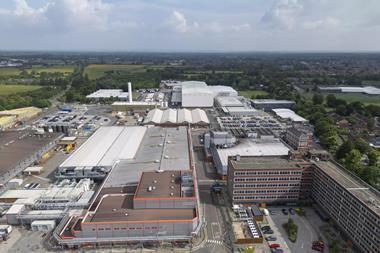
Crucially, Amcor will contribute experience from its proprietary CleanStream® mechanical recycling technology, which already operates at industrial scale. The company’s Leamington Spa facility in the UK can recycle nearly 40 percent of all domestically collected PP waste and works within existing waste management systems, offering a proven model for high-purity recycled plastics suitable for food contact.
Known as CRISP – Circular Recycling Innovation for Sustainable Packaging – the partnership runs from 2025 to 2028 and aims to create a fully circular market for recycled HDPE and PP food packaging in Denmark. Amcor will also draw on expertise from its packaging production facility in Randers, Denmark, applying its knowledge of designing food packaging using recycled materials.
Critical time for food and packaging industry
The project comes at a critical time for the food and packaging industries. The EU is targeting a 55 percent plastic recycling rate by 2030, while the Packaging and Packaging Waste Regulation (PPWR) requires most plastic packaging to be designed for recyclability by the same year.
Christian Bruno, R&D director for North East Europe at Amcor said:
Sustainable challenges require industry collaboration, and this partnership will demonstrate what can be done when the supply chain comes together. We are proud to be part of a project that could potentially have a significant environmental impact in Denmark and set new standards worldwide.”
CRISP will develop and demonstrate a systemic solution that turns post-consumer plastic waste into food-grade packaging, with full traceability of food contact materials throughout the recycling loop.
Bruno added:
The long-term goal is to establish circular loops for food plastic packaging aligned with the design guidelines from the PPWR. The EU’s goals are driving this industry to greater highs; the project will make a strong business case for the entire value chain, with improved traceability of food contact materials in the recycling system.”
The initiative also aligns with Denmark’s Extended Producer Responsibility scheme, which requires producers to pay for the packaging they place on the market while incentivising more sustainable design and material choices.
Business manager Per Sigaard Christensen at the Danish Technological Institute commented:
We are delighted to bring together this highly knowledgeable and innovative consortium. This three-year project has the potential to provide a clear pathway towards the circular recycling of PE and PP food packaging.”
If successful, CRISP could provide a scalable blueprint for circular food packaging systems, supporting regulatory compliance while reducing reliance on virgin plastics across the European food industry.
Related topics
Environment, Labelling, Packaging & Labelling, Processing, Regulation & Legislation, Research & development, retail, Supply chain, Sustainability, Technology & Innovation, Traceability, Trade & Economy