

From South America to the Irish border: how the EU–Mercosur deal could reshape UK food risk
Posted: 20 January 2026 | Professor Chris Elliott | No comments yet
New trade deals bring new opportunities – for the scrupulous and the not-so scrupulous. Here Professor Chris Elliott highlights where vigilance will be needed to head off potential deceptions from opportunistic trade exploiters.
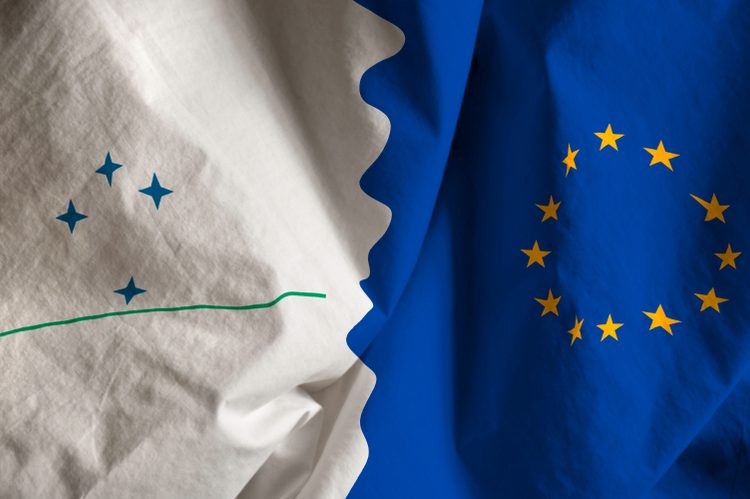
When trade deals make the headlines, the discussion is generally around who the winners and losers are in terms of financial benefits. Consideration of impact to the risk landscape rarely seems to feature, certainly in the negotiation stages. However, I’ve learnt one hard lesson: it is generally not the trade deal itself that causes problems, but the blind spots they often create. The recently announced and hailed EU–Mercosur agreement may not bind the UK legally, but in my view it will change the global food risk landscape. Let me explain why.
It is generally not the trade deal itself that causes problems, but the blind spots they often create.”
Trade deals that we are not directly involved in are, in most cases, presented as distant and abstract agreements about lowering tariffs and enhancing trade. Yet while these goals are laudable, such deals have a habit of reshaping food systems in ways that only become obvious years later – often when something goes awry. I may be wrong but my concern is that the EU’s decision to progress the long‑negotiated EU–Mercosur agreement is a case in point – perhaps accelerated by the fears and fallout from the tariff-wielding trade expert in the White House who treats the global economy like a late-night poker game.
Of course, the UK is not a signatory to this deal; it does not cause any rewriting of UK food law and any food placed on the UK market must comply with UK legislation. But to think it has no relevance to the UK food system would be an overly complacent view, in my opinion. Food supply chains are global, can adapt at lightning speed and are intensely opportunistic, responding quickly to price signals, regulatory asymmetries and the appearance of unintended enforcement gaps. I am relatively sure this is where the real risks may lie. Why? Because the integrity of the food system is not protected by legislation alone. It is safeguarded and conversely threatened by how systems behave under pressure and major trade deal changes are known to add new pressure points.
Join our free webinar: Rethinking Listeria monitoring: faster, simpler solutions for food safety & environmental testing
Discover how modern Listeria monitoring solutions can support faster, more reliable food and environmental testing, and help elevate your laboratory’s efficiency and confidence in results.
Date: 18 March 2026 | Time: 15:00 GMT
One of the most predictable consequences of increased market access is intensified price competition. In food systems, sustained downward price pressures inevitably increase the incentive and opportunities for fraud. Experiences with food fraud episodes demonstrate a clear pattern: increasing supply-chain length and complexity directly fuel greater sophistication in fraudulent activity.
Taking all this into account, the most significant UK exposure from the outworkings of the EU–Mercosur will be indirect and perhaps harder to predict and thus deflect. Changes in EU import dynamics will alter global flows of many food commodities. Some products will be pulled towards EU markets, while others will be displaced elsewhere. UK buyers may see lower prices in certain categories, while UK producers, already operating on tight margins, will undoubtedly face further economic pressures.
Much of the public debate around the EU–Mercosur deal has focused on environmental and sustainability concerns, particularly deforestation. While these are not directly about food fraud they are highly relevant to food system integrity. Low confidence in production systems creates fertile ground for fraud. Where claims become difficult to prove and verification is weak, the opportunity for deception increases and with it, the risk of unsafe or non‑compliant food entering the chain.
History tells us that where borders are complex, politically sensitive and do not have high levels of enforcement, organised crime will take advantage.”
For the UK, the most sensitive pressure point sits on the island of Ireland. Northern Ireland occupies a unique position in the post‑Brexit landscape, aligned with elements of EU regulation while remaining part of the UK internal market. The absence of routine customs border checks on the island means EU‑compliant Mercosur products can lawfully enter the Republic of Ireland, naturally moving onwards to Northern Ireland across the land border. While this is not inherently problematic, it does raise important questions: How robust is the traceability of these goods? How clear is oversight of onward movement of them into Great Britain? And how confident can we really be that Northern Ireland will not unintentionally become an attractive route for diversion of food products into the GB marketplace?
History tells us that where borders are complex, politically sensitive and do not have high levels of enforcement, organised crime will take advantage. Smuggling and fraud do not appear by accident; they happen as new opportunities arise. Whether it be fuel smuggling, drugs or human trafficking, criminals will seek to exploit opportunities across the Irish border.
So yes, there will be new risks to the UK because of this trade deal. It is also important to have a balanced view of what trade deals do offer. They can bring many benefits: increased supply can serve to stabilise markets and reduce volatility. Many producers in Mercosur countries operate to high standards and EU import rules will still apply to food entering the EU market. The issue is not trade itself, but whether oversight will keep pace with the increased scale of the resulting trade.
From a UK perspective, the priorities should be clear. We need sustained investment in border intelligence and enforcement capability. We need modern, fit-for-purpose food authenticity and traceability tools deployed where opportunities for fraud are highest. And we will need even closer operational cooperation between UK and Irish authorities. Food crime does not respect borders.
I am not saying that the EU–Mercosur agreement presents an immediate food fraud crisis for the UK. But it will subtly reshape the risk landscape. If the authorities respond – as I hope they do – with evidence‑based vigilance, the risks are manageable. If the response is complacency – the ‘nothing to see here’ attitude – which I fear it may be, particularly at the border on the island of Ireland, vulnerabilities will be exploited by criminal elements.
Related topics
Food Fraud, Food Safety, Food Security, Regulation & Legislation, Supply chain, Traceability, Trade & Economy, World Food