



Regulation, labelling & compliance
Explore the evolving regulatory landscape affecting food and beverage businesses, including labelling requirements, product claims, novel food approvals, governance frameworks and compliance strategies. Stay informed on policies and regulations shaping market access and consumer confidence.
Latest content
 Webinar
Detecting the presence of PFAS in chicken eggs
Free webinar: University of Connecticut researchers test chicken eggs for 28 PFAS compounds and compare two UHPLC-MS/MS extraction methods.
 News
UK secures millions in new South-East Asia meat export deals
A government-led trade mission to South-East Asia has delivered significant new export opportunities for British farmers and food producers, including the reopening of the Vietnamese market to UK Processed Animal Protein and a landmark regionalisation agreement protecting pork exports to the Philippines.
 News
Researchers call for chemical risk assessments in sustainable food packaging
New research warns that food packaging decisions based solely on environmental metrics such as carbon emissions risk overlooking more than 1,200 hazardous chemicals that can migrate into food.
Featured
New Food Explains
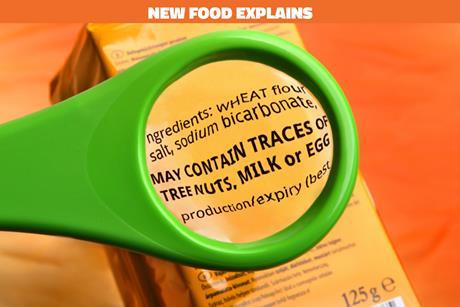
What justifies a ‘may contain’ allergen warning?
As new international guidelines seek to harmonise precautionary allergen labelling, Ben Cornwell examines the science behind ‘may contain’ warnings and how manufacturers can scientifically justify their use.

Opinion
The World Is Not Enough: who will protect the food supply?
In part two of this series, Dr Darin Detwiler levels the question of responsibility at food industry leaders; noting that cybersecurity has become a critical test of food safety leadership.
Webinars
- Previous
- Next





Join now
Unlock exclusive industry insights
- Bookmark articles and resources to access anytime
- Enjoy free access to industry leading resources, webinars and insights
- Stay informed with in-depth coverage of food safety, quality, innovation and regulatory change from across the global food and beverage industry
- Receive updates and recommendations tailored to your professional interests
More Regulation, labelling & compliance
 Article
How California is rethinking the value of food byproducts
Following a recent trip to California, Ben Cornwell explores how processors are rethinking food byproducts, including almond hulls, whey and broken rice, and whether new applications are commercially worthwhile.
 Opinion
No, Mr Bond, I expect you to dine!
In the first of a two-part series, exploring the breadth of tactics employed in various cyberattacks over recent years, Dr Darin Detwiler elucidates the vulnerabilities of our connected digital food systems and cautions the need for vigilance against pervasive invisible threats.
 New Food Explains
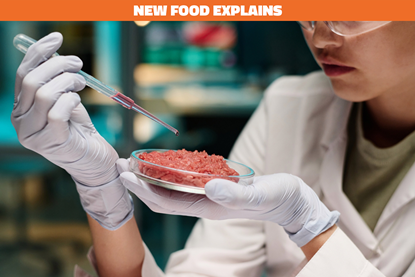
What evidence is needed to bring cultivated meat to market?
As cultivated meat advances towards commercial production, Ben Cornwell explores the evidence regulators require to establish its safety, with insights from the FSA’s Dr Thomas Vincent.
More Regulation, labelling & compliance
 The Elliott Review
Weaponising our food supply: the dark new age of cyberterrorism
What happens when the very systems designed to keep our food safe become targets for cyberattacks? Professor Chris Elliott warns of the potentially devastating consequences for our food supply.
 Article
Mounting evidence of rising global food fraud
Food fraud rarely reveals itself willingly. The Food Authenticity Network examines what three years of monitoring can tell us about a problem that remains notoriously difficult to measure.
 Report
Where AI and digital tools are delivering value in food production
AI in food production is moving beyond pilots into everyday operations but where is it already delivering measurable value? Read this free report to explore real-world applications and barriers to wider adoption.
 New Food Explains
Why nitrites in processed meat are back in the spotlight and what reformulation requires
As scrutiny of nitrites grows, Ben Cornwell examines the evidence, how current UK and EU regulations differ and what’s required to reformulate processed meat without them.
 The Elliott Review
The bitter taste of sustainable coffee
The world wants and needs more sustainable food production, but who should pay for it? Chris Elliott examines the growing cost burden on coffee farmers and what must change to ensure the prized cup of joe can be produced responsibly for generations to come.
 New Food Explains
GLP-1 food products must deliver more from less, but what can they claim?
GLP-1 use changes how some consumers eat, New Food examines how nutrition science can translate into viable products, with Osborne Clarke’s Charlie Hennig unpacking the claims and regulatory challenges.
 Article
Plant-based homogenisation starts with the right pre-mix
Steffen Jahnke of GEA explores how the right pre-mix sets the foundation for successful plant-based homogenisation, and what scale-up really tests.
 Article
The Process NIR Readiness Checklist
Successful process NIR starts before installation. This checklist helps manufacturers assess readiness, identify gaps and make the right decisions early to accelerate deployment and results.
 The Elliott Review
The canaries are singing: is Britain finally waking up to food security?
With the UK’s food and drink trade deficit at its highest since 2000 and concern growing across industry and academia, a leading sector voice warns that food security is now a national security issue.
 New Food Explains
What viable PFAS-free food packaging really requires
With new EU limits on PFAS in food-contact packaging now in force, New Food speaks to VTT experts about balancing product performance requirements with viable PFAS-free alternatives.
 Article
Why fragmented product data raises the cost of food non-compliance
Specright’s Andy Stark explores how fragmented product data can increase compliance risk, slow reformulation and drain R&D capacity – and why trusted data is becoming critical to effective AI adoption.
 The Elliott Review
Brazilian beef and the UK: why Europe’s food safety decisions matter again for Britain
With the EU ban on Brazilian beef reigniting debate over import standards, Chris Elliott examines the implications for farmers, consumers and UK food security.
 Opinion
A big UK food policy opportunity… to be seized!
Clive Black lays out potential scenarios governing the health of the UK’s food system – maintaining that securing its resilience is within grasp, if only government will but reach for it.
 Article
GLP-1 friendly’ has no regulatory definition and manufacturers are shipping it anyway
‘GLP-1 friendly’ has no regulatory definition. What manufacturers must verify before using the term.
 The Elliott Review
Imported eggs and Salmonella: the cracks in Britain’s food-safety defences
Recent Salmonella outbreaks have exposed vulnerabilities in UK egg supply chains. Chris Elliott examines their complex routes into food service and where improvements are needed.
 Article
Building food supply chain resilience through data-sharing approaches
As food supply chains face growing disruption, Wageningen University & Research experts explain why better data sharing is becoming critical to building greater agility and resilience.