



All Functional ingredients & nutraceuticals articles
-
 News
NewsCalcium-rich whey permeate helps maintain bone density in postmenopausal women
A clinical trial involving Arla Foods Ingredients found dairy-derived calcium matched conventional supplements in supporting bone health, highlighting potential functional food applications.
-
 Article
GLP-1 food products must deliver more from less, but what can they claim?
GLP-1 use changes how some consumers eat, New Food examines how nutrition science can translate into viable products, with Osborne Clarke’s Charlie Hennig unpacking the claims and regulatory challenges.
-
 News
NewsCalifornia targets ultra-processed foods with sweeping new health legislation
California has signed a wide-ranging package of health legislation targeting ultra-processed foods, sugary drinks, vaping and weight-loss supplements, with new labelling rules and tighter restrictions.
-
 News
NewsTesco launches nitrite-free bacon and ham range
Tesco has introduced a new own-brand range of bacon and ham made without added nitrites, as online consumer searches for such products rise by more than 360 percent year-on-year.
-
 News
NewsMushroom fermentation transforms okara into protein-rich ingredient
Scientists at NTU Singapore have used oyster mushroom mycelium to ferment okara, boosting its protein content and transforming its flavour profile from sour to savoury.
-
 News
NewsUMass Amherst launches $120m future of food initiative
The University of Massachusetts Amherst has launched a $120 million initiative to address food system challenges, including a new Food Innovation Hub and research centre.
-
 News
NewsDutch coalition demands €65m fund to boost plant-based food
A coalition is urging the Dutch government to establish a €65 million annual Plant-Based Acceleration Fund and national action plan, modelled on Denmark’s plant-based food strategy.
-
 News
NewsEuropean trials find non-nutritive sweeteners do not undermine weight loss
A review of three major European trials found that replacing sugar with non-nutritive sweeteners did not hinder weight loss, metabolic health or increase sweet cravings.
-
 Article
GLP-1 friendly’ has no regulatory definition and manufacturers are shipping it anyway
New Food explains: ‘GLP-1 friendly’ has no regulatory definition. What manufacturers must verify before using the term.
-
 News
NewsNestlé agrees $1bn sale of mainstream vitamins business to Yellow Wood Partners
Nestlé has agreed to sell its mainstream vitamins, minerals and supplements business to private equity firm Yellow Wood Partners for $1 billion, sharpening its focus on premium, science-led nutrition.
-
 Article
Designing nutraceuticals around biology, not ingredients
Health claims on nutraceuticals can be limited due to the need for scientific evidence, which traditional products often lack. Here, we introduce a new approach to nutraceutical formulation that marries biology with engineering to address specific health issues – and the results are looking good.
-
 News
NewsGatorade study identifies women’s hydration and fuelling gaps
GSSI research finds widespread dehydration, sodium replacement and carbohydrate intake shortfalls, strengthening calls for more personalised guidance for active women.
-
 News
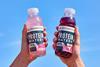
NewsNichols targets functional drinks market with Myprotein clear whey water launch
Nichols will challenge milk-based protein drinks with a sugar-free clear whey water range launching across UK retail in September 2026.
-
 Article
From science to shelf: the rise of pet gut health innovation
Elisabetta Pierangelo, Global Vice President of Research & Development at Mars Pet Nutrition, reveals the latest research that is helping to reshape pet food formulation strategies that prioritise gut health for optimum overall wellness.
-
 News
NewsEU approves fibre-based novel food additive targeting weight gain
EU approval of IPE could open new opportunities for satiety-led foods targeting gradual weight gain before drug intervention.
-
 Article
How wellbeing will drive food sector’s next phase of growth
Backed by data-driven insight, Sharon Bligh from the Consumer Goods Forum cuts to the heart of how manufacturers can get ahead of the curve by catering to the distinct yet varying needs of today’s consumer.
-
 News
NewsDanone to acquire MADE Group to accelerate APAC nutrition growth
Danone will acquire Australia’s MADE Group and take full control of its dairy venture, boosting its healthy nutrition business across APAC.
-
 News
NewsWaitrose becomes first supermarket to offer British samphire year-round
Waitrose and Westlands achieve year-round British samphire production using hydroponic technology, extending domestic supply beyond the traditional summer season.
-
 News
NewsUK approval of Wegovy pill signals next phase of GLP-1 growth
MHRA approval makes Wegovy the UK’s first GLP-1 weight-loss tablet, offering eligible patients an alternative to injections.
-
 News
NewsIngredion agrees terms of £2.7bn acquisition of Tate & Lyle
The board-approved deal would combine Ingredion’s texture and sugar reduction expertise with Tate & Lyle’s strengths in mouthfeel, sweetening and fortification.