



Food safety & integrity
Explore expert insights on food safety and integrity, including allergen management, contamination prevention, food fraud detection, microbiological risks, hygiene practices, recalls and incident response strategies that help manufacturers protect consumers, maintain compliance and strengthen product trust.
Webinars and whitepapers
- Previous
- Next


















More Food safety & integrity
 News
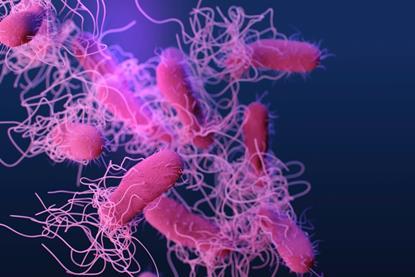
AI forecasts rise in Salmonella antimicrobial resistance across China by 2050
AI modelling identifies 84 Salmonella resistance traits predicted to increase across China’s food chain by 2050, highlighting potential gaps in food safety surveillance programmes.
 Article
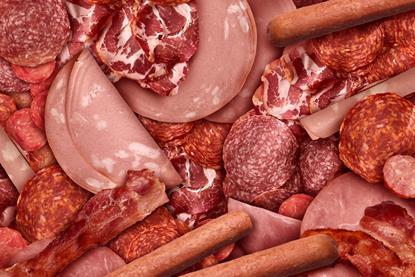
Why nitrites in processed meat are back in the spotlight and what reformulation requires
As scrutiny of nitrites grows, Ben Cornwell examines the evidence, how current UK and EU regulations differ and what’s required to reformulate processed meat without them.
 News
UPM, Ingredion and Paramelt explore starch-based grease barriers for paper food packaging
UPM, Ingredion and Paramelt are developing starch-based grease barriers for paper food packaging, aiming to improve performance and recyclability as demand for sustainable alternatives grows.
Join now
Unlock exclusive industry insights
- Bookmark articles and resources to access anytime
- Enjoy free access to industry leading resources, webinars and insights
- Stay informed with in-depth coverage of food safety, quality, innovation and regulatory change from across the global food and beverage industry
- Receive updates and recommendations tailored to your professional interests
More Food safety & integrity
 Article
Why food testing programmes need to get smarter, not just bigger
How can manufacturers make food testing smarter? Mondelēz Europe’s Nia Owen-Cortez explains how data, governance and risk-based thinking can strengthen testing programmes.
 Opinion
The bitter taste of sustainable coffee
The world wants and needs more sustainable food production, but who should pay for it? Chris Elliott examines the growing cost burden on coffee farmers and what must change to ensure the prized cup of joe can be produced responsibly for generations to come.
 News
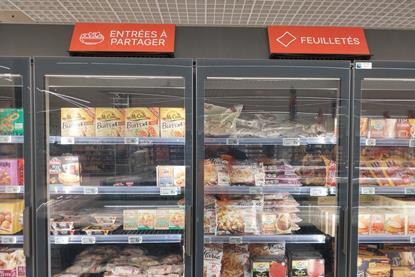
Cyberattack sends supermarket fridges to 50°C as 700 French stores hit
A major cyberattack has forced supermarkets across France to discard fresh and frozen food after hackers manipulated refrigeration controls, exposing vulnerabilities in critical cold chain infrastructure.
More Food safety & integrity
 News
UK agrifood network tackles antimicrobial resistance with £54m UKRI funding
A newly funded UK-wide research network is bringing together farmers, vets, industry and policymakers to address one of the most pressing challenges facing food production - antimicrobial resistance in agrifood systems.
 News
New violet blue light treatment targets Campylobacter on raw chicken
A chemical-free light-based treatment has demonstrated the ability to kill all 64 Campylobacter strains tested, including antibiotic-resistant varieties.
 News
Tesco launches nitrite-free bacon and ham range
Tesco has introduced a new own-brand range of bacon and ham made without added nitrites, as online consumer searches for such products rise by more than 360 percent year-on-year.
 Article
What viable PFAS-free food packaging really requires
With new EU limits on PFAS in food-contact packaging now in force, New Food speaks to VTT experts about balancing product performance requirements with viable PFAS-free alternatives.
 News
Magnetic nanoparticles offer new route to PFAS-free water
Researchers have developed modified magnetic iron oxide nanoparticles that can capture and remove PFAS and fluorine-containing microplastics from contaminated water sources.
 News
PET industry launches shared platform for food contact safety data
PETCORE EUROPE has launched GeNi, a centralised interlaboratory data platform developed with KÖR, to address fragmented testing practices and strengthen food safety knowledge across the PET packaging value chain.
 Article
Why fragmented product data raises the cost of food non-compliance
Specright’s Andy Stark explores how fragmented product data can increase compliance risk, slow reformulation and drain R&D capacity – and why trusted data is becoming critical to effective AI adoption.
 News
Salmonella outbreaks linked to imported eggs remain under investigation
Three clusters of Salmonella Enteritidis infections in England have resulted in nearly 600 confirmed cases and two deaths, with public health authorities continuing to investigate links to imported eggs.
 Opinion
Brazilian beef and the UK: why Europe’s food safety decisions matter again for Britain
With the EU ban on Brazilian beef reigniting debate over import standards, Chris Elliott examines the implications for farmers, consumers and UK food security.
 Opinion
A big UK food policy opportunity… to be seized!
Clive Black lays out potential scenarios governing the health of the UK’s food system – maintaining that securing its resilience is within grasp, if only government will but reach for it.
 Opinion
Imported eggs and Salmonella: the cracks in Britain’s food-safety defences
Recent Salmonella outbreaks have exposed vulnerabilities in UK egg supply chains. Chris Elliott examines their complex routes into food service and where improvements are needed.
 News
New grouping approach targets hazardous chemicals in food packaging
A peer-reviewed study found 87 percent of more than 15,000 food contact chemicals lack sufficient safety data, highlighting the need for more targeted risk assessment.
 Article
PFAS analysis at a turning point: from trace detection to defensible, sustainable decisions
How laboratories can manage contamination, matrix effects, expanding analyte lists and regulatory change – while reducing the environmental cost of high-throughput LC–MS/MS.
 News
Dubai Municipality automated oil and fat testing cuts analysis to two minutes
Dubai Municipality has introduced automated oil and fat testing, raising daily capacity tenfold while cutting analysis time to two minutes.
 Article
How FSA national regulation proposals could reshape industry oversight
The UK Government has asked the FSA to develop national oversight of large food businesses. Walker Morris’ Chris McGarvey explains what it could mean for the industry.
 News
Electron beam technology shows promise for safer poultry processing
A new study in Poultry Science explores whether electron beam irradiation could reduce pathogens such as Salmonella and Campylobacter in poultry without compromising meat quality or consumer appeal.