




Researchers at the Okinawa Institute of Science and Technology (OIST) have developed a low-cost sensor capable of detecting trace PFAS contamination in water, potentially making on-site monitoring more accessible.
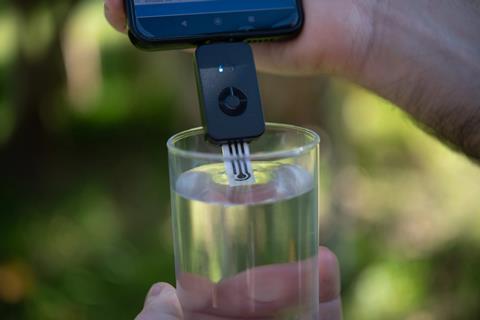
Researchers in Japan have developed a portable sensor capable of detecting trace concentrations of two PFAS chemicals in water, raising the prospect of contamination testing outside specialist laboratories.
The team at the Okinawa Institute of Science and Technology (OIST) combined disposable electrodes with specially engineered polymers to detect perfluorooctanoic acid (PFOA) and perfluorooctane sulfonate (PFOS), two widely studied PFAS compounds.
How accurately does the sensor detect PFAS?
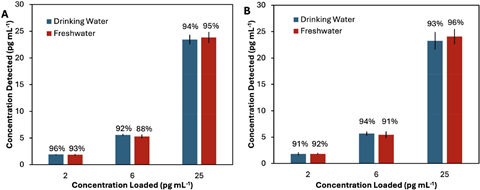
Laboratory tests demonstrated a measurement range of one to 100 picograms per millilitre, with recovery rates of 88–96 percent in drinking water and freshwater samples deliberately spiked with the chemicals.
The findings, published in Biosensors and Bioelectronics, could offer the food industry a more accessible way to assess water quality and investigate suspected contamination.
PFAS, commonly known as ‘forever chemicals’, resist environmental degradation and can enter the food chain through contaminated water, soil and agricultural activities. Their persistence and potential health impacts have increased pressure on regulators and industry to better understand where contamination occurs.
The potential for PFAS to reach the food chain was highlighted by a UK study published in May, which identified contamination in the Solent’s coastal waters, wastewater and marine species consumed by humans.
Yet identifying contamination can be costly and time-consuming. Conventional PFAS testing typically requires specialist laboratory equipment, including mass spectrometry, with samples transported off-site for analysis.
“Our goal is to develop a sensitive, low-cost technology that can eventually be used outside specialised laboratories,” said Dr Mark Sullivan, one of the OIST researchers. “We have demonstrated that it works for PFOA and PFOS, and the same platform could potentially be adapted to detect other PFAS compounds.”
How does the sensor detect PFAS?
The sensor uses molecularly imprinted polymers (MIPs), often called synthetic antibodies, which researchers engineer to recognise specific chemicals.
By forming these polymers around a target PFAS molecule and then removing it, the team creates binding sites that capture the same chemical when it appears in a water sample.
As PFAS molecules bind to the sensor, they alter the electrical current, allowing the device to measure their concentration without requiring additional chemical reagents.
The researchers also designed the platform for inexpensive manufacturing. They screen-printed 100 disposable electrodes onto repurposed fabric within a few hours before coating them with PFAS-specific polymers.
They then connected the electrodes to commercially available measuring instruments that can interface with smartphones or laptops.
The polymers could also be adapted to recognise other PFAS compounds, potentially extending the technology beyond PFOA and PFOS.
PFAS sensor at a glance: what do the results show?
| Measure | Research findings |
|---|---|
|
Target chemicals |
PFOA and PFOS |
|
Measurement range |
1–100 picograms per millilitre |
|
Detection limits |
1.11 pg/mL for PFOA; 1.63 pg/mL for PFOS |
|
Recovery rates |
88–96 percent in deliberately spiked drinking water and freshwater samples |
|
Sensor technology |
Disposable electrodes coated with PFAS-specific molecularly imprinted polymers |
|
Development stage |
Laboratory prototype; further field validation required |
What could this mean for water monitoring?
For the food industry, portable testing could eventually support more frequent water quality checks across production and processing, helping businesses identify potential contamination and determine when further laboratory analysis is necessary.
However, the technology remains at the prototype stage. Although the laboratory results demonstrate its sensitivity, researchers must still establish its reliability under routine field conditions before it can support wider monitoring applications.
“Accurate and accessible detection is an important step toward addressing PFAS contamination,” said Professor Amy Shen, who led the research. “While further development and field validation are needed, we see considerable potential for making environmental monitoring more accessible and widely available.”
UPCOMING WEBINAR | Detecting the presence of PFAS in chicken eggs

Detecting PFAS in water is one challenge, but what happens when these persistent chemicals enter complex food matrices such as eggs?
Join our free upcoming webinar on 25 November 2026 at 3pm GMT to explore how researchers at the University of Connecticut are addressing the analytical challenges of PFAS detection in chicken eggs, including sample preparation, extraction techniques and ways to improve testing efficiency without compromising accuracy.



















No comments yet