


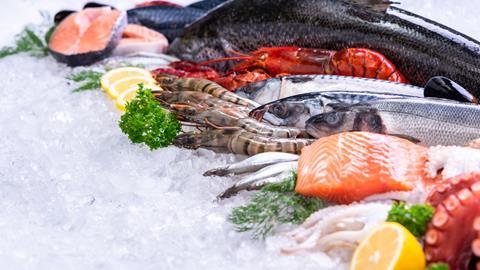

The seafood industry is enormous, so too its supply chains. With consumers willing to pay premium prices for the healthy protein source, fraudulent practices have inevitably followed – on shocking scales. Chris Elliott reveals how the industry is responding and what businesses can do to boost credibility and protect consumers.
There has never been a more important time to talk about seafood fraud. I write this as I have just spent an intensive week at the launch of a new United Nations (FAO/IAEA), large-scale, multi-partner research programme aimed at tacking the issue. But more about this later.
As the global population continues to grow and consumers increasingly seek healthier, lower-carbon sources of protein, demand for seafood has never been greater. Fish and aquaculture products are now among the world’s most valuable traded food commodities. Yet, hidden behind what can be rightly labelled as a major success story lies a hidden reality that should concern every retailer, manufacturer, seafood harvester, regulator and consumer. Perversely, the very factors that have made seafood one of the world’s greatest food security success stories have also created the perfect environment for massive-scale food fraud.
A recently published and excellent FAO report describes seafood fraud as one of the most significant integrity challenges facing the global food system today – and the amount of evidence it presents makes it very difficult to ignore. The seafood sector has become the perfect storm for widespread fraud.
Approximately one in every five seafood products globally may be mislabelled, making seafood one of the most fraud-prone food sectors in the world.”
A global industry of extraordinary complexity
The scale of today’s global seafood industry is remarkable. In 2022, global fisheries and aquaculture produced over 185 million tonnes of aquatic products worth approximately $195 billion. Of this, around 90 percent of production was destined for human consumption, with seafood traded between more than 230 countries and territories. The sector now includes over 12,000 commercially traded aquatic species, each with its own biology, geographical distribution, commercial value and regulatory requirements. These are stunning statistics and when viewed through a food integrity lens represent an enormous challenge.
Supply chains for many terrestrial feed and food commodities and ingredients are complex, but these pale in comparison to the thousands of seafood products often changing hands multiple times before finally reaching the consumer, which is at another level. Fish may be harvested in one country, landed in another, processed in a third, packaged in a fourth and sold many thousands of miles away in different continents. Every additional transaction, processing step and documentation handover creates another opportunity for fraudsters to exploit weaknesses within the supply chain. Many products can lose their defining characteristics during processing, so once a fish has been filleted, skinned, frozen, canned or incorporated into ready meals, even experienced buyers frequently cannot identify the species by visual inspection alone. Criminals understand this better than anyone and know well how to exploit this weakness.
The statistics should concern us all
For many years there have been multiple reports of seafood fraud at a national level and more anecdotal evidence that the practice is widespread. The FAO report highlights that approximately one in every five seafood products globally may be mislabelled, making seafood one of the most fraud-prone food sectors in the world. Studies have identified fraudulent seafood activities in 55 countries, with mislabelling occurring at virtually every stage of the supply chain. Restaurants remain particularly vulnerable, where around 30 percent of seafood products have been reported as incorrectly described. In Peru, fraud was detected in 43 percent of seafood samples, while one Chinese study reported over 75 percent of tested seafood products belonged to a species outside the expected one. Thus, millions upon millions of purchasing decisions are made by consumers who believe they are buying one product but are actually receiving another.
Fraud is all about money – making more of it by deception. Even relatively modest differences in wholesale prices can generate substantial profits when multiplied across international trade volumes. The FAO report highlights examples where substituting one tuna species for another can generate significant financial gain, while misrepresenting farmed fish as wild-caught creates additional economic incentives. Consumers consistently demonstrate willingness to pay premium prices for products offering demonstrable authenticity and traceability. Thus, where premiums exist fraud will likely follow.
Seafood fraud is not just an economic crime
Food fraud is often regarded as a commercial issue. Someone substitutes a cheaper ingredient, makes additional profit and consumers receive poorer value. But seafood fraud is fundamentally different. Many fraudulent practices introduce significant food safety risks. Species substitution can expose consumers to unexpected allergens, naturally occurring toxins, parasites or contaminants. Fish intended only for cooked consumption may instead be served raw as sushi or sashimi, increasing food poisoning risks. Products may originate from waters or production systems that have never undergone appropriate safety controls. Perhaps most alarming, as the authors of the report rightly state, is the finding that 58 percent of documented substitutions involved species presenting potential health risks to consumers. This must, without any degree of uncertainty, move seafood fraud beyond the realm of consumer deception and into the sphere of major public health risk.
Fraud has evolved far beyond species substitution
When most people think about seafood fraud they generally think this means replacing an expensive fish with a cheaper alternative – ie, substituting cod with coley. While this remains the most common fraud, today’s criminal landscape is considerably more sophisticated. In our published review of more than 900 documented seafood fraud incidents worldwide, we identified eleven distinct forms of seafood fraud. Termed ‘the eleven sins of seafood’, they constitute species adulteration; species substitution; undeclared product extension; chain of custody abuse; fishery substitution; illegal processing; illegal or unauthorised international trade; illegal, unreported and unregulated (IUU) fishing; catch method fraud; modern-day slavery and animal welfare fraud.
Collectively, these illustrate that seafood fraud is not just about replacing an expensive fish with a cheaper alternative; it represents a complex web of economic, environmental, ethical and public health deception that can occur at every stage of the global seafood supply chain. The greatest threats increasingly arise from sophisticated fraud involving documentation, provenance, illegal trade, processing practices and sustainability claims; forms of deception that are often far more difficult to detect and potentially far more damaging to consumers, legitimate businesses and marine ecosystems.
Integrity is inseparable from sustainability
One aspect that deserves greater attention is the close relationship between seafood fraud and environmental sustainability. When illegally caught fish enter legitimate markets through fraudulent documentation, the consequences extend far beyond economics. Misrepresentation masks illegal, unreported and unregulated fishing, undermines fisheries management, distorts stock assessments and weakens conservation efforts designed to protect vulnerable marine ecosystems. Similarly, falsely claiming sustainable or certified production damages the credibility of certification schemes that responsible producers have heavily invested in. Thus, seafood fraud not only steals from consumers and honest businesses, but also from future generations who will depend upon sustainable marine resources.
This must, without any degree of uncertainty, move seafood fraud beyond the realm of consumer deception and into the sphere of major public health risk.”
Science is taking the fight to fraudsters
The encouraging news is that analytical science has never been more capable of exposing food fraud. For this reason, myself and representatives from nearly 20 countries across five continents recently met in Vienna to map existing detection technologies and those that show the most promise in terms of speed, cost and portability. We will be undertaking a highly integrated and interdisciplinary approach to developing, validating and deploying these across a range of carefully selected seafood supply chains.
Despite the impressive advances in analytical capability, testing alone will not solve seafood fraud. The sheer volume of global seafood trade makes it impossible to analyse every shipment, batch and product. We must therefore become smarter in identifying where fraud is most likely to occur using intelligence-led surveillance, stronger vulnerability assessments, enhanced digital traceability, improved international information sharing and greater collaboration between regulators, industry and academia.
A defining moment for global seafood integrity
The timing of the UN initiatives, in terms of publishing the report and launching the scientific project, could not be more apt. Global trade continues to expand and consumer demand for sustainable seafood is increasing. Supply chains remain under pressure from geopolitical instability and economic uncertainty. Each of these factors creates new incentives for fraud while simultaneously increasing the importance of protecting consumer confidence. More than any other factor we must look to climate change as a driver for increased seafood fraud.
The emerging 2026 El Niño demonstrates how climate shocks can rapidly cascade through global seafood supply chains. One major example already upon us is the collapsing Peruvian anchovy stocks disrupting fishmeal production; this accounts for about 20 percent of the world’s supply of fishmeal and the shortage is driving record feed prices and threatening the multibillion-dollar global aquaculture industry. As legitimate supplies tighten and prices rise, these conditions create the perfect environment for economically motivated fraud, increasing the incentives for species substitution, origin fraud, undeclared product extension and other forms of seafood deception as businesses struggle to meet demand.
What we know is that for the seafood industry, integrity is rapidly becoming one of its greatest challenges. Those organisations that invest today in robust traceability, advanced authentication technologies and genuine transparency will not just reduce fraud risk, they will strengthen consumer trust, protect their brands and position themselves as leaders within an increasingly demanding global marketplace.
The seafood industry has overcome enormous challenges throughout its history. Combatting food fraud should be viewed as the next great opportunity – not merely to catch criminals, but to build a global seafood system that consumers can trust with complete confidence.













No comments yet