



Free webinar: a University of Connecticut case study assessing PFAS contamination in a complex food matrix using UHPLC-MS/MS technology, and whether a faster extraction method holds up.
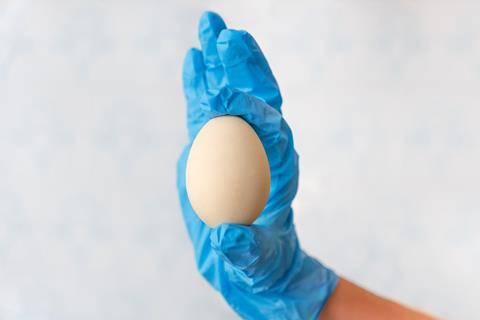
Long-chain PFAS compounds can remain in the body for years, and even small exposures accumulate, mainly through contaminated food, water and air. Researchers at the University of Connecticut’s Center for Environmental Sciences and Engineering looked at one specific food source: chicken eggs. Using a method built to test for 28 PFAS compounds with UHPLC-MS/MS, they compared two extraction approaches to see whether skipping a sample cleanup step would change the result.
This free webinar, sponsored by PerkinElmer, puts that question to the researchers who ran the study. Marisa Vatteroni and Dr Anthony Provatas of UConn’s CESE will walk through how the two extraction methods compared, what skipping cleanup did and did not change, and what a faster workflow means for how much PFAS testing a lab can realistically run.
You will learn:
- What the study set out to measure: PFAS concentrations across different types of chicken eggs, using a targeted 28-compound UHPLC-MS/MS method
- Whether skipping cleanup changes the result: what the comparison between two extraction methods actually showed
- What speed buys you: how much more PFAS testing becomes realistic once extraction time comes down
- Where this goes next: what researchers see as the next step, and how it connects to the case for firmer PFAS regulation
Interested? Register your interest now!
Dr Anthony Provatas
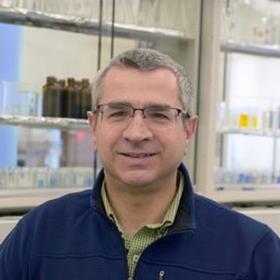
Dr Anthony Provatas is Director of the Organic Molecular Analysis Laboratory at UConn’s Center for Environmental Sciences and Engineering (CESE), where he provides guidance on complex analytical challenges and oversees the delivery of the Center’s scientific work. He also serves as a Research Professor in UConn Chemistry, mentoring undergraduate students and guiding independent research projects at CESE.
Marisa Vatteroni
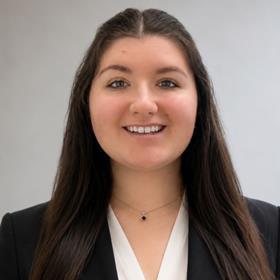
Marisa Vatteroni is a Research Associate with the Center for Environmental Sciences and Engineering at the University of Connecticut. She graduated from the University of Connecticut in 2023 with a Bachelor of Science in Chemistry and has worked in an industry or research lab for three years. She is experienced in both GC-MS/MS and UHPLC-MS/MS analysis and has worked on many projects researching PFAS contamination across various matrices.
Is the panel discussion free?
Yes – there is no charge to watch the panel discussion, either live or on-demand.
Can I watch it later?
The panel discussion will become available to watch on-demand shortly after the live webinar takes place.
How long will the panel discussion be?
This panel discussion will last up to 45 minutes.
What do I need to watch this panel discussion?
All you need is a computer with an internet connection. We recommend using headphones if possible if you’re in an office environment.
Detecting the presence of PFAS in chicken eggs
Venue