



Food Safety & Integrity Focus
Latest content
 News
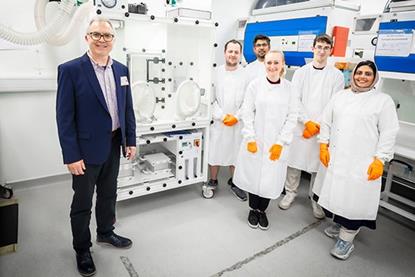
NewsUK agrifood network tackles antimicrobial resistance with £54m UKRI funding
A newly funded UK-wide research network is bringing together farmers, vets, industry and policymakers to address one of the most pressing challenges facing food production — antimicrobial resistance in agrifood systems.
 News
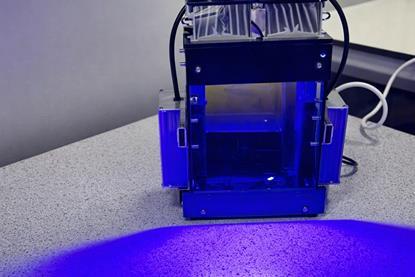
NewsNew violet blue light treatment targets Campylobacter on raw chicken
A chemical-free light-based treatment has demonstrated the ability to kill all 64 Campylobacter strains tested, including antibiotic-resistant varieties.
 Webinar
PFAS in food: Are you testing for enough?
PFAS regulation is expanding and analytical methods are becoming more capable. How far should food businesses test?
Featured

Webinar
PFAS in food: Are you testing for enough?
PFAS regulation is expanding and analytical methods are becoming more capable. How far should food businesses test?

Article
What viable PFAS-free food packaging really requires
With new EU limits on PFAS in food-contact packaging now in force, New Food speaks to VTT experts about balancing product performance requirements with viable PFAS-free alternatives.
Webinars
- Previous
- Next






Join now
Unlock exclusive industry insights
- Bookmark articles and resources to access anytime
- Enjoy free access to industry leading resources, webinars and insights
- Stay informed with in-depth coverage of food safety, quality, innovation and regulatory change from across the global food and beverage industry
- Receive updates and recommendations tailored to your professional interests
More Food Safety & Integrity

The Process NIR Readiness Checklist
Successful process NIR starts before installation. This checklist helps manufacturers assess readiness, identify gaps and make the right decisions early to accelerate deployment and results.
More Food Safety & Integrity
 Article
PFAS analysis at a turning point: from trace detection to defensible, sustainable decisions
How laboratories can manage contamination, matrix effects, expanding analyte lists and regulatory change – while reducing the environmental cost of high-throughput LC–MS/MS.
 Article
How FSA national regulation proposals could reshape industry oversight
The UK Government has asked the FSA to develop national oversight of large food businesses. Walker Morris’ Chris McGarvey explains what it could mean for the industry.
 Article
How laboratory AI agents can transform R&D and quality in the food industry
Food and beverage laboratories face growing pressure to innovate without compromising safety. This article explores how agentic AI can connect siloed data, strengthen predictive quality and accelerate R&D.
 Article
Why food laboratories need analytical systems that deliver more than sensitivity
Can laboratories increase sensitivity without compromising routine reliability, workflow efficiency or resource use? The LCMS-8065XE was designed to address these growing analytical demands.
 Opinion
The perfect storm for seafood fraud
The seafood industry is enormous, so too its supply chains. With consumers willing to pay premium prices for the healthy protein source, fraudulent practices have inevitably followed – on shocking scales. Chris Elliott reveals how the industry is responding and what businesses can do to boost credibility and protect consumers.
 Article
The Odyssey of consumer trust – Part two: Homecoming
What it means to deserve the world’s trust.
 Article
The Odyssey of consumer trust – Part one: Departure
Food may be the world’s most global product, but trust remains its most personal ingredient.
 Article
Setting pass/fail criteria with GENESYS custom method application: Sports drink quality testing
How can beverage manufacturers catch concentration errors and contamination quickly? This study explores how UV-Visible spectroscopy and custom pass/fail criteria can support faster, straightforward quality checks.
 Article
Moving AI beyond pilot: a compliance guide for food businesses
AI can improve forecasting, traceability and customer communications, but food businesses remain accountable when failures create safety or compliance risks. Here is what technical and compliance leaders should consider before moving AI from pilot to production.
 Report
Is your food testing programme a map of current risk or an archive of past concerns?
A practical guide for QA, QC and laboratory leaders navigating rapid reformulation, complex matrices and escalating regulatory scrutiny.
 Opinion
Food fraud could be flourishing in Britain’s forgotten supply chains
The recent successful conviction of Kismet Kebabs Ltd is as encouraging as it is concerning… Professor Chris Elliott explains why.
 Article
Combining modern approaches in food pathogen detection with smarter control strategies
As food safety laboratories strive for faster, reliable, and audit-ready pathogen detection, success depends on more than advanced molecular methods. Robust workflows, contamination control, and compliance are now just as critical as PCR performance.
 Opinion
Cold chains, red-hot risks: the critical infrastructure not talked about enough
Few things spread fear more effectively than mistrust of the food supply. Professor Chris Elliott demonstrates how decisive cold chains are to the safety of food systems and why their protection must be a top priority and collective effort.
 Opinion
Microplastics, PET packaging and the need for standardised science
Microplastics are a growing concern for consumers and the food industry. But how much of the coverage reflects the evidence? Laura Stewart, Executive Director at NAPCOR, argues that conclusions about PET should be based on robust science and its long-established safety record.
 Opinion
Criminals innovate and so must we: what the Food Fraud Festival taught us
Taking a novel approach to engaging the brains and imagination of its participants, Chris Elliott reflects on the success of the Food Fraud Festival and why this strategy is what we need to tackle tenacious fraudsters.
 Article
The new Nexis GC-2060 gas chromatograph: lower operating costs and maximum efficiency for your laboratory
Shimadzu’s new Nexis GC-2060 combines analytical intelligence with innovative hardware to cut gas and energy consumption, reduce manual workload and simplify complex sample analysis. Designed for maximum flexibility and efficiency, it helps laboratories lower operating costs without compromising performance or accuracy.