



Mondelēz, PepsiCo and pladis join a Belgium-wide trial testing digital watermarks to improve sorting and support food-grade flexible packaging recycling.
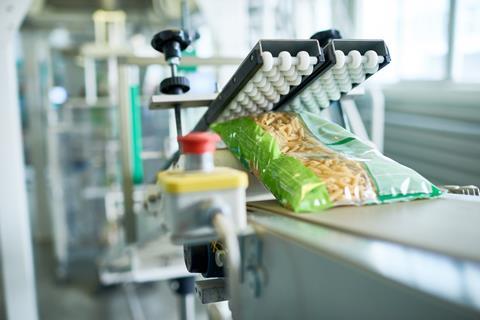
Mondelēz International, PepsiCo and pladis are taking part in a Belgium-wide trial assessing whether invisible digital watermarks could improve the sorting of flexible food packaging and support greater use of recycled material in food-contact applications.
The national-scale trial comes as food manufacturers adjust to the EU Packaging and Packaging Waste Regulation (PPWR), which began applying across the EU on 12 August 2026 and will introduce minimum recycled content requirements for certain plastic packaging categories.
Flexible food packaging remains particularly difficult to recycle into food-contact applications because recycled material must meet strict quality and safety requirements. One of the first challenges is identifying and separating suitable packaging accurately enough to create well-defined recycling streams.
The Belgian trial will test whether digital watermarks can help address that problem by allowing sorting systems to recognise characteristics including material type and whether packaging previously contained food.
“Food-contact recycled content is where the industry has some of the biggest challenges and the least time,” said Liz Morrish, Operations Director on the CEFLEX Leadership Team. “This trial moves testing from evidence-gathering into commercial reality, which is exactly what bridging the gap between ambition and the 2030 targets requires.”
What is a digital watermark?
A digital watermark is an imperceptible code incorporated across the surface of packaging during the printing process.
It can cover a large area of the pack and be detected by specialist cameras on sorting lines. Applying the watermark across the packaging surface can help it remain detectable even when the pack has been damaged or deformed.
In the Belgian trial, Digimarc watermarks can identify characteristics including:
- Material type
- Whether the packaging was used for food
- Other characteristics relevant to sorting
The aim is to help sorting facilities separate flexible packaging into more specific waste streams, potentially increasing the amount of material available for higher-quality and food-grade recycling.
Putting the technology through a real-world test
The project forms part of the HolyGrail 2030 – Circular Packaging Consortium, facilitated by AIM – European Brands Association and involving around 79 companies and organisations.
Fost Plus, which manages household packaging recycling and reuse in Belgium, is leading the sorting trials.
Flexible film collected through Belgium’s household recycling system is sorted before bales are sent to Hündgen Entsorgungs’ sorting centre in Germany. There, high-resolution cameras supplied by Pellenc ST detect the Digimarc watermarks and identify information about the packaging.
The project partners describe it as the first national-scale European trial involving flexible post-consumer packaging collected through a household recycling system.
Food-contact recycled content is where the industry has some of the biggest challenges and the least time. This trial moves testing from evidence-gathering into commercial reality, which is exactly what bridging the gap between ambition and the 2030 targets requires.”
Liz Morrish, Operations Director on the CEFLEX Leadership Team
That scale matters because packaging reaching sorting facilities may be crushed, folded or damaged. The trial will therefore assess whether the watermarks remain readable after packs pass through real-world collection and sorting systems.
For food manufacturers, improvements in recyclability must also preserve packaging’s primary functions, including protecting food, maintaining shelf life and reducing waste.
Russell Avens, Director, Breakthrough Packaging, Innovation and Technology at pladis, said: “Snack packaging has an important job to do: it protects product quality, keeps food fresh and helps reduce waste. The challenge is ensuring that packaging can also be identified, sorted and returned to use at scale without compromising the quality and safety consumers expect from food packaging. By contributing to HG2030, pladis is helping to build the practical, system-level evidence needed to move flexible food packaging from ambition to real-world circularity.”
Sorting is only the first hurdle
Even if the watermarks perform reliably, better sorting alone will not make flexible packaging suitable for food-contact reuse.
Under EU requirements for recycled plastic food-contact materials, collection and sorting form part of the pre-processing needed to create a well-defined plastic input before material undergoes decontamination.
More accurate identification could therefore provide recyclers with better-defined input streams, but recycling and decontamination processes must still remove contamination and produce material that meets food-contact safety requirements.
That remains a significant hurdle for flexible packaging. A 2026 Horizon Europe call on multilayer flexible food packaging states that there is not yet a market at scale for closing the loop from post-consumer flexible food-contact packaging back into food-contact applications.
The need to overcome those barriers is becoming more pressing. Under Article 7 of the PPWR, a 10 percent minimum recycled content target will apply to contact-sensitive plastic packaging made from materials other than PET, excluding single-use plastic beverage bottles.
The regulation sets the deadline at 1 January 2030 or three years after the relevant implementing act enters into force, whichever is later.
What this means for the industry
The Belgian trial could show whether digital watermarking can help create the better-defined waste streams needed for food-grade recycling.
If it succeeds, the next challenge will be establishing whether those more precisely sorted streams can deliver the volume, consistency and quality needed for viable food-to-food recycling.
Other projects are tackling related parts of that challenge. A Danish circular packaging project backed by Amcor is examining how rigid household PP and HDPE food packaging could be recycled back into food-grade applications.
Together, these efforts highlight the different stages involved in returning post-consumer food packaging to food-contact use. Better identification and sorting could improve the starting material, but recycling and decontamination technologies must develop alongside them, with coordination between food manufacturers, packaging converters, waste operators, sorting facilities and recyclers.
Dominika Maruszak-Dankbaar, Sr. Packaging Sustainability Manager, Global Foods R&D at PepsiCo, said: “Flexible plastic packaging remains one of the more complex areas of packaging circularity, and progress will require collaboration across the entire value chain. Through HolyGrail 2030, PepsiCo is working alongside partners to explore how digital watermarking could support more effective sorting and help generate the real-world insights needed to evaluate pathways towards more circular packaging systems. Initiatives like this are important because no single company can drive this kind of system change alone.”
Key takeaways
- National-scale test: The trial will assess digital watermarks on flexible packaging collected through Belgium’s household recycling system.
- Better identification: Watermarks could help sorting facilities distinguish food packaging and create more targeted recycling streams.
- One part of the solution: Better sorting must still be matched by recycling and decontamination processes capable of producing food-safe recyclate.
- Regulatory pressure: PPWR recycled content targets are increasing the need for scalable food-contact packaging recycling solutions.




Topics
- Automation, AI & digital manufacturing
- Decarbonisation, energy & utilities
- Enforcement, policy & governance
- Food waste, by-products & circularity
- Mondelēz International
- Packaging & product protection
- Packaging operations (line-side)
- PepsiCo
- Pladis
- Processing & manufacturing
- Shelf life, spoilage & integrity
- Sustainability & supply chain resilience








No comments yet