



A study of 24 households across seven countries has found that overfilled fridges, poorly designed packaging and ingrained storage habits are significant drivers of household food waste.
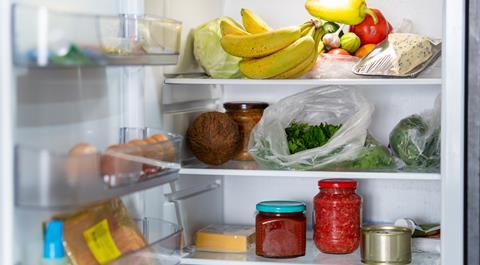
Household food waste may be influenced as much by the design of fridges and food packaging as by consumer behaviour, according to researchers at Linköping University (LiU) in Sweden.
The study suggests that information campaigns alone are unlikely to tackle the problem, arguing that food storage systems and packaging need to reflect how people actually use their fridges.
The research examined the fridge habits of 24 households across seven countries, including South Africa, Spain, Iran and Sweden. Participants submitted 47 photographs showing the contents of their fridges on different occasions and were subsequently interviewed about their shopping and storage habits.
Overfilled fridges lead to forgotten food
One of the first things to emerge was how similar the photographs looked, despite the households being based in different countries. Buying large quantities of food and overfilling fridges appeared to be common practices.
This often made it difficult for people to see what they already had. Food placed at the front was more likely to be used, while products pushed to the back could be forgotten until they had spoiled and needed to be discarded.
The interviews also revealed that participants frequently relied on memory when shopping rather than checking their fridge beforehand. This increased the likelihood of buying products they already owned, particularly when storage spaces were crowded.
Convenience also influenced where food was stored. Rather than organising products according to specific requirements, participants tended to put items wherever they fitted, keeping frequently used products within easy reach.
Milk, for example, was often stored in fridge doors, despite this being a warmer area that is less suitable for keeping certain products fresh.
Packaging and storage design contribute to waste
The researchers also identified how packaging can make it harder to manage food once it has been brought home.
Packages often lost their original function as sources of information when placed inside crowded fridges. Bulky designs made products difficult to stack and could block labels, expiry dates and storage instructions.
Some packaging also made food easier to forget. Brown paper bags used for fruit and vegetables were one example, as their contents were less visible once stored away.
Almost none of the participants considered how much space was available in their fridge when shopping, instead assuming there would always be room for additional products.
Babak Nemat, a postdoctoral fellow at LiU’s Division of Product Realisation, described the fridge as a kind of ’moral black hole.’
“When people put goods in the fridge, they seem to think their responsibility is over. It’s now the responsibility of the fridge,” he said.
Rethinking how fridges and packaging are designed
The researchers argue that reducing household food waste requires a shift away from viewing it solely as an information or consumer awareness problem.
Instead, they suggest that manufacturers should consider how packaging interacts with crowded storage spaces, while fridge designs could help encourage better organisation and make forgotten products easier to identify.
Professor Renee Wever, from the Division of Product Realisation at Linköping University, highlighted the wider environmental implications.
“One third of all food produced worldwide is wasted. In the Western world, most of the waste takes place in the shops or in households. It has a huge impact on the environment and climate,” she said.
The researchers caution that their findings should be interpreted carefully because the study was exploratory and involved a relatively small number of households. Nevertheless, they suggest that designing fridges and packaging around real consumer habits could form part of wider efforts to reduce food waste.










No comments yet