

A practical guide for QA, QC and laboratory leaders navigating rapid reformulation, complex matrices and escalating regulatory scrutiny.
Featuring strategic insights and perspectives from:
Mondelēz Europe | Pladis UK & I | McCain Foods | Food Forensics | Waters Corporation
Testing programmes rarely become complex overnight. They build layer by layer.
A past incident leaves a test behind. A customer requests additional reassurance. A formulation changes. Over time, testing protocols expand in cost and operational weight without necessarily delivering sharper visibility into current risk.
With food safety alert notifications rising, supply chains exposed and reformulation cycles accelerating, quality and laboratory leaders are under mounting pressure to make testing work harder: identifying emerging hazards earlier, accelerating batch decisions and proving the return on analytical investment.
“Due diligence will always be a necessity… but the meaningful shift is in the growing need to build more probability-based testing programmes.”
— Nia Owen-Cortez, Vice President Quality Assurance, Mondelēz Europe
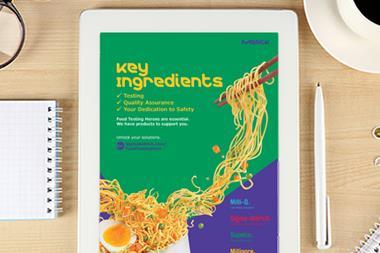
The What Food Manufacturers Need from Testing in 2026 report examines how leading manufacturers are moving beyond static, retrospective spot-checks to build data-led, predictive testing strategies.
What you will learn inside the report
- Rationalise your testing programme: How to challenge accumulated tests, eliminate redundancy and align testing spend directly with current risk profiles.
- Move from retrospective to predictive testing: How leading teams use trend data and historical patterns, such as raw material storage degradation, to adapt processing before inconsistencies reach finished goods.
- Handle low concentrations and complex matrices: Strategies to overcome baseline noise, co-eluting compounds and matrix interference when validating critical claims, such as lactose-free or allergen-free.
- Make faster, defensible batch decisions: How to equip laboratory and QA teams with the analytical speed, compound identification confidence and reproducibility needed to make informed decisions on a busy production line.
Cross-industry perspectives from industry leaders:
- Nia Owen-Cortez – Vice President Quality Assurance, Mondelēz Europe
- Darshana Desai Mestry – Head of Quality & Food Safety, Pladis UK&I
- Tola Alade-Lambo – Quality & Technical Leadership, McCain Foods
- Alison Johnson – Founder & Technical Director, Food Forensics
- Euan Ross – Market Development Manager, Food & Environment, Waters Corporation
- Ian Westcott – Technical & Editorial Contributor, New Food
Is your testing programme delivering the evidence you need?
Discover how industry leaders are turning testing data into proactive operational confidence and how your own testing strategy could evolve in 2026.
Download Now
What food manufacturers need from testing in 2026: smarter decisions, stronger assurance



Topics
- Allergens & free-from risk
- Analytical testing (LC/GC/MS)
- Automation, AI & digital manufacturing
- Contaminants & residues
- Food Forensics
- Food fraud & authenticity
- Food safety & integrity
- McCain
- Mondelēz International
- Pathogens & microbiology
- Pladis
- Process design & scale-up
- Processing & manufacturing
- QA/QC systems (HACCP, FSMS)
- Quality systems & testing
- Rapid methods & microbiology testing
- Waters Corporation