

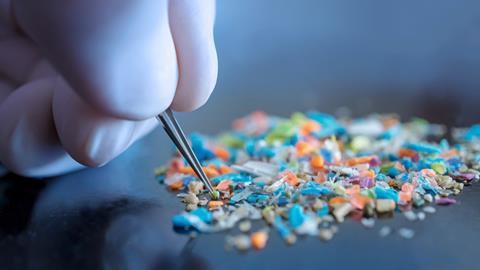

Defined as plastic particles smaller than five millimetres, the food industry and consumers alike are well versed in the ubiquitous nature of microplastics. But to what extent can we trust the headlines? Against a long history and well-established safety profile, Laura Stewart, Executive Director at NAPCOR, argues that sound scientific validation is needed if we are to draw meaningful conclusions about PET.
Microplastics have become one of the most discussed topics in food and beverage packaging. Hardly a week passes without a new headline warning of particles found in our water, our food and even our bodies.
Some of those headlines may ultimately prove significant, while others may not. The challenge is that it is often difficult to tell the difference.
The issue stems from the fact that microplastics research still lacks standardised methods. For policymakers, food manufacturers, packaging producers and consumers alike, meaningful progress will depend not only on conducting more research, but on ensuring that research is built on common scientific foundations.
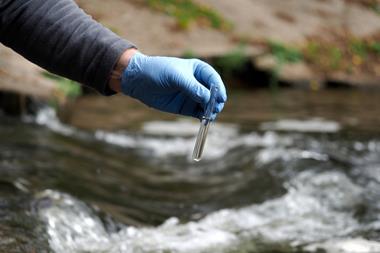
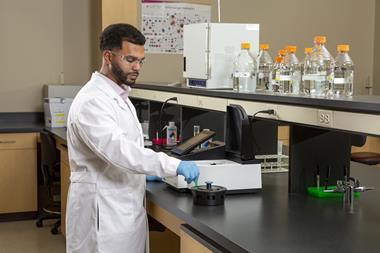
Scientists around the world are working with different definitions, sampling techniques, contamination controls, particle-size thresholds and analytical tools. As a result, studies can produce dramatically different findings, making comparisons difficult and conclusions uncertain.
Detecting particles is not the same as demonstrating risk. The public deserves to understand this nuance, especially when making decisions about food and beverage safety.”
We have already seen the consequences. Last year, headlines around the world reported that the average human brain contained the equivalent of a “plastic spoon” worth of microplastics. The finding generated enormous public concern. Yet subsequent scientific critiques questioned whether the methods used in that study could reliably distinguish microplastics from naturally occurring biological materials and whether sufficient controls were in place to rule out contamination. The episode illustrates a larger problem: preliminary findings can quickly become accepted facts before the underlying science has been fully validated.
This matters; particularly when discussions turn to food and beverage packaging. These are materials people rely on every day, making it especially important that public conversations are grounded in accurate, evidence-based information.
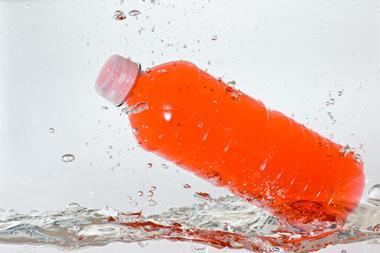
Polyethylene terephthalate (PET) plastic, identifiable by the #1 resin code, is one of the most extensively studied food-contact materials in the world. It has been safely used for food and beverage packaging for decades and remains approved by the US Food and Drug Administration, European Food Safety Authority, Health Canada and other regulatory agencies globally. PET packaging plays an essential role in modern public health, protecting food from contamination and extending shelf life, reducing food waste and enabling safe transportation of food and beverages across long distances.
While studies continue to explore the presence of microplastics, leading health authorities have consistently stated that evidence of adverse human health effects from current exposure levels remains limited and inconclusive. Detecting particles is not the same as demonstrating risk. The public deserves to understand this nuance, especially when making decisions about food and beverage safety.
Yet PET is often swept into broader conversations about plastics as if all materials share the same chemistry, safety profile and regulatory history. They do not. Virgin PET does not contain bisphenol A (BPA), phthalates or per- and polyfluoroalkyl substances (PFAS). Both virgin and recycled PET undergo extensive review before being approved for food-contact applications. Four-plus decades of scientific evaluation continue to support its safe use.
Beyond its long-established safety profile, PET is also one of the few packaging materials with a proven pathway to circularity. PET is the most recycled plastic in the world and one of the only packaging materials capable of true bottle-to-bottle recycling. A used PET bottle can be collected, processed and remade into a new food-grade bottle while maintaining its essential performance characteristics.
Conversation around microplastics is important. It deserves rigorous science, thoughtful debate and careful reporting. Industry, regulators, academic researchers and public health experts all have a role to play in advancing our understanding of microplastics. Thus before we draw sweeping conclusions, we must ensure that researchers are measuring the same thing, in the same way, and are interpreting the results through the same scientific lens.
Science advances through precision, transparency and evidence. NAPCOR supports continued research and the development of standardised methods that can strengthen confidence in the findings. Better science will lead to better decisions – for consumers, for food manufacturers and for the environment.



No comments yet