



Few things spread fear more effectively than mistrust of the food supply. Professor Chris Elliott demonstrates how decisive cold chains are to the safety of food systems and why their protection must be a top priority and collective effort.
From experience, food security is often discussed through the lens of agricultural production, climate change, trade disruption, sustainability, food fraud and increasingly, artificial intelligence (AI). While all of these issues are critically important, there is another component of the global food system that receives remarkably little attention despite underpinning the safety, quality and availability of food consumed by billions of people every day. That component is the cold chain.
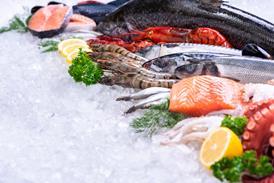
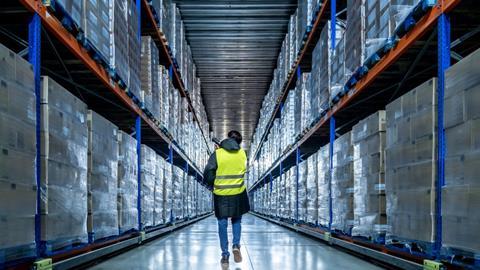
Most of us think of cold chains as refrigerated lorries, cold stores and the chilled and frozen food sections in shops and supermarkets. In reality, they represent one of the most important pieces of critical infrastructure in the modern world. Few innovations have transformed the global food system as profoundly as the cold chain; from the first refrigerated shipping routes in the 1870s to today’s highly sophisticated global refrigeration networks, cold-chain technologies have enabled the safe movement of perishable foods across vast distances in an affordable way. They have fundamentally reshaped food security, international trade and consumer choice. Without them, a plethora of various food types such as fresh meat, seafood, dairy products, fruits, vegetables and many processed foods would quickly spoil, creating enormous challenges for food security, public health and economic stability.
The Food and Agriculture Organization of the United Nations and the UN Environment Programme have highlighted the vital role that cold-chain systems play in reducing food losses, improving food availability and supporting sustainable food systems worldwide. Similarly, the World Economic Forum has described sustainable cold chains as an essential component of future food security strategies, particularly as populations continue to grow and food supply chains become increasingly globalised. Yet despite this massive importance, from my own experience, cold chains remain one of the least discussed vulnerabilities within modern food systems.
Most of us think of cold chains as refrigerated lorries, cold stores and the chilled and frozen food sections in shops and supermarkets. In reality, they represent one of the most important pieces of critical infrastructure in the modern world.”
Backbone of the global food system
Food systems today are incredibly complex and interconnected. Often livestock can be reared in one country, crops harvested in another, with the major commodities produced and processed in several other countries, stored in even more countries and consumed thousands of miles away in a still greater number of countries. Cold chains make this possible. Every stage of the often long journeys depends upon refrigeration systems operating reliably and continuously. Any interruption can have immediate consequences for food quality, safety, availability and economic viability. However, the cold chain itself depends on a much wider network of supporting infrastructure, including energy (electricity and fuel) supplies, telecommunications systems, cloud computing platforms, transport networks, industrial control systems and increasingly sophisticated digital technologies. The UK’s National Protective Security Authority (NPSA) recognises food as one of the country’s critical national infrastructure sectors, reflecting the fundamental role food systems play in maintaining societal stability and national resilience. The daunting challenge is that as food systems have become more sophisticated, they also become more vulnerable on a number of fronts.
Cybercrime: a growing and underestimated threat
I believe one of the fastest-growing threats facing cold-chain infrastructure is cybercrime. Over the past decade, the food sector has undergone a rapid digital transformation. Temperature monitoring systems, automated warehouse management platforms, cloud-based logistics software, remote sensor networks and AI-driven optimisation tools have become increasingly common. These technologies have undoubtedly brought enormous benefits: they improve efficiency, reduce waste and enhance traceability. However, they also create new opportunities for cybercriminals. At a recent food industry event I attended, a very knowledgeable and reliable source told me that it’s estimated up to 40 percent of the UK’s medium and large food manufacturing and retail base has suffered some form of cyberattack over recent years. This shouldn’t really come as a surprise since the US Cybersecurity and Infrastructure Security Agency (CISA) has repeatedly warned that food and agriculture organisations are becoming increasingly attractive targets for cyberattacks because disruption can have immediate and widespread societal impacts. Ransomware attacks are of particular concern. Recent reports from the Food and Agriculture Information Sharing and Analysis Center indicate a substantial increase in ransomware activity targeting food and agriculture organisations during the past two years. Criminal groups are increasingly focusing on operational technology systems that directly control production, storage and distribution activities.
For a cold-chain operator, the consequences can be severe. Imagine a scenario where attackers gain access to a major refrigerated distribution centre. Temperature monitoring systems could be manipulated, refrigeration controls could be disabled, inventory records could be corrupted, transport scheduling systems could be locked or encrypted. The potential for large-scale food spoilage may occur before operators even realise that a systems breach has taken place. Unlike traditional cyberattacks that focus on stealing data, attacks on food infrastructure can directly impact food safety and food availability.
When food becomes a strategic target
Historically, governments have tended to view energy infrastructure, telecommunications networks and defence facilities as the primary targets for hostile state actors. Food infrastructure has often received less attention and there’s a feeling the Government considers it an issue for industry to deal with alone. This may prove to be a dangerous assumption. Recent assessments by the UK’s National Cyber Security Centre (NCSC) have highlighted the growing threat posed by state-sponsored cyber activities directed at critical infrastructure systems. The NCSC has warned that hostile states are actively probing and testing vulnerabilities across a range of sectors that support national resilience. Societies depend on a continuous supply of safe and affordable food. Significant disruption to food distribution networks, cold-storage facilities or logistics systems are likely to rapidly undermine public confidence and create economic instability. Unfortunately, I have very little doubt that in a future geopolitical crisis, food infrastructure will become an attractive target because of the widespread societal disruption it would cause. The objective is unlikely to be long-term destruction; the real danger of a deliberate attack on the UK’s cold chain is not about the number of people directly affected, but the potential to shatter public confidence in national food security. Much like a terrorist incident, its greatest impact may be the fear and uncertainty it creates across the entire nation.
As geopolitical tensions continue to rise globally, food businesses must recognise that they operate within a much wider national security landscape. As World Economic Forum President Børge Brende recently observed, the world is experiencing a “geopolitical recession” marked by increasing fragmentation, competition and instability, with many experts expecting a turbulent global environment for years rather than months to come.
The emerging threat of hybrid attacks
One of the most concerning developments in recent years has been the rise of so-called ‘hybrid threats’. Hybrid attacks combine multiple forms of disruption, including cyberattacks, misinformation campaigns, physical sabotage and economic coercion. Rather than relying on a single mode of attack, bad actors seek to exploit several vulnerabilities simultaneously.
Imagine a hypothetical scenario involving a major cold-storage hub: a cyberattack disables temperature monitoring systems while a coordinated misinformation campaign spreads false reports of widespread food contamination that could lead to serious illness. At the same time, physical access controls are compromised, delaying recovery efforts. Individually, each event may be contained to some degree but together, they can create a cascading crisis that pushes companies to their limits in their attempts to tackle them. Food businesses have traditionally focused on food safety hazards, fraud risks and operational resilience. Increasingly, they must also prepare for threats that originate far beyond standard risk management frameworks.
Climate change and infrastructure stress
While cyber threats are rightfully receiving growing attention, climate change continues to place additional and substantial pressures on critical infrastructure. Extreme heat events increase demand for refrigeration and place greater strain on electricity networks. Flooding can isolate distribution centres and damage transport infrastructure. Severe storms can interrupt power supplies and delay logistics operations. The UK Parliamentary Office of Science and Technology has identified climate resilience as a major challenge for critical infrastructure planning over the coming decades. I firmly believe that for cold-chain systems, the challenge is particularly acute. As temperatures rise, refrigeration becomes even more important, yet its supporting infrastructure becomes increasingly vulnerable to climate-related disruption. The result is a growing dependence on systems that may themselves be under greater stress than ever before.
History repeatedly teaches us that the greatest disasters are often not those we fail to foresee, but those we foresee and choose not to prepare for.”
Building resilience for the future
The strategic importance of cold-chain infrastructure is only just starting to dawn on policymakers, yet politically the raging debates that dominate the airwaves centre around defence budgets, energy independence and military capability. Despite warnings, food and water security remain largely absent from national resilience planning, despite their fundamental importance to public wellbeing, safety and economic stability. Consequently, the burden of protecting cold-chain infrastructure rests heavily on the food industry, yet in an era of escalating cyber threats, hostile state activity and climate disruption, resilience can no longer be delivered by individual companies acting alone, no matter their size. Thankfully, in a UK context, the Cold Chain Federation has become increasingly vocal about both cybersecurity threats and climate-related risks. In tits very recent and very good whitepaper, The Critical Link, the Federation explicitly identifies cyberattacks as one of the major threats facing the UK’s cold chain alongside climate impacts, energy instability, labour shortages and geopolitical conflict. The paper outlines that disruption to cold-chain operations could rapidly affect food availability, affordability and access to essential products – precisely the points I have tried to convey in this article.
Food security is often described as one of the defining challenges of the twenty-first century. Yet discussions on the subject rarely mention cold chains. Perhaps we all should do more: scenario planning around the next major food security crisis we face; acknowledging that it could begin with a ransomware attack on a refrigerated warehouse or a hostile state actor targeting critical infrastructure. It could emerge from a prolonged power outage, a climate-driven infrastructure failure or a coordinated attack on logistics systems. It could of course involve all of these at once – what a frightening thought….
History repeatedly teaches us that the greatest disasters are often not those we fail to foresee, but those we foresee and choose not to prepare for. Unless we begin treating cold-chain resilience as a strategic national priority, today’s warning signs may quickly become tomorrow’s food security crisis.




Topics
- Enforcement, policy & governance
- Food fraud & authenticity
- Food safety & integrity
- Logistics, cold chain & disruption
- Processing & manufacturing
- Refrigeration, freezing & cold chain ops
- Regulation, labelling & compliance
- Sustainability & supply chain resilience
- Traceability, transparency & compliance
- Trade, economics & market risk







No comments yet