



Thousands of compounds, a compliance environment that shifts at both federal and state level, and exposure routes that begin long before food reaches a factory gate, PFAS were always going to be a difficult problem. What is becoming clearer is just how long the food industry will be living with them – and how much the science of detecting them will have to keep pace.
The story of per- and polyfluoroalkyl substances (PFAS) is one of chemistry outpacing caution. First synthesised in the late 1930s, these compounds were widely adopted for their stability, water and heat resistance, and non-stick properties. Internal industry documents later revealed that toxicity concerns were identified by manufacturers decades before regulatory action. By the time the science became widely accepted, PFAS were already embedded in food-contact packaging, coatings, firefighting foams and the wider environment.
Through the mid-20th century, PFAS use expanded across consumer and industrial applications, including cookware, textiles and food packaging. By the 1970s, internal research from major manufacturers had begun to indicate toxicity and bioaccumulation risks. However, much of this evidence only became public through litigation, most notably cases linked to DuPont’s PFOA emissions in Parkersburg, West Virginia. The resulting settlement of more than $670 million marked a significant point in both public awareness and regulatory momentum.
The term ‘forever chemicals’ reflects their persistence. PFAS are highly resistant to environmental degradation and can accumulate in soil, water and living organisms over time. As a result, legacy contamination from historic industrial use continues to be detected in food systems today.
PFAS comprise thousands of compounds sharing a carbon-fluorine backbone that gives them their persistence, but with wide variation in structure, toxicity and environmental behaviour.”
A group of thousands, not one
PFAS comprise thousands of compounds sharing a carbon–fluorine backbone that gives them their persistence, but with wide variation in structure, toxicity and environmental behaviour. This diversity creates a fundamental challenge for both regulation and analysis.
Regulatory frameworks typically focus on defined target lists. However, as legacy compounds such as PFOA and PFOS have been phased out, structural substitutes have emerged, often with similar concerns. This pattern of substitution means the analytical challenge continues to evolve.
Effective monitoring therefore requires programmes that are not fixed to static compound lists, but are capable of adapting as scientific understanding and regulatory expectations expand. On 18 June, the Nestlé Quality Assurance Center will host a complimentary webinar, Addressing PFAS in Food: Scientific Perspectives on a Complex Challenge, bringing together regulatory context and analytical practice to explore how laboratories and food manufacturers are responding to this evolving issue.
A moving target at federal and state level
In the US, PFAS regulation is shaped by overlapping federal and state requirements.
At federal level, the Environmental Protection Agency (EPA) has established drinking water standards for key PFAS compounds including PFOA and PFOS. The US Food and Drug Administration (FDA) continues to monitor PFAS in food, with Import Alert 99-48 increasing scrutiny of imported products where contamination is suspected.
At state level, requirements vary and are tightening independently. Maine has set maximum levels for PFAS in milk, beef and fish. Other states including New Hampshire, New York, Michigan and California have introduced or are developing their own standards.
For national manufacturers, this creates a need to align with the most stringent applicable requirements across jurisdictions.
Internationally, the EU continues to develop some of the most comprehensive PFAS controls. From August 2026, the EU Packaging and Packaging Waste Regulation is set to introduce restrictions on PFAS in food-contact packaging above defined thresholds. Maximum limits for key compounds in certain foods have been in place since 2023. Mandatory PFAS monitoring under the EU Drinking Water Directive took effect in January this year, and a broader restriction proposal is under review at the European Chemicals Agency (ECHA).
Given the global nature of food supply chains, regulatory divergence is increasingly difficult to isolate geographically.
Addressing PFAS in Food: Scientific Perspectives on a Complex Challenge
June 18, 2026 1:00-2:00 PM EDT
PFAS, often called “forever chemicals,” have moved from early scientific discovery to a major focus of regulatory and public concern. This webinar provides a brief look at the evolution of PFAS over the last 100 years, including key regulatory developments and how laboratories are responding to growing testing and monitoring needs. Learn how Nestlé, as the world’s largest food and beverage company, is addressing this challenge - and how the Nestlé Quality Assurance Center (NQAC) Dublin is supporting efforts to identify and reduce potential PFAS exposure through scientific and analytical expertise.
What you’ll learn:
- A brief history of PFAS and why they remain a focus of scientific and regulatory concern
- Key regulatory trends impacting PFAS testing and monitoring
- How laboratories are adapting methods and capabilities to meet emerging requirements
- NQAC Dublin’s role in supporting Nestlé’s broader PFAS risk‑reduction efforts
Exposure begins well before the factory gate
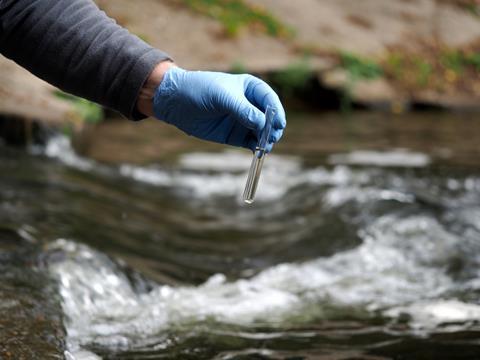
PFAS exposure in food systems often begins upstream of manufacturing. In addition to food-contact materials, pathways include contaminated irrigation water, biosolids used in agriculture, and environmental persistence in soil and groundwater.
Documented cases across the US and Europe have shown PFAS entering milk, meat and produce via contaminated farmland, often linked to historical industrial activity rather than current production processes.
This shifts risk management beyond finished product testing. Supply chain origin, production water quality and land-use history are increasingly relevant to due diligence frameworks.
Why food is harder to test than water
PFAS analysis in food presents significantly greater complexity than water testing due to matrix variability and contamination risk.
Water methods such as EPA 533 and 537.1 are well established and standardised. Food matrices vary widely in fat, protein and carbohydrate content, requiring more complex extraction and preparation techniques such as alkaline digestion, solid-phase extraction, or QuEChERS-based methods.
Each step introduces potential contamination risk, as PFAS are widely present in laboratory environments as well. Consequently, achieving a clean analytical blank is not always straightforward.
Effective monitoring requires programmes that are not fixed to static compound lists, but capable of adapting as scientific understanding and regulatory expectations expand.”
Detection requirements are also more stringent in certain categories. Infant and baby-food testing may require low parts-per-trillion sensitivity, exceeding standard environmental thresholds.
Analytical scope is also expanding. While targeted LC-MS/MS remains the primary regulatory method, broader screening approaches such as total fluorine or extractable organic fluorine analysis are increasingly used to complement targeted testing.
It is also notable that no single fully harmonised EU-wide method is currently in place for PFAS testing in food packaging, placing greater emphasis on laboratory-specific method development and validation.
Building programmes that keep pace
PFAS testing strategies are increasingly multilayered. Targeted LC-MS/MS provides quantitative regulatory compliance data, while broader screening approaches support identification of unknown or emerging compounds.
No single method is sufficient on its own. Instead, effective programmes combine targeted precision with broader screening capability, supported by continuous method development as regulatory requirements evolve.
Scientific depth as a competitive asset
PFAS management is both a regulatory and scientific challenge. Compliance thresholds are increasing, enforcement scrutiny is intensifying and reputational risk is significant.
However, the most effective responses are not defined solely by regulatory alignment, but by scientific capability – particularly in understanding how analytical methods must evolve alongside the expanding PFAS universe.
As the largest and most sophisticated testing facility in the Nestlé global network – and the lead quality assurance centre for Nestlé’s businesses throughout the Americas – NQAC has developed validated PFAS testing capabilities across a range of food matrices including baby foods, dairy, meats, fish, oils, coffee and pet food. These include targeted and infant-specific methods designed to support monitoring at levels aligned with current regulatory expectations.
The ‘forever’ in forever chemicals describes not only their environmental persistence, but the sustained scientific and regulatory challenge they present. For the food industry, PFAS management is not a temporary compliance exercise but an evolving analytical requirement.
The organisations best positioned to respond are those building long-term scientific capability rather than reacting to individual regulatory thresholds.
To explore these issues further, the Nestlé Quality Assurance Center webinar on 18 June will examine how laboratories and food manufacturers are adapting to this complex and evolving challenge, bringing together regulatory context and analytical practice to explore how laboratories and food manufacturers are responding to this evolving issue.