




The US Department of Health and Human Services proposes mandatory GRAS notifications, with enforcement questions and the UPF definition still unresolved.

The US Government has proposed requiring food manufacturers to notify the Food and Drug Administration (FDA) of Generally Recognized as Safe (GRAS) determinations, while advancing the country’s first proposed federal definition of ultra-processed foods (UPFs).
The US Department of Health and Human Services (HHS) announced the measures on 10 August alongside the US Department of Agriculture (USDA). Under the proposed FDA rule, manufacturers would have to notify the agency when they conclude that a substance added to human or animal food is GRAS. Companies can currently make their own GRAS determinations without submitting them to the regulator.
HHS and USDA have also submitted a proposed federal UPF definition for final review following stakeholder consultation but have not published the definition itself.
Neither measure is final. The GRAS requirements remain a proposed rule, while the UPF definition still requires further review and publication.
Acting FDA Commissioner Kyle Diamantas said: “By proposing mandatory GRAS notifications, we are closing critical information gaps and giving the FDA greater visibility into substances entering the food supply. By advancing a proposed definition of ultra-processed foods, we seek to create a stronger foundation for future nutrition research.”
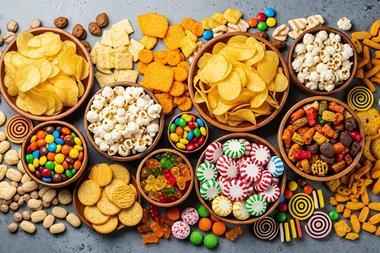
HHS Secretary Robert F. Kennedy Jr added: “Nearly 60 percent of the American diet is made up of ultra-processed foods, and childhood obesity now affects more than one in five American children.
“We cannot reverse America’s chronic disease epidemic without transforming our food system. These historic actions bring greater transparency to what’s in our food and stronger science to federal nutrition policy. President Trump and I promised to Make America Healthy Again, and today we are turning that promise into policy.”
GRAS oversight moves towards mandatory disclosure
Congress established the GRAS exemption in 1958, allowing substances considered generally recognised as safe under their intended conditions of use to avoid the pre-market approval requirements applied to food additives.
The FDA currently operates a voluntary notification programme, meaning businesses can independently conclude that an ingredient is GRAS without telling the regulator. The proposed rule would make notification mandatory and expand the publicly available inventory of submitted notices.
It would also create a time-limited streamlined process for substances already marketed under independent GRAS conclusions, allowing manufacturers to submit information on existing uses.
For food businesses, the change could bring previously undisclosed determinations under greater regulatory and public scrutiny and require companies to review the evidence and documentation supporting existing and future ingredient decisions.
We cannot reverse America’s chronic disease epidemic without transforming our food system. These historic actions bring greater transparency to what’s in our food and stronger science to federal nutrition policy.
President Trump and I promised to Make America Healthy Again, and today we are turning that promise into policy.”
HHS Secretary Robert F. Kennedy Jr
However, food safety advocates argue the proposal leaves a significant gap because manufacturers would still not need FDA clearance before bringing a GRAS substance to market.
Dr Peter Lurie, President of the Center for Science in the Public Interest (CSPI) and previously Associate Commissioner for Public Health Strategy and Analysis at the FDA, welcomed greater transparency but argued the proposal did not go far enough.
“The proposed rule will still allow companies to sell products before or during the process of submitting a GRAS notice to FDA,” Lurie said, describing the absence of a requirement to secure FDA approval before going to market as “one of the fundamental flaws in the existing system.”
He also questioned how the agency would police the new requirement, saying it remained unclear how FDA would enforce a notification provision characterised as mandatory.
Lurie added: “Mandatory without enforcement is not mandatory at all.”
The proposal follows growing scrutiny of US ingredient oversight. A March 2026 analysis highlighted more than 100 substances reportedly entering US foods without FDA review, intensifying debate around independent GRAS determinations.
Federal UPF definition remains under wraps
The second strand of the announcement could have wider implications for US nutrition policy, but significant questions remain because HHS and USDA have not published the proposed definition.
The administration says a standardised federal definition could improve consistency across nutrition research. Until the definition is published, however, it remains unclear which characteristics federal agencies will use to classify a food as ultra-processed.
A federal definition would not itself introduce labelling requirements, formulation restrictions or product bans. However, by establishing a common reference point for research, it could eventually inform wider measures such as dietary guidance, procurement or other food policy.
That prospect is increasingly relevant to manufacturers. The 2025–2030 Dietary Guidelines for Americans encourage reduced consumption of highly processed foods, while earlier this year California moved to restrict certain ultra-processed foods in school meals.
For industry, much will therefore depend on what the eventual federal definition captures and how agencies choose to apply it.

















No comments yet