



The summer of 2026 is signalling a serious warning about the resilience of our food system. While highlighting our current plight, Chris Elliott describes how the coming months will reveal the full extent of the impact of global events on our food supply; suggesting remedial strategies with win-win benefits.
For some time I have warned that the UK is heading towards a potentially serious food security crisis – and while I may occasionally have sounded like ‘the boy who cried wolf’, that wolf is now determinedly approaching the door. For many years, whenever concerns have been raised about the security of Britain’s food supply, there has been a reassuring response across governments. Buoyed by the presumption that the UK has some of the world’s most sophisticated farmers, food manufacturers and retailers; our international supply chains are highly developed; and with global markets proving remarkably adaptable, somehow, everything has been OK. These assumptions are now proving to be false – belonging in history books and not government strategy.
There is a dangerous assumption buried within this model: that somebody, somewhere, will always have the food we need and will be willing and able to sell it to us.”
Widespread drought
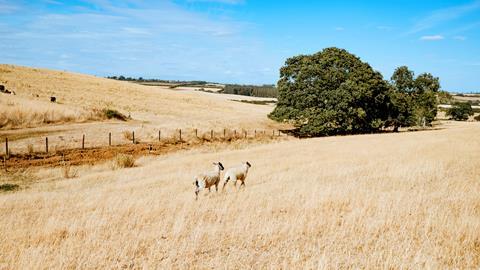
The summer of 2026 must be regarded as a very serious warning about the resilience of our food system. Almost three-quarters of England is now officially in drought. On 10 August, the Environment Agency reported that over 71 percent of the country was in drought, with all regions experiencing pressure on water resources with increasing impacts on agriculture, public water supplies and the environment.
The Burnham-led government is offering farmers financial support, which is a positive move but it would be a mistake to view the drought simply as a British agricultural problem. What concerns me greatly is the convergence of a series of threats, each capable of stressing our food system independently yet potentially having severe consequences if interacting with each other. We are experiencing accelerating climate change effects and increasingly extreme weather patterns. We have continuing wars around the globe and growing geopolitical instability. We have vulnerabilities around some of the world’s most important maritime trading routes, while remaining extremely dependent on internationally traded fertilisers, animal feed, energy and other critical inputs. And now another major climatic threat is developing: El Niño.
El Niño impact is strengthening
The latest assessment from the US National Oceanic and Atmospheric Administration (NOAA) is particularly concerning, having confirmed in August that El Niño is present and strengthening. Its latest assessment gives a greater than 90 percent chance of a very strong El Niño during the Northern Hemisphere autumn and winter of 2026–27. There is even close to a 70 percent probability during October–December that the event will reach a level that exceeds previous El Niño events in records going back to 1950.
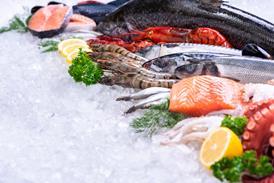
Why should this matter to UK food security? Because El Niño could potentially disrupt agricultural production thousands of miles away from Britain, in places that produce commodities upon which international food markets depend. Its impacts vary greatly according to geography and from one event to another, but changes in rainfall, drought, flooding and temperature can affect the production of major crops and commodities. Fisheries will almost certainly also be badly affected. The danger is therefore not necessarily the one catastrophic harvest failure we are currently facing but the multiple shocks occurring simultaneously across a food system already under considerable pressure.
International trade is not a given
The Government’s own UK Food Security Report 2024 gives us plenty of reasons to be concerned. It concluded that extreme weather continues to have a significant impact on domestic production, while the UK remains highly dependent on imports to satisfy demand for fruit, vegetables and seafood. It also identified declining natural capital, geopolitical instability and single points of failure within food supply chains as important resilience risks. International trade has served the UK extraordinarily well and will continue to be essential to our food security. It gives consumers enormous choice and allows supplies from overseas to compensate when domestic production struggles. But there is a dangerous assumption buried within this model: that somebody, somewhere, will always have the food we need and will be willing and able to sell it to us. That assumption needs challenging. The scale of our exposure to international markets is substantial. In 2025, UK imports of food, feed and drink were worth £67.8 billion – an increase of £3.1 billion in real terms compared with 2024. The UK’s trade deficit in food, feed and drink widened to £42.1 billion. Fresh fruit and vegetables alone accounted for £8.2 billion of imports.
Imports are not inherently a weakness and in reality the UK cannot even be close to being self-sufficient in food production. Diversity of supply is an important component of resilience. But dependence on international markets becomes a vulnerability when multiple producing regions are affected simultaneously. Many of these are countries supplying Britain.
The UK Food Security Report specifically identifies this problem. Britain imports substantial quantities of fruit and vegetables from countries such as Spain and Morocco, where water stress is around 40–50 percent. Spain is particularly important. In 2023 it provided 84 percent of UK lettuce imports, 37 percent of lemons and limes, 33 percent of oranges and 30 percent of total fresh or chilled vegetable imports. The same government assessment describes drought and water stress as already challenging Spanish agricultural production.
So what happens if Britain experiences a poor harvest at the same time other European countries suffer drought? We will soon find out as this is the situation we are now facing. What happens if El Niño then reduces production of important commodities elsewhere in the world? We will also learn the consequences of this over the coming months extending into the next two years. And what happens if, simultaneously, another geopolitical event disrupts another major maritime chokepoint or causes another spike in energy and fertiliser prices? The odds of this happening are reducing day upon day.
We should remember just how quickly Russia’s invasion of Ukraine affected the food system. The UK Food Security Report found that the invasion caused major increases in energy and fertiliser costs, contributing to business uncertainty and eventually the highest spike in UK food inflation for 45 years. UK farm fertiliser costs increased from £1.5 billion in 2021 to £2 billion in 2022.
Food security minister – a UK first
Against this backdrop of doom and gloom there is, however, one recent development in government that I welcome. Stephen Morgan MP was appointed to Defra in June and became Parliamentary Under-Secretary of State in July 2026. He holds, for the first time, the title of Minster of Food Security. Is this possibly a sign that the new administration will act in a way that many previous governments have not? National food security cannot be delivered by Defra alone. This is perhaps the most important point I wish to press. Making our food system secure involves agriculture, food manufacture and food sellers but it also involves foreign policy, international development, trade, energy, water, transport, ports, labour, science, technology, national security and of course the Treasury. Indeed, the UK Cabinet Office must take a central coordinating role in delivering national food security, ensuring that policy and action across government are aligned to strengthen the resilience of the nation’s food system. The new minister responsible for food security therefore needs the mandate and support to work right across Whitehall to develop what I believe is urgently required: a comprehensive National Food Security and Resilience Strategy.
Such a strategy should stress-test the UK food system against combinations of shocks rather than individual risks. It should identify the commodities and agricultural inputs on which we have dangerous dependencies, examine from where alternative supplies could come and consider where some strategic stocks of food commodities (which we currently badly lack) would be justified. Water infrastructure must be considered as part of our food infrastructure – alongside ports, energy supplies, cold chains, laboratories, digital systems and our ability to manufacture food domestically.
I believe the UK must establish a National Food Security and Resilience Observatory capable of bringing together climate forecasting, agricultural production, water availability, global commodity prices, trade flows, shipping disruption, geopolitical intelligence and food-fraud intelligence. Such an observatory wouldn’t merely report on past events; its purpose should be prediction. Where will the next shortage potentially occur? Which commodity is becoming vulnerable? Which country is experiencing an unexpectedly poor harvest? Where are prices rising unusually quickly? Which critical food or ingredient has only one or two realistic sources? What will a very strong El Niño mean for food availability six or twelve months from now? And where are those pressures likely to increase the incentive for fraud?
Water infrastructure must be considered as part of our food infrastructure – alongside ports, energy supplies, cold chains, laboratories, digital systems and our ability to manufacture food domestically.”
I am not alone in calling for a major step up in managing our food security risks by supporting an energy–water–food national resilience plan akin to a number of other countries in the world – the United Nations Economic Commission for Europe being one such example. However, I am perhaps a current lone voice in considering that our international development policy should become part of this thinking.
Let me explain why. The UK spent over £13 billion on Official Development Assistance in 2025. Africa rightly remained the largest recipient region for FCDO bilateral assistance, receiving approximately £1.7 billion. However, I firmly believe a substantial proportion of the total £13 billion investment should be directed towards agricultural and food-system development in a number of carefully selected African countries. This must of course be approached very carefully and not become a modern version of extracting food from poorer countries to feed Britain. The primary objective must be to improve food security, prosperity and economic opportunity within the partner countries themselves. Rather than spreading resources thinly across numerous short-term initiatives, the UK could develop long-term strategic partnerships with a small number of African countries that possess significant agricultural potential, good prospects for political and institutional partnership and opportunities to expand production sustainably. The reasons I highlight Africa as a strategic target are outlined in a previous article.
Africa investment strategy
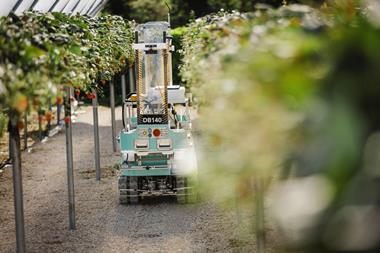
Investment could help transform irrigation and water management, crop genetics, soil health, mechanisation, precision agriculture, storage, cold chains, laboratories, food-safety systems, transport infrastructure and food processing. It could also help address one of the great problems of global agriculture: food being successfully produced but then lost before it ever reaches consumers. Indeed, Britain could be a major exporter of knowledge to these countries, generating new markets, new jobs and boosting our own GDP. Thus, the objective could be far bigger than simply growing more crops. It should be about developing modern, resilient and increasingly sophisticated African food economies. Farmers would have access to better technologies and high value markets, while more safe and nutritious food would become available to local populations. Increased levels of processing could take place within Africa, allowing countries to retain a greater share of the economic value of what they produce. Jobs would be created and export earnings increased. When those countries generate genuine surpluses, Britain, through governmental and industry partnerships, would become an increasingly important long-term trading partner.
I believe this strategy would create the double dividend (the win-wins we all seek): greater African food security and economic development alongside greater diversification and resilience of UK food supplies. We stop thinking about food aid and start thinking about food systems and technology partnerships.
Britain is not about to run out of food and I have no desire to be alarmist. We have outstanding farmers, food manufacturers, retailers and scientists. Our supply chains have repeatedly demonstrated extraordinary adaptability. However, resilience should not be judged simply by whether we managed to ride out the last crisis. It must be judged by how well prepared we are for the next one.
So, clearly, on the home front, we must act quickly and decisively to protect domestic production while looking to new regions that will diversify our import sources. Our new minister responsible for food security has an enormous challenge ahead, but also an extraordinary opportunity. Churchill once warned, before World War II, of the consequences of an ‘unwillingness to act when action would be simple and effective’. Fundamentally, the UK must now abandon the comforting misassumption that everything will somehow be all right on the night.












No comments yet