



Quality systems & testing
Access expert coverage of quality systems and testing methodologies, including analytical techniques, microbiological testing and food safety management systems. Learn how manufacturers strengthen compliance, verify product integrity, improve quality assurance and manage risk across operations.
Latest content
 News
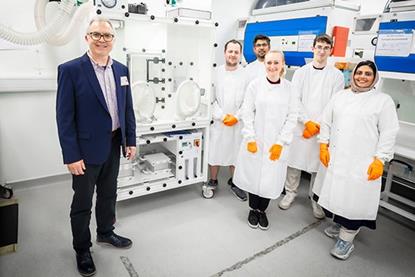
NewsUK agrifood network tackles antimicrobial resistance with £54m UKRI funding
A newly funded UK-wide research network is bringing together farmers, vets, industry and policymakers to address one of the most pressing challenges facing food production - antimicrobial resistance in agrifood systems.
 Article
The science behind consistent snack manufacturing
Discover how METTLER TOLEDO balances and halogen moisture analysers help snack manufacturers monitor critical quality parameters, make faster decisions and deliver consistent flavour, texture, appearance and crunch.
 News
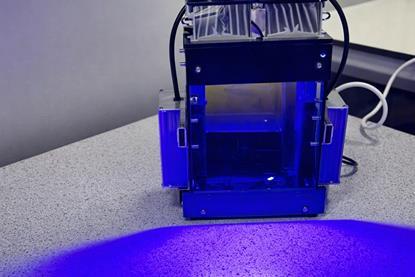
NewsNew violet blue light treatment targets Campylobacter on raw chicken
A chemical-free light-based treatment has demonstrated the ability to kill all 64 Campylobacter strains tested, including antibiotic-resistant varieties.
Featured

Opinion
The perfect storm for seafood fraud
The seafood industry is enormous, so too its supply chains. With consumers willing to pay premium prices for the healthy protein source, fraudulent practices have inevitably followed – on shocking scales. Chris Elliott reveals how the industry is responding and what businesses can do to boost credibility and protect consumers.
Report
Is your food testing programme a map of current risk or an archive of past concerns?
A practical guide for QA, QC and laboratory leaders navigating rapid reformulation, complex matrices and escalating regulatory scrutiny.
Webinars
- Previous
- Next







Join now
Unlock exclusive industry insights
- Bookmark articles and resources to access anytime
- Enjoy free access to industry leading resources, webinars and insights
- Stay informed with in-depth coverage of food safety, quality, innovation and regulatory change from across the global food and beverage industry
- Receive updates and recommendations tailored to your professional interests
More Quality systems & testing
 News
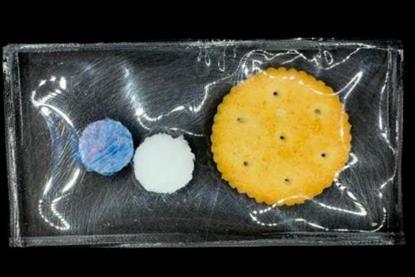
NewsColour-changing starch sensor detects moisture in food packaging
Scientists at the University of São Paulo have created a biodegradable, starch-based sensor that shifts from blue to pink when moisture enters food packaging.
 News
NewsMagnetic nanoparticles offer new route to PFAS-free water
Researchers have engineered magnetic iron oxide nanoparticles with specially modified surfaces that can bind and extract PFAS compounds and fluorine-containing microplastics from contaminated water sources.
 News
NewsPET industry launches shared platform for food contact safety data
PETCORE EUROPE has launched GeNi, a centralised interlaboratory data platform developed with KÖR, to address fragmented testing practices and strengthen food safety knowledge across the PET packaging value chain.
More Quality systems & testing
 Article
Setting pass/fail criteria with GENESYS custom method application: Sports drink quality testing
How can beverage manufacturers catch concentration errors and contamination quickly? This study explores how UV-Visible spectroscopy and custom pass/fail criteria can support faster, straightforward quality checks.
 Report
Is your food testing programme a map of current risk or an archive of past concerns?
A practical guide for QA, QC and laboratory leaders navigating rapid reformulation, complex matrices and escalating regulatory scrutiny.
 Article
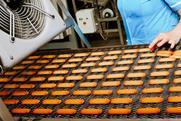
What 10 years of advancement mean for Process NIR reliability
Process NIR has a reputation problem. Not because the technology doesn’t work but because for many manufacturers, an earlier experience left a lasting impression.
 Article
Combining modern approaches in food pathogen detection with smarter control strategies
As food safety laboratories strive for faster, reliable, and audit-ready pathogen detection, success depends on more than advanced molecular methods. Robust workflows, contamination control, and compliance are now just as critical as PCR performance.
 Opinion
Microplastics, PET packaging and the need for standardised science
Microplastics are a growing concern for consumers and the food industry. But how much of the coverage reflects the evidence? Laura Stewart, Executive Director at NAPCOR, argues that conclusions about PET should be based on robust science and its long-established safety record.
 Article
The new Nexis GC-2060 gas chromatograph: lower operating costs and maximum efficiency for your laboratory
Shimadzu’s new Nexis GC-2060 combines analytical intelligence with innovative hardware to cut gas and energy consumption, reduce manual workload and simplify complex sample analysis. Designed for maximum flexibility and efficiency, it helps laboratories lower operating costs without compromising performance or accuracy.
 Article
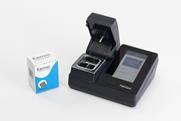
The Compliance Imperative: How Electrochemical Testing Is Transforming Water Quality Monitoring in Food and Beverage Production
Tightening regulatory demands are pushing food and beverage operators to treat water quality monitoring as a core compliance function, with auditable, traceable records now an operational necessity rather than a best practice. Electrochemical testing — and Palintest’s Kemio platform in particular — is meeting this need by delivering consistent results across challenging sample types and automatically logging every test against operator, location, and time.
 Article
The forever challenge: how the food industry must rise to meet PFAS
Thousands of compounds, a compliance environment that shifts at both federal and state level, and exposure routes that begin long before food reaches a factory gate, PFAS were always going to be a difficult problem. What is becoming clearer is just how long the food industry will be living with them – and how much the science of detecting them will have to keep pace.
 Article
From spreadsheets to strategy: the high-stakes gamble of traditional supplier management
Supplier management processes are often manual and time-consuming, a high-stakes gamble that exposes your business to significant risk. Discover how a data-driven approach to supplier management can protect your brand, save thousands of administrative hours, and transform your due diligence from a reactive process into a strategic advantage. Read on to learn how to move from spreadsheets to strategy.
 Article
New Food launches new website designed for food industry professionals
New Food has launched an updated website to improve access to content across food manufacturing, food safety and innovation, alongside a new membership model that provides full access to premium analysis, reports and expert commentary.
 Opinion
The buses on Main Street
The human instinct to draw decisive conclusions in moments of pressure can have deadly consequences in food safety, if evidence has not been verified. Darin Detwiler demonstrates what a small-town misunderstanding reveals about leadership, decision making and the hidden risks of certainty in global food safety systems.
 Article
5 Myths Keeping Manufacturers in the Lab
Many manufacturers still rely on lab-based testing due to long-standing assumptions. Perten, a PerkinElmer company, examines five common myths and the research and ROI analysis that challenge them.
 Article
From blind spots to real time insight: the importance of NMR based screening on tackling food fraud
Food fraud erodes margins, weakens consumer trust, and distorts fair competition. This article outlines why traditional controls miss signals of adulteration and mislabeling, and how reproducible NMR screening with large validated databases enables rapid authenticity testing across food products.
 Article
Decoding the hidden structure of modern foods: how TD-NMR is supporting plant-based innovation
Unlocking the secrets of plant-based foods, Dr Kevin Nott at Oxford Instruments shows how TD-NMR helps scientists understand water and fat at a molecular level, shaping the next generation of meat and dairy alternatives.
 Article
Harnessing technology and innovation to ensure safe food for all
Technology is transforming food safety. Elizabeth Andoh-Kesson and Franck Pandiani of GFSI explain why digital tools, AI, and real-time data are now essential to protect consumers and streamline supply chains.
 Report
Scaling Biotechnology and Novel Foods: inside the industrial reality of food innovation
New food technologies are advancing rapidly but scaling them remains the industry’s defining challenge. The Scaling Biotechnology and Novel Foods report explores whow to turn promising science into industrial reality.