




The £4.8 million investment will help bring robotics into UK food production, tackling barriers to adoption through funding, testing and industry collaboration.
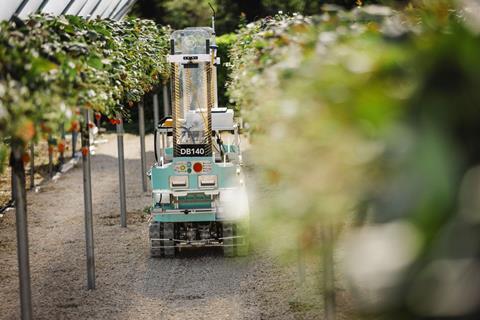
The University of Lincoln has secured £4.8 million as part of a £7.1 million investment to establish a robotics hub aimed at accelerating automation across UK agriculture and food manufacturing.
The hub, known as HARVEST, will give agri-food businesses access to robotics research, testing facilities and technical expertise to help bring emerging technologies into practical use.
A £1 million Acceleration Fund will support robotics businesses across the UK in overcoming barriers to the adoption of their technologies. The investment also includes £500,000 to develop a dedicated robotics test track at the university’s Riseholme Park Campus.
This funding takes us to the next level on our journey to advance agri-food through cutting-edge robotic solutions.”
Professor Simon Pearson MBE, Founding Director of LIAT and Executive Director of HARVEST
The initiative brings together robotics developers and agri-food businesses, including Cranswick, Saga Robotics, Dogtooth Technologies and Dyson Farming Research, to test and validate technologies for use across the supply chain.
HARVEST is one of eight Robotics Adoption Hubs selected from 74 applications nationwide through Innovate UK’s Robotics Adoption programme, part of UK Research and Innovation’s (UKRI) IS8 Advanced Manufacturing Programme.
Alongside the test track, the hub will establish industry-led Living Labs where developers can test and demonstrate robotic systems with potential end users.
Professor Elizabeth Sklar, Director of the Lincoln Institute for Agri-food Technology (LIAT) and Director of HARVEST, said: “HARVEST features a state-of-the-art Test Track, hosted at the University’s Riseholme Park farm campus, and industry-led Living Labs to facilitate development, testing and demonstration for agri-food robotics businesses across the UK.”
The wider partnership includes robotics developers Dynium and JABAS AI, alongside B-Hive Innovations and British Berry Growers. Barclays Eagle Labs, Agri-TechE and Bishop Burton College will contribute expertise in commercial development, industry engagement and training.
Closing the gap between innovation and adoption
The emphasis on practical testing addresses a challenge for agricultural robotics: turning promising technologies into systems that businesses can integrate into their operations.
In September 2026, the Department for Environment, Food and Rural Affairs (Defra) identified high upfront costs, access to finance, skills requirements and uncertainty over returns as barriers to technology adoption among smaller farms.
In a separate parliamentary response, Defra acknowledged that most automation projects supported through its Farming Innovation Programme remain in research or trial stages, making it too early to assess their wider impact on productivity and labour shortages.
These challenges underline the potential value of HARVEST’s approach. By bringing developers and prospective users together, the hub could help businesses evaluate robotic systems under practical conditions and identify technical or operational issues before committing to wider adoption.
The investment also comes as established food manufacturers modernise their operations. In May 2026, Mars announced a £190 million investment in its Slough chocolate factory, incorporating AI-driven production systems, robotics and advanced manufacturing technologies.
For HARVEST, the challenge will be helping developers and potential users turn technological advances into solutions that work across different agricultural and food production settings.
Professor Simon Pearson MBE, Founding Director of LIAT and Executive Director of HARVEST, said: “This funding takes us to the next level on our journey to advance agri-food through cutting-edge robotic solutions, securing support for businesses to overcome technical, commercial, regulatory and workforce challenges by working with the LIAT team and key industry representatives. We welcome the opportunity to lead this sector into the exciting future of food.”













No comments yet