



All Analytical testing (LC/GC/MS) articles
-
 Article
Why food testing programmes need to get smarter, not just bigger
How can manufacturers make food testing smarter? Mondelēz Europe’s Nia Owen-Cortez explains how data, governance and risk-based thinking can strengthen testing programmes.
-
 Article
The science behind consistent snack manufacturing
Discover how METTLER TOLEDO balances and halogen moisture analysers help snack manufacturers monitor quality, make faster decisions and maintain more consistent production.
-
 Webinar
Detecting the presence of PFAS in chicken eggs
Free webinar: University of Connecticut researchers test chicken eggs for 28 PFAS compounds and compare two UHPLC-MS/MS extraction methods.
-
 Article
The Process NIR Readiness Checklist
Successful process NIR starts before installation. This checklist helps manufacturers assess readiness, identify gaps and make the right decisions early to accelerate deployment and results.
-
 News
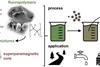
NewsMagnetic nanoparticles offer new route to PFAS-free water
Researchers have developed modified magnetic iron oxide nanoparticles that can capture and remove PFAS and fluorine-containing microplastics from contaminated water sources.
-
 News
NewsPET industry launches shared platform for food contact safety data
PETCORE EUROPE has launched GeNi, a centralised interlaboratory data platform developed with KÖR, to address fragmented testing practices and strengthen food safety knowledge across the PET packaging value chain.
-
 News
NewsNew grouping approach targets hazardous chemicals in food packaging
A peer-reviewed study found 87 percent of more than 15,000 food contact chemicals lack sufficient safety data, highlighting the need for more targeted risk assessment.
-
 Article
PFAS analysis at a turning point: from trace detection to defensible, sustainable decisions
How laboratories can manage contamination, matrix effects, expanding analyte lists and regulatory change – while reducing the environmental cost of high-throughput LC–MS/MS.
-
 News
NewsDubai Municipality automated oil and fat testing cuts analysis to two minutes
Dubai Municipality has introduced automated oil and fat testing, raising daily capacity tenfold while cutting analysis time to two minutes.
-
 Webinar
Automated solutions for mycotoxins and vitamins in complex foods matrices
Watch this webinar to learn how automation helps food testing laboratories address evolving regulatory requirements, achieve lower LOD/LOQ targets through effective sample clean-up, and analyse novel foods and other complex matrices.
-
 Article
Why food laboratories need analytical systems that deliver more than sensitivity
Can laboratories increase sensitivity without compromising routine reliability, workflow efficiency or resource use? The LCMS-8065XE was designed to address these growing analytical demands.
-
 Article
Setting pass/fail criteria with GENESYS custom method application: Sports drink quality testing
How can beverage manufacturers catch concentration errors and contamination quickly? This study explores how UV-Visible spectroscopy and custom pass/fail criteria can support faster, straightforward quality checks.
-
 Report
Is your food testing programme a map of current risk or an archive of past concerns?
A practical guide for QA, QC and laboratory leaders navigating rapid reformulation, complex matrices and escalating regulatory scrutiny.
-
 Webinar
Measuring what matters: water quality analysis with UV-Visible spectrophotometry
Watch the webinar to discover how UV-Visible spectrophotometry can support reliable water quality analysis across a range of applications.
-
 Article
What 10 years of advancement mean for Process NIR reliability
Process NIR has a reputation problem. Not because the technology doesn’t work but because for many manufacturers, an earlier experience left a lasting impression.
-
 Article
Combining modern approaches in food pathogen detection with smarter control strategies
As food safety laboratories strive for faster, reliable, and audit-ready pathogen detection, success depends on more than advanced molecular methods. Robust workflows, contamination control, and compliance are now just as critical as PCR performance.
-
 Article
The new Nexis GC-2060 gas chromatograph: lower operating costs and maximum efficiency for your laboratory
Shimadzu’s new Nexis GC-2060 combines analytical intelligence with innovative hardware to cut gas and energy consumption, reduce manual workload and simplify complex sample analysis. Designed for maximum flexibility and efficiency, it helps laboratories lower operating costs without compromising performance or accuracy.
-
 News
NewsDubai Municipality launches advanced ViruGenetics Lab to detect foodborne viruses
Dubai Municipality has launched the ViruGenetics Lab at Dubai Central Laboratory, a first-of-its-kind facility in the UAE using digital PCR and genomic technologies to detect foodborne viruses with greater speed and precision, strengthening food safety and public health protection.
-
 Article
From blind spots to real time insight: the importance of NMR based screening on tackling food fraud
Food fraud erodes margins, weakens consumer trust, and distorts fair competition. This article outlines why traditional controls miss signals of adulteration and mislabeling, and how reproducible NMR screening with large validated databases enables rapid authenticity testing across food products.
-
 Article
Decoding the hidden structure of modern foods: how TD-NMR is supporting plant-based innovation
Unlocking the secrets of plant-based foods, Dr Kevin Nott at Oxford Instruments shows how TD-NMR helps scientists understand water and fat at a molecular level, shaping the next generation of meat and dairy alternatives.