

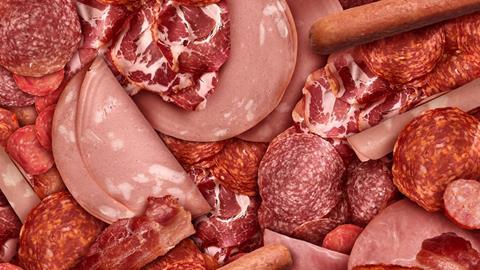

As scrutiny of nitrites grows, Ben Cornwell examines the evidence, how current UK and EU regulations differ and what’s required to reformulate processed meat without them.
Removing nitrites from a slice of ham changes more than the ingredient list.
The familiar pink colour can become harder to maintain. Oxidation can accelerate. Shelf life may shorten. Most importantly, part of the preservation system helping to control harmful microorganisms has gone.
These factors explain why nitrites remain such a technically important ingredient in processed meat – even as their use comes under greater scrutiny.
That attention is increasingly visible at retail. In September, Tesco launched eight own-brand bacon and ham products made without added nitrites, citing a 360 percent year-on-year rise in online searches, while Waitrose expanded its own-label nitrite-free range earlier in 2026. The subject also featured in BBC Panorama’s Cancer Before 50: Why Is It Rising?
As public interest grows, the debate comes down to two questions. What does the evidence say about added nitrites, and what happens when their functions have to be delivered elsewhere?
Why nitrites are back under scrutiny
The broader health concern around processed meat is well established. In a September 2026 update on red and processed meat, the World Health Organization reiterated the International Agency for Research on Cancer’s (IARC) classification of processed meat as carcinogenic to humans, based on sufficient evidence that consumption can cause colorectal cancer.
An analysis of 10 studies considered by IARC estimated that every 50g portion of processed meat eaten daily was associated with an approximately 18 percent increase in colorectal cancer risk. IARC also stresses that its classification describes the strength of evidence that processed meat can cause cancer; it does not attribute that association specifically to added nitrites.
A central concern in assessments of nitrate and nitrite use is the formation of N-nitroso compounds, including nitrosamines.
In 2023, the European Food Safety Authority (EFSA)’s assessment of nitrosamines in food concluded that dietary exposure raised a health concern across all age groups in the EU. Ten nitrosamines considered in the assessment were carcinogenic and genotoxic. EFSA identified meat and meat products as the most important food group contributing to exposure.
Professor Chris Elliott, Founder of the Institute for Global Food Security at Queen’s University Belfast and a supporter of the Coalition Against Nitrites, points to the evolving evidence around added nitrites.
“The World Health Organization’s classification of processed meat as carcinogenic to humans, particularly in relation to colorectal cancer, has been known for more than a decade,” Professor Elliott said.
“What has developed is a better understanding of the potential role of added nitrites, their contribution to the formation of potentially carcinogenic N-nitroso compounds, and the opportunities now available to reduce or fully eliminate their use.”
EFSA’s separate 2017 re-evaluation of nitrate and nitrite food additives concluded that nitrites and nitrates added to food at permitted levels were safe for consumers in Europe, while identifying knowledge gaps around nitrosamine formation and epidemiological evidence. It re-established an acceptable daily intake for nitrites of 0.07 mg/kg body weight per day.
Professor Ian Young, Chief Scientific Adviser at the Food Standards Agency (FSA), said nitrite and nitrate additives used in processed meat are “tightly regulated and subject to strict maximum legal safety limits”, adding that industry must use no more than necessary for food safety. He stressed that the established health risks relate to red and processed meat overall, rather than specifically to the nitrates or nitrites used in processing.
“Our position is based on the totality of the scientific evidence, and our advice remains that the safest way to reduce any risk from red and processed meat is to eat less of it, in line with NHS guidance,” he said.
Professor Elliott interprets the emerging evidence differently.
“I believe the scientific evidence that added nitrites contribute to the health risks associated with processed meats has increased substantially over the last few years, although quantifying their precise contribution still remains challenging,” he said.
“We know that nitrites can contribute to the formation of carcinogenic N-nitroso compounds, and growing epidemiological and experimental evidence links nitrite exposure with adverse health outcomes.”
Our position is based on the totality of the scientific evidence, and our advice remains that the safest way to reduce any risk from red and processed meat is to eat less of it, in line with NHS guidance.”
Professor Ian Young, Chief Scientific Adviser at the Food Standards Agency (FSA)
Where the evidence becomes less clear-cut
The FSA commissioned a rapid evidence assessment of research published between 2016 and 2024. It initially identified 1,158 records and included 68 papers in its final qualitative synthesis.
The review found inconclusive evidence for a relationship between nitrate and nitrite additives and health outcomes including cancer, while also identifying uncertainties and research gaps.
One point of disagreement concerns animal evidence. Professor Elliott has previously challenged the FSA’s assessment of nitrites in processed meat, and points to experimental research which he says found increased intestinal tumour formation associated with nitrite-cured meat.
The FSA review identified animal studies but excluded them from its final scope, citing its human-health focus, available human and in vitro evidence, and time and resource constraints. Its separate science explainer notes that while laboratory and animal studies can suggest potential mechanisms for cancer risk, it is not possible to conclude that the same mechanisms occur in humans.
Professor Elliott argues that the evidence already warrants action. “While further research is needed to establish the precise risks attributable to added nitrites, the combined mechanistic, epidemiological and animal evidence is sufficiently strong to justify precautionary reductions now, rather than waiting for absolute scientific certainty,” he said.
The dispute therefore turns partly on how different forms of evidence are weighted and how much uncertainty should trigger precautionary action.
The FSA’s position is that there is currently no evidence that processed meats made without nitrate or nitrite additives are safer.
While further research is needed to establish the precise risks attributable to added nitrites, the combined mechanistic, epidemiological and animal evidence is sufficiently strong to justify precautionary reductions now, rather than waiting for absolute scientific certainty.”
Professor Chris Elliott, Founder of the Institute for Global Food Security at Queen’s University Belfast
Why regulation is moving at different speeds
Under Commission Regulation (EU) 2023/2108, revised EU nitrate and nitrite limits began applying to meat products from 9 October 2025.
For the general category of non-heat-treated meat products, the regulation cut the maximum permitted addition of nitrites from 150 mg/kg (expressed as sodium nitrite) to 80 mg/kg (expressed as nitrite ion). The rules also introduced a maximum residual amount from all sources – ie, the levels of free nitrites in the product at the point of purchase – of 45 mg/kg for the product ready for marketing throughout its shelf life. Other meat categories and traditionally cured products are subject to their own limits.
Professor Elliott regards the divergence more critically.
“I find this regulatory divergence deeply concerning because the underlying scientific evidence does not change when we cross the English Channel,” he said.
“The EU has adopted a more precautionary approach, recognising that unnecessary exposure should be reduced wherever technologically feasible without compromising microbiological safety.”
Great Britain currently retains the rules in assimilated Regulation 1333/2008. These limits are product-specific. In the main meat-products category, the rules permit up to 150 mg/kg of added nitrites, except for sterilised meat products, while traditional cured products have different added or residual limits according to product and process.
Under the planned UK-EU sanitary and phytosanitary agreement, the UK Government expects relevant food manufacturing and food-additive requirements to align with EU rules. Defra’s July 2026 guidance states that the Government intends the agreement to take effect in mid-2027, while exact requirements and timings remain subject to ongoing negotiations. The FSA has also said it will work with Defra and industry to update the relevant rules ahead of implementation.
Lower limits change the formulation problem, but they do not change the functions that must still be delivered.
GB vs EU nitrite regulations at a glance
European Union
Revised limits have applied since 9 October 2025. For general non-heat-treated meat products, the maximum amount of nitrite that may be added fell from 150 mg/kg (as sodium nitrite) to 80 mg/kg (as nitrite ion), alongside a 45 mg/kg maximum residual amount.
Great Britain
GB currently operates under its assimilated food-additive rules. These limits vary between product categories and curing methods. The main meat-products category permits up to 150 mg/kg added nitrite, while traditional cured products are subject to specific added or residual limits.
What could change?
The planned UK-EU SPS agreement is expected to affect food-additive requirements. The Government intends the agreement to take effect in mid-2027, but negotiations remain ongoing and detailed requirements are still being finalised.
Key point: both GB and the EU continue to permit nitrite use. Their current rules differ principally in the permitted levels and how limits apply across product categories.
One ingredient, several jobs
Those functions do not carry equal weight when nitrite levels are reduced. For Professor Declan Bolton, Research Officer at Teagasc Food Research Centre, the antimicrobial role is the most difficult to substitute.
“The antimicrobial function is arguably the most challenging to replace, particularly its contribution to controlling Clostridium botulinum, the bacterium responsible for botulism.”
“The challenge is that no single alternative ingredient can necessarily reproduce all these functions simultaneously,” Bolton said. “Removing nitrite therefore requires a more comprehensive reformulation strategy, combining appropriate ingredients with carefully controlled processing and preservation technologies.”
What nitrites actually do
- Microbial safety: contribute to controlling organisms including C. botulinum
- Colour: help create and stabilise the characteristic appearance of cured meat
- Oxidative stability: slow lipid oxidation and the development of rancidity
- Flavour: contribute to the characteristic cured sensory profile
- Product stability: work alongside other preservation hurdles during processing and storage.
Why it matters: reducing or removing nitrites can require several different controls to reproduce functions previously delivered by the conventional curing system.
Reformulating the whole system
Once nitrite levels are reduced, salt concentration, pH and water activity may need reassessment alongside antimicrobial or antioxidant ingredients, thermal treatment, cooling, hygiene, packaging and temperature control through distribution and storage. Removing nitrites may also reduce the safety margin provided by the conventional curing system.
Dr Cristina Botinestean, Food Technologist at Teagasc Food Research Centre describes the scale of that task.
“Developing a safe nitrite-free meat product requires much more than simply removing nitrite from the recipe. It involves reassessing the entire formulation and manufacturing process to ensure that microbial safety, product quality and shelf life are maintained.”
At Teagasc, the Department of Agriculture, Food and the Marine (DAFM)-funded NO2Nitrates project (2021R426) is investigating approaches to reducing or eliminating nitrates and nitrites while assessing microbiological safety and physicochemical quality.
“Ultimately, a successful nitrite-free formulation must be supported by scientific validation and a combination of effective preservation hurdles, rather than relying on one ingredient to replace nitrite,” Dr Botinestean said.
The FSA’s evidence review of potential alternatives identified research into plant-derived ingredients, essential oils and other approaches with antimicrobial or antioxidant properties, but found inconsistent testing methodologies and incomplete assessment of potential risks.
Matching one function is only part of the development challenge. How the rest of the preservation system changes depends heavily on the product itself.
Ham, bacon and salami pose different problems
As PhD Walsh Scholar Jan Roland Molina of Teagasc puts it, “The key difference is the combination of preservation hurdles within each product category.”
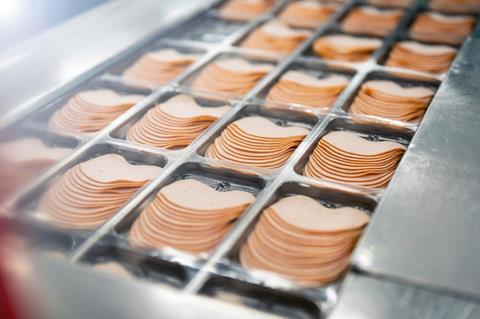
Cooked ham combines ready-to-eat safety requirements with expectations around pink colour, mild cured flavour and refrigerated stability.
Bacon presents different challenges around oxidation, colour stability and chilled microbial control. Cooking before consumption provides an additional control step, although appropriate controls remain necessary during manufacture and storage.
Fermented meats such as salami rely more heavily on lower pH, reduced water activity, starter cultures and consistent fermentation and drying, but are not automatically easier to reformulate.
“There is no universal solution, and reformulation strategies need to be tailored to the specific product and manufacturing process,” Molina said.
When safety is only one part of the equation
Maintaining microbiological safety does not settle every development question.
Removing nitrites may accelerate lipid oxidation, potentially contributing to rancid flavours, undesirable odours and a shorter shelf life.
Colour can become less stable, with cooked ham or bacon developing a greyer appearance despite remaining microbiologically acceptable. Flavour may also shift because nitrites contribute to cured-meat sensory characteristics and alternatives can introduce effects of their own.
“One of the main challenges in nitrite reduction is balancing food safety with the sensory and technological characteristics that consumers expect,” Dr Botinestean said.
“From an industry perspective, there may also be implications for manufacturing costs, processing times, packaging requirements and shelf life.
“The objective of reformulation is therefore not simply to remove an ingredient, but to develop a product that remains safe, appealing to consumers, technologically feasible and commercially viable.”
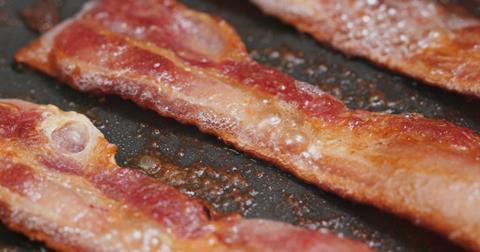
Processing itself can further alter the risk picture. The FSA evidence review found that higher cooking temperatures and longer cooking times were associated in the reviewed literature with increased formation of some nitrosamines and N-nitroso compounds. It also identified formulation and processing factors, including ascorbic acid, that may influence nitrosamine formation, with some studies finding an inhibitory effect.
Proving the replacement works
A product-specific microbiological risk assessment should consider formulation, processing conditions, packaging, storage temperatures and hazards relevant to that product. Depending on the formulation, microbiological challenge studies may also be appropriate.
For ready-to-eat meat products, Listeria monocytogenes can be a significant consideration, while C. botulinum may require assessment where product characteristics and storage conditions create a relevant risk.
Shelf-life work can assess microbiological stability alongside pH, water activity, colour, lipid oxidation, texture and flavour.
Teagasc’s Professor Bolton explains that validation must reflect real commercial conditions.
“Validation should be conducted under realistic, and where appropriate reasonably foreseeable worst-case, storage and distribution conditions,” he said. “Results should demonstrate that the product remains safe and acceptable throughout its declared shelf life, including consideration of normal manufacturing variability.”
Current FSA guidance on managing microbiological food safety also supports robust HACCP systems and documented validation for managing L. monocytogenes risk in ready-to-eat foods.
Even after teams validate the formulation, another question remains. How should businesses describe the product?
Reducing or removing nitrites from processed meat is not simply an ingredient substitution exercise. It requires a scientific understanding of how formulation, processing and preservation interact.”
Dr Cristina Botinestean, Teagasc
What does ‘nitrite-free’ actually mean?
Nitrite-free, nitrate-free and no-added-nitrites can describe different formulation circumstances.
The FSA notes that most dietary nitrate comes from natural sources such as leafy green vegetables, and that products marketed as having no added nitrites may nevertheless contain nitrites.
That distinction is particularly relevant where a curing system uses nitrate-rich vegetable ingredients that can subsequently result in nitrite being present .
The FSA’s evidence review explicitly included naturally occurring nitrates and nitrites where the food industry used them directly or indirectly, for example through concentration, to create, enhance or process food.
Professor Elliott also emphasises the role of consumer understanding and transparency. He argues that products marketed as ‘nitrite-free’ should also exclude nitrite introduced indirectly through nitrate-rich vegetable extracts.
“Consumer understanding and education are absolutely central to this debate,” he said. “I strongly believe that providing the public with reliable, scientifically robust information and being fully transparent about potential health risks allows consumers to make genuinely informed choices about the food they purchase and consume.”
The terminology therefore carries technical as well as communication implications, particularly where consumers may not immediately recognise how nitrates or nitrites enter the curing system.
What comes next for nitrites in processed meat?
Professor Elliott says the UK “must urgently revisit its approach” to regulating added nitrites and argues that alignment with the EU’s reduced limits should be “a starting point, not the ultimate ambition”. He says the longer-term goal should be to “progressively phase out added nitrites using the safe, scientifically validated alternatives already available”.
He has also called for more independent research incorporating mechanistic studies, animal experiments and human epidemiological investigation, and wants industry to accelerate adoption of validated alternatives.
The FSA’s current position, outlined by Professor Young, remains that its advice reflects the totality of the scientific evidence and that reducing overall consumption of red and processed meat is the clearest way for consumers to reduce the established risk. Its evidence review nevertheless identifies gaps around the assessment of alternatives and how cooking, processing and additives influence nitrosamine formation. The agency says it will continue to review emerging evidence and act if clear evidence emerges that warrants a change.
That leaves an important distinction. The precise contribution of added nitrites to processed-meat health risks remains contested, but the practical consequences of reducing them are far clearer. Safety, preservation, colour, flavour and shelf life must still be delivered elsewhere in the formulation and process.
As Dr Botinestean puts it, “Reducing or removing nitrites from processed meat is not simply an ingredient substitution exercise. It requires a scientific understanding of how formulation, processing and preservation interact.”
That is likely to remain the defining challenge. As scrutiny of nitrites grows, the question is not only whether their use should fall, but how every function they perform can be replaced without creating new risks or compromising product quality.









No comments yet