



A weekly roundup of the latest food innovations, from new ingredient and product launches to novel food approvals, emerging technologies and breakthroughs in food production.
Welcome to this week’s edition of The Week in Food Innovation, our weekly roundup bringing together the latest ingredient innovations, product launches and technological developments, alongside what they could mean for the food industry.
For 21–27 November 2026, we explore a major investment in higher-value dairy proteins, a new packaging format for spoonable foods, research into consumer trust in biotechnology and developments in robotics, functional beverages and food processing.
Arla bets €95 million on turning whey into premium protein
Arla Foods Ingredients has announced a €95 million investment in its Felinfach facility in Wales to expand premium whey protein production and convert lower-value dairy streams into ingredients for human nutrition.
The project includes a new 5,100m² production building and processing equipment, with completion expected in 2029. It will increase production of whey protein isolates for applications including clear protein drinks.
The investment also reflects growing interest in extracting greater commercial value from food processing side-streams. However, turning byproducts into higher-value ingredients requires processing technology capable of delivering consistent quality at a commercially viable cost.
Arla’s expansion demonstrates the substantial capital investment that can underpin efforts to capture more value from existing raw materials.
Tetra Pak sets its sights on the yoghurt pot
Tetra Pak has launched Tetra Reva, a paper-based carton for spoonable foods including yoghurt, desserts, plant-based alternatives and soft cheeses.
The format features a full-top opening with a pull-ring lid and accommodates products ranging from thick yoghurts to desserts containing fruit pieces.
The launch takes carton technology into categories traditionally dominated by pots and tubs, offering another packaging option as sustainability expectations and material requirements evolve.
However, replacing established food-contact materials involves trade-offs around product protection, shelf life and recyclability. Alongside these considerations, the format must prove compatible with existing filling operations and meet consumer expectations around convenience.
Nestlé takes AI and robotics from the lab to the factory
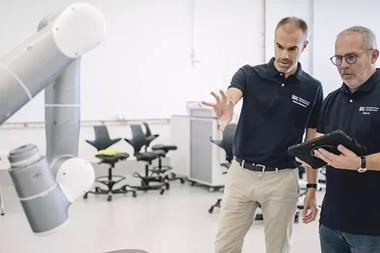
Nestlé has unveiled its Deep Tech Center in Orbe, Switzerland, bringing together artificial intelligence, robotics and smart sensors to support product development and manufacturing.
The centre includes prototyping and pilot-scale testing facilities, allowing Nestlé to assess technologies before introducing them more widely.
As food manufacturers explore applications ranging from digital twins to automated quality control, moving from successful demonstrations to reliable industrial deployment remains a substantial challenge.
By testing applications at pilot scale, Nestlé can assess their compatibility with existing production equipment and quality systems, identifying potential integration problems before committing to wider deployment.
Can food biotechnology win over sceptical consumers?
While manufacturers are investing in new technologies, their commercial success can also depend on whether consumers are prepared to embrace them.
EIT Food has published research examining what Europeans would need to see before accepting biotechnology-derived foods.
The findings suggest cautious openness, with participants prioritising credible safety evidence, transparency, consumer choice and tangible benefits. Taste and affordability also featured prominently, raising questions about whether sustainability claims alone are sufficient to encourage consumers to try unfamiliar products.
With cultivated-food and precision fermentation companies progressing towards market entry, the research highlights the importance of demonstrating benefits that consumers can recognise and value, alongside meeting regulatory requirements.
Coffee gets a protein boost with 14g per serving
Australian brand Beforeyouspeak Coffee has launched a powdered iced coffee containing 14g of whey protein and 80mg of caffeine per serving, with a US rollout planned for December.
The product combines Colombian coffee with whey protein concentrate and comes in three flavours.
The launch reflects protein enrichment’s continued expansion beyond sports nutrition into everyday products. Coffee provides an established consumption occasion, although maintaining its expected flavour, texture and solubility while incorporating whey protein remains a formulation consideration.
EnWave’s vacuum drying technology gains ground in Iceland
Canadian technology company EnWave has signed two commercial licensing agreements in Iceland for its Radiant Energy Vacuum (REV) drying technology.
The agreements cover fish products for human consumption and pet food, with one partner already launching a product manufactured using the technology.
REV combines microwave energy with vacuum conditions to remove moisture, offering an alternative to conventional drying processes.
The agreements mark another step in the technology’s commercial adoption as food processors assess different approaches to balancing processing time, energy consumption and product quality.
Topics
- Automation, AI & digital manufacturing
- Clean label, natural & reformulation
- Fats, oils & emulsifiers
- Flavours, colours & sensory
- Food waste, by-products & circularity
- Functional ingredients & nutraceuticals
- Ingredients & formulation
- Novel foods & approvals
- Processing & manufacturing
- Proteins & alternative proteins









No comments yet