





Skimmed from the risen cream of a recent presentation, From the Nile to Denial: A History of Food Fraud, Chris Elliott gets to the heart of why fraud in the food industry remains a tough nut to crack.
Food fraud is often portrayed as a modern problem, driven by complex global supply chains, sophisticated criminal networks and enormous financial rewards. Yet a rather uncomfortable truth is that food fraud is almost as old as civilisation itself. For nearly 4,000 years people have found ways to deceive others regarding the food they buy and consume. Despite some amazing advances in science, technology and regulations, perpetration of these food crimes has remained remarkably steady.
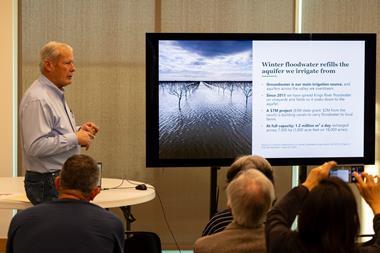
I recently had the honour of delivering the annual lecture at the Society of Food Hygiene and Technology (SOFHT) awards ceremony. Rather than focusing on the latest scandals, as I often do, I decided to take the audience on a historical journey. Entitled From the Nile to Denial: A History of Food Fraud, the lecture explored how food fraud has evolved over the millennia, what we can learn from its long journey of deception and whether we are truly prepared for the future challenges it still presents.
What struck me most when preparing the lecture was not how much food fraud has changed, but how much has remained the same. The range of ingredients and commodities affected, increasing opportunities for fraud as trading routes expanded and regulations struggling to keep up are all documented through our history. The scale of the fraud may be different, but these fundamental drivers are sadly familiar. Food fraud is certainly not a modern problem, but it has become more sophisticated and global in nature.
What struck me most when preparing the lecture was not how much food fraud has changed, but how much has remained the same.”
From ancient Babylon to medieval Europe
Going back to the third millennium BC, the ancient Babylonians understood that dishonest trading threatened society. The Code of Hammurabi, a legal text carved into black basalt, contained laws governing commercial transactions, pricing and trading practices. Thus, 4,000 years ago authorities were already attempting to regulate behaviour – especially in the grain trade – that undermined confidence in markets.
Moving onto the Egyptian empire, evidence of dishonest trading in wine, beer, honey and grain can be found. Dilution, adulteration and use of dishonest measures were all being practised – each forms of fraud that are immediately recognisable to anyone working in food authenticity today. To combat this fraud they introduced market inspectors, standardised measures for commercial transactions and introduced laws against grain profiteering.
During Roman times, more evidence that food adulteration was seen as a threat is apparent. A famous Roman author, naturalist and military commander, Pliny the Elder, wrote a set of encyclopaedias on Natural History, which included mention of adulteration of olive oil, spices and fish among others – all commodities we continue to have serious issues with now. The Romans established some of the fundamental principles still used in food fraud prevention today: regulation, inspection, measurement standards, commercial documentation and penalties for deception.
By medieval times, bread had become a staple food across Europe due to increased trade and was clearly an attractive target for dishonest traders. Inferior flour was mixed with the ‘good stuff’ and weights were manipulated to bring about extra profits for the cheats. In England a law was introduced called the ‘Assize of Bread and Ale’ in the thirteenth century to regulate the weight, price and quality of bread and ale.
When science began fighting back
During what is described as the Early Modern Period (between 1500 and 1800), international trade expanded enormously, driven by the great explorers such as Vasco da Gama, Christopher Columbus and Sir Francis Drake. Spices, sugar, tea and coffee increasingly travelled across the continents. These valuable commodities, combined with long trading routes and limited traceability, created ideal conditions for fraud. Where have we heard about issues of complex supply chains and fraud before?
Writing this as a scientist who has worked in food fraud for many years, the nineteenth century marked a major turning point in the fight against food fraud, with scientists exposing the true extent of food adulteration. One influential figure was a German by the name of Friedrich Accum, whose 1820 publication Treatise on Adulterations of Food and Culinary Poisons revealed widespread adulteration and highlighted serious public health consequences. Accum’s work was backed by strong scientific evidence and was followed by Arthur Hill Hassall, a British physician and chemist who used microscopy to investigate food adulteration in Victorian Britain. Their investigations helped generate public pressure for stronger legislation, contributing to the development of food laws, including Britain’s Adulteration of Food and Drink Act 1860, the Sale of Food and Drugs Act 1875 and the formation of the Public Analyst.
Across the Atlantic, another great chemist, Harvey W Wiley, played an equally important role. His investigations – along with his team called ‘The Poison Squad’ – and campaigning helped build support for America’s Pure Food and Drugs Act of 1906 and led to the formation of the Food and Drug Administration, which still exists today and was copied in many countries across the world.
Modern scandals, ancient motivations
In the twenty-first century, we now have analytical technologies that Accum, Hassall and Wiley could only have dreamt of. We can detect substances at extraordinarily low concentrations, establish sophisticated chemical fingerprints and use artificial intelligence to interpret complex datasets. Yet despite all these advances, major food fraud scandals continue.
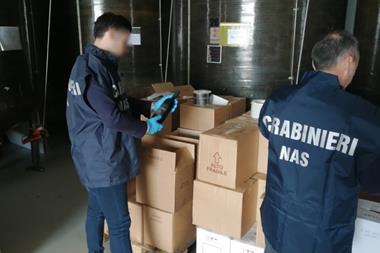
The melamine contamination of milk products in China in 2008 demonstrated how deliberate adulteration can have devastating public health consequences with many thousands of infants hospitalised and at least six fatalities. At about the same time was The Peanut Corporation of America scandal which stemmed from a large Salmonella outbreak due to senior executives allowing contaminated peanut distribution around the country. The products had falsified safety records to avoid delays and financial losses. According to records, the outbreak sickened at least 714 people across 46 states and killed nine people, sparking one of the largest food recalls in US history. The European horsemeat scandal of 2013, while not a direct food safety issue, exposed serious weaknesses in international meat supply chains, including lack of traceability and robust auditing.
Many other incidents involving products such as adulterated oils, counterfeit alcohol, fraudulent seafood and false origin claims continue to undermine consumer confidence. Although these crimes may appear different, their motivations are remarkably similar to those of dishonest traders thousands of years ago: an opportunity to make money through deception, with the consequences borne by consumers and legitimate businesses.
During my lecture, I introduced an interactive honesty test, drawing on research shared by good friend and colleague, Professor Saskia van Ruth. The results of her work suggest around 20 percent of the population is willing to cheat for personal gain – particularly when the chances of being caught appear small. The lesson from this is that bad actors are likely lurking in many food supply chains, just waiting for an opportunity to make some extra money. While trust is important it cannot operate without some form of verification.
New threats in an increasingly connected world
Today’s food system is extraordinarily complex, with products crossing international borders and passing through numerous intermediaries. One example I discussed during the lecture concerned the international tomato trade, where the movement of raw materials and processed products makes establishing genuine geographical origin very challenging. Products marketed as originating from one country may contain ingredients grown or processed elsewhere, undermining legitimate producers and deceiving consumers. I will report more fully on our tomato investigations another time.
There is a growing awareness that global pressures are creating further vulnerabilities to fraud. Climate change, extreme weather, geopolitical instability, trade restrictions and economic uncertainty can all affect commodity availability and prices. Whenever shortages emerge or prices increase sharply, financial incentives for cheating become greater. This is why food fraud must increasingly be considered within the wider context of global food security.
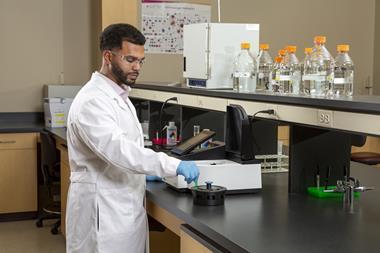
Artificial intelligence and digital traceability platforms offer enormous opportunities to strengthen our defences. Combining analytical testing using portable analytical devices and chemical fingerprinting together with supply-chain intelligence, commercial data and predictive models will help identify vulnerabilities before fraud occurs.
But let’s not fool ourselves, criminals have access to increasingly powerful technologies too. AI is already being used to generate convincing fake documentation, manipulate digital records and create false certification claims. Cyberattacks against food businesses introduce another dimension of risk. I believe we are entering an era in which the manipulation of information becomes just as important as physically adulterating products. Are our existing systems sufficiently prepared? I fear many are not.
Our ability to produce, transport and analyse food has advanced beyond anything our ancestors could have imagined. Yet the fundamental human weakness that allows food fraud to flourish remains largely unchanged.”
Learning from history to protect the future
Looking back over nearly 4,000 years, several lessons should become clear. Food fraud is fundamentally driven by human behaviour and economic incentives and while scientific testing is essential, it will not eliminate dishonesty. Regulation is of course vital, but legislation without enforcement achieves relatively little. We must therefore move beyond concentrating primarily on detecting fraud after it happens and put greater emphasis on prevention, intelligence gathering, vulnerability assessments and international cooperation.
At the conclusion of my lecture, I reflected on how much humanity has achieved over four millennia. Our ability to produce, transport and analyse food has advanced beyond anything our ancestors could have imagined. Yet the fundamental human weakness that allows food fraud to flourish remains largely unchanged. I do think the ancient Babylonians, Egyptians, Greeks and Romans would recognise many dishonest practices that still occur today, but what might astonish them is the scale of international trade. I wonder what ingenious solutions our remarkably clever ancestors might have found to tackle modern food fraud.










No comments yet