




The Hashgraph Group, Merck and PwC are piloting a system that ties physical cocoa authentication to a blockchain record as the EUDR deadline nears.
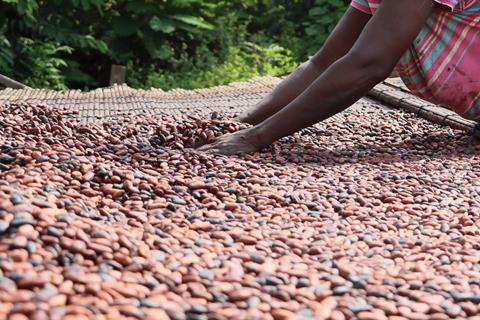
The Hashgraph Group, the science and technology company Merck and PwC Germany have begun piloting a cocoa traceability system that binds a physical authentication marker on each batch to a digital record held on a distributed ledger. The partners describe it as a way to prove origin, authenticity and chain of custody from farm to finished product, and to speed up any response to a quality or recall question.
The system pairs three parts. The Hashgraph Group contributes TrackTrace, a digital product passport platform that records origin, supply chain, quality and compliance events on Hedera, a public distributed ledger. Merck supplies M-Trust, a physical authentication layer that uses secure markers and scanning to confirm that a product or its packaging is genuine rather than a substitute. PwC Germany is handling implementation, mapping the business processes, governance and training needed to run the model beyond a pilot. Stefan Deiss, CEO and co-founder of The Hashgraph Group, said the model can move cocoa traceability “beyond fragmented documentation and self-declared claims”.
This solution shows how cocoa traceability can move beyond fragmented documentation and self-declared claims”
Stefan Deiss, CEO and Co-Founder, The Hashgraph Group
What the deforestation deadline means for cocoa
Cocoa is one of seven commodities covered by the EU Deforestation Regulation (EUDR), which requires operators to show that goods are deforestation-free and legally produced, backed by geolocation data for the plots where they were grown. After a further postponement agreed in December 2025, the rules apply to large operators and traders from 30 December 2026 and to micro and small operators from 30 June 2027. That leaves large cocoa operators under four months before the obligations bite.
The provenance problem is structural. An estimated five to six million smallholder farmers grow about 90 percent of the world’s cocoa, and Côte d’Ivoire and Ghana account for around 60 percent of global production, much of it moving through several intermediaries before it reaches a processor. Tying each physical batch to one digital identity is meant to replace self-declared paperwork with a record an auditor, or a consumer scanning a code, can check. According to Thomas Endress, Executive Director and Head of M-Trust at Merck, digital traceability “only delivers its full value when it is connected to physical proof”, with the authentication layer confirming that a scanned item is genuine and TrackTrace recording that check as part of the product’s history.
Digital traceability only delivers its full value when it is connected to physical proof”
Thomas Endress, Executive Director and Head of M-Trust, Merck
Where the passport framing runs ahead of the rules
The partners also position the work against the EU’s shift towards digital product passports under the Ecodesign for Sustainable Products Regulation (ESPR). That framing is forward-looking rather than a current obligation: food and feed are explicitly excluded from the ESPR’s scope, and its first working plan covers product groups such as textiles, steel and electronics rather than food. For cocoa, the binding near-term requirement remains EUDR due diligence, with the passport approach a voluntary layer on top.
The partners say the architecture is not limited to cocoa and could extend to pharmaceuticals, luxury goods and industrial components. Husen Kapasi, who leads enterprise blockchain work at PwC Germany, noted that a verifiable trail covering raw materials as well as finished product should allow faster, more targeted action in a recall or compliance investigation.
Key facts
- EUDR application dates – 30 December 2026 for large operators and traders; 30 June 2027 for micro and small operators
- Cocoa is in scope – one of seven EUDR commodities, alongside cattle, coffee, oil palm, rubber, soya and wood
- Who grows it – around five to six million smallholder farmers produce about 90% of the world’s cocoa
- Where it comes from – Côte d’Ivoire and Ghana account for around 60% of global cocoa production
- The passport caveat – food and feed are excluded from the EU’s ESPR digital product passport mandate








No comments yet