



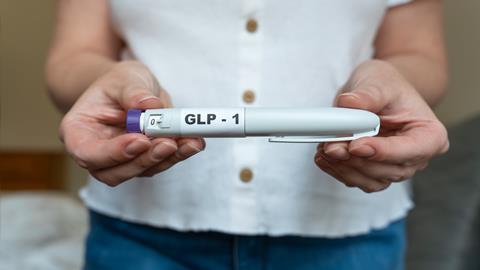

No US or EU regulator has defined ‘GLP-1 friendly’, yet manufacturers are shipping the claim – and the compliance exposure is real.
Conagra puts ‘GLP-1 Friendly’ directly on Healthy Choice packaging. While Nestlé did not use the exact phrase in its May 2024 launch materials, its subsequent Vital Pursuit Max Pro range was positioned for consumers using GLP-1 medications and pursuing weight management. Neither the US Food and Drug Administration (FDA) nor the US Department of Agriculture (USDA) has defined what the term actually means.
The claim has spread fast. Smoothie King had already launched a five-drink GLP-1 Support Menu in October 2024 and Lactalis added a :ratio Pro-Fiber yoghurt, 20g protein and 10g fibre per serving, in November 2025. By December 2025 both Chipotle and Shake Shack had launched high-protein menus of their own, each marketing items outright as ‘GLP-1 friendly’. None of this activity sits inside a labelling standard that a US or European regulator has specifically established for ‘GLP-1 friendly’. The absence of a dedicated definition does not, however, mean the claims sit outside existing food-labelling, health-claim or advertising rules.
The claim nobody has defined
Neither US agency with primary responsibility for food labelling has published a definition of ‘GLP-1 friendly’. Meat, poultry and most egg products fall to USDA’s Food Safety and Inspection Service (FSIS) for label approval; most other packaged foods sit with the FDA. FSIS approval confirms a label meets general requirements around ingredients, nutrition claims and safety – it is not the same as defining, or approving, ‘GLP-1 friendly’ itself and neither agency has published guidance that does. Conagra’s own announcement states that USDA “has reviewed and approved all products carrying the badge”. That approval relates to the specific labels submitted to FSIS; it does not create a generally applicable definition or standard for other manufacturers to rely on.
BY THE NUMBERS
• About 30 percent of an individual’s weight loss from using a GLP-1 receptor agonist is lean mass rather than fat: a meta-analysis of nine randomised trials (659 participants) found 6.9kg greater total weight loss and 1.9kg greater lean mass loss with GLP-1 therapy versus placebo.
• A separate meta-analysis of GLP-1 recipients with type 2 diabetes and sarcopenia found no significant difference in lean body mass or skeletal muscle index versus controls.
• 31.7 percent of patients discontinued a GLP-1 agonist within 180 days, most commonly over adverse effects or cost, in a single-institution study of 1,374 patients at Kaiser Permanente Colorado between 2018 and 2023.
• Conventional food manufacturers do not have to notify the FDA before making a structure/function claim, and no on-label disclaimer is required (FDA, Structure/Function Claims).
• The Federal Trade Commission (FTC)’s final order against telehealth provider NextMed, approved 3 December 2025, required $150,000 in consumer redress over unsubstantiated GLP-1 weight-loss claims and fake reviews (FTC, NextMed final order, 2025).
Some manufacturers are using more indirect positioning. Acosta Group’s own research describes a polarising effect when the term GLP-1 appears outright on pack, and the more common approach across the category is coded language: high protein, added fibre, muscle-mass support, smaller portions, without the letters GLP-1 anywhere on pack. That caution has commercial as well as regulatory motivation. A high-protein or high-fibre claim may stand on its own as a nutritional proposition, whereas explicitly linking those characteristics to GLP-1 treatment can introduce additional health-claim and medicines-advertising considerations. The distinction lies in what the marketing communicates, not simply in whether the letters ‘GLP-1’ appear on the pack.
31.7 percent of patients discontinued a GLP-1 agonist within 180 days.”

Why the physiology behind the claim matters
The commercial logic is real. Tate & Lyle’s own research into what GLP-1 users want from food keeps landing on the same three priorities – taste, texture and satiety – and GLP-1 receptor agonists change what a body needs from food enough that ignoring the difference is its own kind of risk.
HOW IT WORKS
• GLP-1 receptor agonists mimic the action of the naturally occurring gut hormone glucagon-like peptide-1 (GLP-1), reducing appetite and food intake through effects on central and peripheral pathways and, for some agents, slowing gastric emptying.
• Reduced energy intake is a major driver of the weight loss produced by GLP-1 receptor agonists, although the drugs have broader physiological effects.
• A calorie deficit of this scale can reduce absolute protein intake, potentially making it harder for manufacturers to provide enough protein to support muscle protein synthesis – a risk now documented directly in the clinical literature.
• GLP-1 receptor agonists can slow gastric emptying and reduce appetite, while gastrointestinal adverse effects including nausea and constipation are common during treatment. These effects can contribute to tolerability problems and treatment discontinuation.
• Food formulated for this audience is thus answering a three-part physiological brief: protein density, smaller portions and easier tolerance.
The evidence on how much that lean-mass loss matters clinically is not settled. Beavers’ meta-analysis pools nine randomised trials at a mean participant age of 41.7; a separate meta-analysis focused on patients who already had type 2 diabetes and sarcopenia found no significant difference in lean body mass or skeletal muscle index between GLP-1 recipients and controls. Recent clinical research adds a further complication: the GLP-1 agonist liraglutide holds protein at a stable share of total energy intake, roughly 14 to 17.5 percent, but total energy intake itself falls far enough to render absolute protein consumption levels insufficient to adequately support muscle protein synthesis, even when protein remains a similar share of total energy intake. A product genuinely formulated to close that gap is not the same claim as one merely labelled to imply it does.

Where the compliance line actually sits
In the US the dividing line is well established, though rarely tested against this exact wording. A conventional food can make truthful structure/function claims derived from its nutritive value without premarket notification to the FDA. But claims must not be misleading; those that imply a food is intended to treat, prevent or mitigate disease can raise drug-claim issues under the Federal Food, Drug, and Cosmetic Act. The dividing line is therefore not the presence of the letters ‘GLP-1’ alone, but what the claim communicates about the product’s intended use and effects.
The Federal Trade Commission (FTC) regulates advertising alongside the FDA’s primary responsibility for food labelling. For health-related advertising claims, the FTC expects advertisers to have a reasonable basis for the claim before it is disseminated, with health claims generally requiring competent and reliable scientific evidence.
The picture is more restrictive outside the US. Under EU Regulation (EC) No 1924/2006 health claims about foods are subject to an authorisation system based on scientific assessment, with the European Food Safety Authority (EFSA) evaluating the evidence and the European Commission responsible for authorisation. No authorised EU health claim currently establishes a ‘GLP-1 friendly’ food category. Separately, UK advertising rules prohibit advertising prescription-only medicines to the public. That creates an additional consideration where food marketing could be interpreted as promoting a prescription medicine, but it does not mean that every reference to GLP-1 in food marketing is automatically prohibited.
Indeed, this rule has not stopped the claim reaching UK shelves. Morrisons launched the UK’s first GLP-1-friendly supermarket ready meals, in a licensing deal with Applied Nutrition, on 2 January 2026 – a sign of how far the claim has already spread, even into a market where the underlying health-claim rules are tighter than in the US.
WHAT TO CHECK
• Separate nutritional positioning from physiological or therapeutic claims. A claim about objectively verifiable composition or nutrient content is materially distinct from suggesting a product influences GLP-1, appetite, satiety, weight loss or a disease or medical condition. The latter requires substantially closer regulatory scrutiny.
• Treat references to GLP-1 medicines as a separate risk category. Names such as ‘Ozempic’, ‘Wegovy’, ‘Mounjaro’ and ‘Zepbound’, and active ingredients including semaglutide and tirzepatide, can introduce medicines-advertising, health-claim and trademark considerations. In the UK in particular, regulators have acted against advertising that indirectly references GLP-1 medicines where it is likely to lead consumers to request a prescription-only medicine.
• Confirm the applicable US regulator before making a claim. Meat, poultry and egg products fall under USDA FSIS rather than FDA jurisdiction, while most other foods fall under FDA. Neither agency has established a regulatory definition of ‘GLP-1 friendly’, so proprietary or expert-reviewed terminology should not be presented as an official designation.
• For EU markets, assess ‘GLP-1 friendly’ against the health-claims framework rather than treating it as a new product category. No authorised EU health claim currently establishes such a category. In Great Britain, the Advertising Standards Agency has already ruled that a product name implying an effect on GLP-1 constituted a specific health claim requiring authorisation, while separate rulings have found comparisons with GLP-1 medicines capable of making a food supplement medicinal by presentation.
• Scrutinise third-party endorsement as well as the underlying claim. Influencer, dietitian and expert endorsements can trigger FTC disclosure requirements where there is a material connection with the brand. The underlying health-related claim must also meet applicable substantiation requirements; an expert endorsement does not, by itself, make a claim compliant.
None of this makes the commercial opportunity illusory. Higher -protein, smaller-portion, nutrient-dense products may address genuine nutritional considerations for people taking GLP-1 medicines, whether or not a manufacturer ever cites ‘GLP-1’ on the pack. But the absence of a formal ‘GLP-1 friendly’ category does not create a regulatory vacuum. Existing rules on health claims, medicines advertising and misleading marketing still apply – and recent enforcement and adjudications show that regulators are already beginning to test where the boundaries lie.
The absence of a formal ‘GLP-1 friendly’ category does not create a regulatory vacuum. Existing rules on health claims, medicines advertising and misleading marketing still apply.”
















No comments yet