

The UKHSA, FSA and public health partners are investigating three concurrent Salmonella Enteritidis clusters in England, with 586 confirmed cases and two deaths reported as of September 2026.
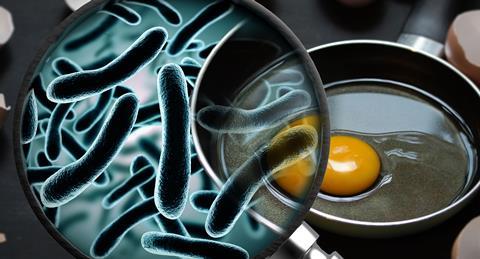
Three clusters of Salmonella Enteritidis infections in England are continuing to be investigated by public health authorities, with evidence suggesting links to imported eggs.
The agency are working alongside the Food Standards Agency (FSA) and other public health partners as they continue their ongoing investigation.
As of 15 September 2026, there have been 355 confirmed cases and one death linked to the t5.9411 cluster. Samples from affected patients date from 11 August 2025 to 7 September 2026.
A further 189 cases have been confirmed in the t0.24068 cluster, with no deaths reported. Samples in this cluster date from 27 May 2025 to 2 September 2026.
The third cluster, t5.9765, has been linked to 42 confirmed cases and one death. Sample dates range from 27 January 2026 to 24 August 2026.
Fewer cases reported
Authorities said fewer cases had been reported in recent weeks, although infections continue to be associated with a range of food outlets including small cafés, restaurants and takeaway businesses.
Dr Gauri Godbole, Deputy Director for Gastrointestinal Infections, Food Safety and One Health at UKHSA, said it was too early to determine whether the outbreak was subsiding.
While new cases are still being reported, we have seen fewer cases over recent weeks. However, it is too early to say if the outbreak is subsiding and we are continuing to monitor closely. Our investigation to date indicates links to imported eggs, however this investigation remains ongoing. We will continue to follow up cases and investigate any further common sources if they come to light.”
Dr Gauri Godbole, Deputy Director for Gastrointestinal Infections, Food Safety and One Health at UKHSA
She stressed that the overall risk to the public remained low. In England, Salmonella samples from patients seen in hospitals or primary care are routinely analysed using Whole genome sequencing, which helps health authorities identify and investigate potential outbreaks.
Most Salmonella infections cause diarrhoea, stomach cramps, vomiting and fever, which usually resolve without treatment after a few days. However, the infection can occasionally cause more serious illness including sepsis requiring hospital admission, particularly in young children, older adults, pregnant women and people with weakened immune systems.
FSA issues food safety advice
Professor Ian Young, Chief Scientific Adviser for the Food Standards Agency, said investigations into the outbreaks had not yet identified their exact causes but had found links to imported eggs.
We continue to work closely with the UK Health Security Agency and other partners to investigate outbreaks of Salmonella Enteritidis. The exact causes of these outbreaks have not yet been identified, but investigations so far have identified links to imported eggs. There is no evidence that UK-produced eggs are affected.”
Professor Ian Young, Chief Scientific Adviser for the Food Standards Agency
The FSA said eggs that are thoroughly cooked and handled hygienically should not present a food safety risk.
Infants, young children, pregnant people and older adults should only eat raw or lightly cooked eggs if they carry the British Lion mark or are produced under the Laid in Britain scheme.
This advice does not apply to people who are severely immunocompromised and require medically supervised diets. They should continue to follow individual medical advice.
For vulnerable people eating out or buying food containing eggs, the FSA said it may not be possible to know whether the eggs carry the British Lion mark or are covered by the Laid in Britain scheme. The safest approach when eating out is to ensure eggs are thoroughly cooked and avoid dishes containing raw or lightly cooked egg such as mousses, fresh mayonnaise and hollandaise sauce.
Good food hygiene also remains important. Consumers are advised to store and cook food according to packet instructions, wash their hands thoroughly before handling food and always wash their hands after handling raw meat, poultry and eggs.






No comments yet