




England’s new school food standards will restrict fried food, processed meat and desserts, while introducing breakfast nutrition requirements from 2027.

Schools across England will face tighter rules on fried food, processed meat, sugary desserts and breakfast options from September 2027 under the biggest overhaul of school food standards in more than a decade.
The new standards will ban deep frying, increase requirements for fruit, vegetables, wholegrains and fibre, and restrict foods including sausages, chicken nuggets and sweetened desserts. Breakfast clubs will also face dedicated nutrition requirements for the first time.
The government says the reforms will help tackle childhood obesity and poor nutrition while supporting pupils’ concentration, learning and wellbeing. One in three children leave primary school overweight or obese, while tooth decay linked to high-sugar diets remains the leading cause of hospital admissions among children aged five to nine.
Education Secretary Lucy Powell said: “These are once-in-a-generation changes that will transform school food for children across the country.
“From our historic expansion of free school meals to the rollout of free breakfast clubs and new school food standards, we are making sure that every child has access to the healthy meals we know children need to learn, grow and succeed.”
What will change on school menus?
The reforms translate those wider health ambitions into specific requirements for school meals.
These are once-in-a-generation changes that will transform school food for children across the country.”
Education Secretary Lucy Powell
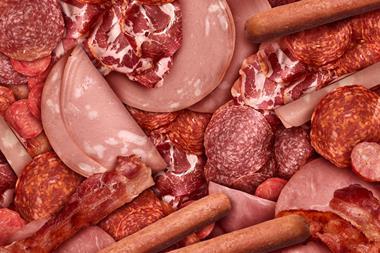
Processed sausages, chicken nuggets and ham will be restricted to once a week and must come with fruit or vegetables. Sweetened desserts will fall to a maximum of twice a week in secondary schools and once a week in primary schools, with fruit served alongside them.
Schools will no longer be able to deep-fry food, meaning products such as chips must instead be oven-baked. At least one pasta dish each week must contain 50 percent or more wholewheat pasta, while bread must contain at least 4g of fibre per 100g and use a minimum of 50 percent wholemeal flour.
Breakfast provision will also face tighter requirements. The new rules will exclude pastries and fried eggs, introduce limits on sugar in cereals and prohibit chocolate spread.
Key school food changes from September 2027
-
Deep frying: No deep frying permitted, with chips instead oven-baked.
-
Desserts: Sweetened desserts limited to twice weekly in secondary schools and once weekly in primary schools, with fruit included.
-
Fruit and vegetables: Every dish must contain at least one portion of fruit or vegetables.
-
Wholegrains: At least one pasta dish each week must contain 50 percent or more wholewheat pasta.
-
Bread: Higher-fibre bread must contain at least 4g of fibre per 100g and a minimum of 50 percent wholemeal flour.
-
Breakfasts: No pastries or fried eggs, with limits on cereal sugar content.
-
Condiments: Reduced-salt and reduced-sugar condiments limited to 10g portions, with chocolate spread excluded.
-
Processed meat: Sausages, chicken nuggets and ham limited to once a week and accompanied by fruit or vegetables.
Alongside the menu changes, the government plans to strengthen scrutiny of how schools meet the standards. Schools will need to publish food policies and menus online and nominate a school food governor, while the Department for Education (DfE) will work with the Food Standards Agency (FSA) on a new monitoring approach.
Professor Susan Jebb, Chair of the FSA, said: “We want to see school food standards that are effective in practice, and schools appropriately supported to meet them. That’s why we’ve been working closely with DfE, offering our expertise on food regulation, assurance and the practical considerations involved in implementation.
“Our aim is to help shape a future approach that is practical, proportionate and deliverable, and we look forward to continuing to work with DfE to ensure every school is offering pupils food that meets the nutritional standards.”
Delivering the new standards
The tighter requirements will have implications beyond school kitchens, particularly for the products schools and caterers procure.
Suppliers serving the education sector may see greater demand for products that meet the new fibre, wholegrain, sugar and other nutritional requirements. Caterers, meanwhile, will need to adapt menus while balancing nutritional improvements with affordability, availability and pupil acceptance.
The final rules follow a nine-week consultation launched in April 2026 involving school food providers, caterers, manufacturers and suppliers. Most changes will take effect from September 2027, with a small number of requirements for secondary schools phased in from September 2028.
Delivering the changes may prove challenging. A six-week pilot of the proposed standards at a Brighton primary school resulted in a 15 percent fall in school-meal uptake, while the caterer involved estimated that the healthier menu added around 20p per meal.
The pilot highlights a central implementation challenge: improving nutritional quality while keeping meals affordable and appealing enough for pupils to choose them.
Support is also emerging to help schools make the transition. Five food and education organisations have formed the School Food Project, backed by a £2.3 million implementation fund to help schools improve menus, train kitchen teams and deliver healthier food within existing budgets.
Anna Taylor, Executive Director of The Food Foundation, said: “Good school food standards are critical to making that happen and the School Food Project is there to help schools train up their kitchen teams and work with pupils to improve menus. This all needs to be underpinned by a robust approach to monitoring and supporting schools to improve.”
How school food standards differ across the UK
While England prepares for the new requirements, school food policy remains devolved, meaning standards vary across the four UK nations.
England: New standards take effect from September 2027, including a ban on deep frying, tighter restrictions on processed meat and sweet desserts, increased wholegrain and fibre requirements and new breakfast rules.
Wales: New guidance is due to take effect by the end of 2026, with greater emphasis on offering at least two portions of vegetables every day. Only water, milk or plant-based drinks will be permitted for hydration.
Scotland: Legislation updated in 2020 requires schools to offer at least two portions of vegetables and one portion of fruit every day. Oily fish must also be served at least once every three weeks.
Northern Ireland: Regulations last updated in 2007 require schools to provide bread every day without spread and offer two portions of fruit and vegetables daily. If beans or pulses provide the protein element of a main course, another vegetable must also be available.
















No comments yet