




Backed by data-driven insight, Sharon Bligh from the Consumer Goods Forum cuts to the heart of how manufacturers can get ahead of the curve by catering to the distinct yet varying needs of today’s consumer.
The wellbeing boom is now considered a structural shift of the consumer goods industry. With its global market forecast set to reach $9.8 trillion by 2029, consumer expectations are evolving rapidly, demanding products that support healthier lifestyles, while fitting into daily realities.
New research from The Consumer Goods Forum (CGF) with Bain & Company, published last week at our Global Summit, reveals the tension consumers face between health and convenience.
While they associate cooking from scratch at home with healthier eating, only half of at-home meals are produced this way. Lack of time tops the chart as the biggest barrier, with 46 percent of those surveyed saying they are too busy to cook despite wanting to do so. The findings highlight a clear gap between aspiration and behaviour.
In this new landscape, the focus for food companies is no longer just about taste or price, but how effectively health and convenience can converge.
Three shifts will define how companies can navigate this new reality:
1. Fragmented lifestyles
People’s eating habits have become more fragmented. Our report finds that a staggering 40 percent of all at-home main meals are eaten alone. Even in multi-person households, one in four meals is a solo affair.
Eating habits are also becoming more fluid and flexible, with three large meals per day sometimes being replaced by snacking or smaller but more frequent meals, often on-the-go.
To reflect these more individualised lifestyles, companies must move beyond improving nutritional profiles towards supporting a growing range of eating occasions across the day. This can include providing energy before a workout, supporting recovery afterwards, helping to maintain focus during a busy workday or offering a convenient source of nutrition. Products that are modular, easy to consume or resealable can help consumers move between meals, snacks and on-the-go consumption, while still meeting their nutritional goals.
In this new landscape, the focus for food companies is no longer just about taste or price, but how effectively health and convenience can converge.”
2. AI-informed decision making
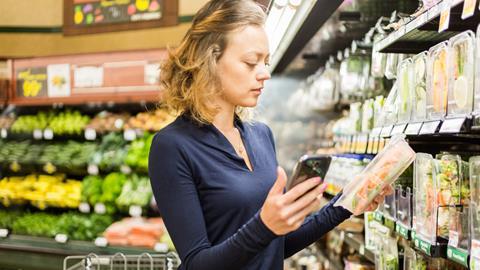
Technology is playing a central role in the wellbeing boom. Our research shows that half of consumers already use digital tools, including AI, for food planning, preparation and shopping. Searching for recipe inspiration is the most common use case, followed by researching nutritional information and dietary guidance.
Consumers are also turning to AI for convenience, such as building shopping lists, finding deals on preferred products and discovering new items – often during online shopping and well before they step into a physical store.
The rise of AI and digital tools is reshaping how consumers discover and evaluate food products, reducing the influence of traditional brand relationships and elevating the importance of algorithm-driven visibility.
For brands and retailers that want to get ahead of the curve, this requires a rethink of how value is created and delivered. Companies can leverage AI to analyse real-time consumer data and identify emerging dietary preferences and micro-trends, enabling faster and more targeted product innovation. It can also support more personalised offerings, such as tailored meal recommendations or nutrition-led product bundles, that align with individual wellbeing goals.
3. Clear and accessible information is key
As purchasing decisions are increasingly influenced by AI-powered sources before consumers shop online or enter a physical store, inaccuracies or unclear product information are more likely to be penalised.
This places greater emphasis on clear and consistent communication. Companies that present accurate, accessible and well-structured information are better placed to build trust, strengthen loyalty and support informed decision making. In practice, this means providing richer yet transparent product data to improve how products are interpreted by not only consumers but also AI platforms, while ensuring consistency across channels to avoid conflicting or confusing information.
For retailers and manufacturers, this presents an opportunity to embed communication and consumer engagement early on at the product development and marketing stages. From clear labelling to accessible product information and aligned messaging across retail and digital platforms, these efforts can help consumers better understand product attributes and make more confident choices.
The opportunity lies in recognising that this is not a marginal change, but a transformation across the value chain.”
The wellbeing transformation
At the CGF, we believe enabling people to live healthier lives is the future of food. This view is also echoed by many industry leaders attending the Global Summit. For food companies, the next step is to rethink where growth can come from under this shift.
As the wellbeing norm and demand for convenience continues to shape decision making, traditional boundaries between food and supplements, as well as online and in-store engagements, are blurring. The opportunity lies in recognising that this is not a marginal change, but a transformation across the value chain.
Companies that fail to adapt their products and consumer engagement strategies risk falling behind. Those that succeed will embed health, convenience and personalisation into every aspect of their business, turning changing consumer expectations into a source of growth.









No comments yet