



Study finds FDA-backed “healthy” labels increase healthier snack purchases and price premiums, highlighting the commercial power of credible regulatory endorsements.

A new study suggests that snacks carrying an FDA-backed “healthy” label could see stronger sales and higher prices, as consumers increasingly respond to trusted nutrition signals on packaging.
Researchers from Oregon State University and Tufts University found that shoppers were more likely to choose healthier snacks when products displayed a “healthy” icon – particularly one endorsed by the US Food and Drug Administration (FDA). The study also showed consumers were willing to pay an average 59 cents more for snacks carrying the FDA-backed label compared with products without it.
The findings highlight the commercial potential of credible nutrition labelling as food manufacturers respond to evolving dietary guidance and regulatory standards.
In 2024, the FDA updated its definition of the term “healthy” for use on food packaging, replacing a standard introduced in 1992. The revised definition aligns with current nutrition science and federal dietary guidance. The regulator has also proposed a new “FDA healthy” icon for food packages, although the symbol is still awaiting final approval.
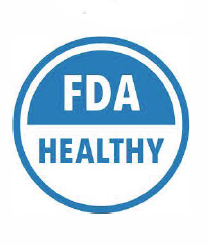
Study examines consumer snack choices
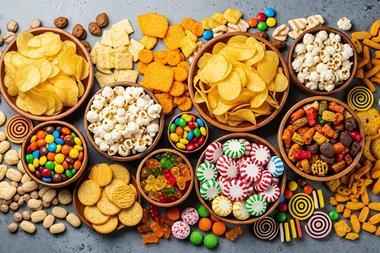
To understand how regulatory endorsement affects consumer behaviour, the research team conducted an in-store experiment in 2023 involving 267 shoppers across six grocery stores in the Boston area. Participants were shown images of 15 real snack products – nine meeting the new FDA healthy criteria and six that did not – first without any health label and then with either a generic healthy icon or an FDA-backed symbol.
Participants were given $5 in cash and a $10 store gift card, with the cash usable towards the purchase of a selected product. The design ensured shoppers’ decisions had real financial consequences rather than being purely hypothetical.
Giving study participants purchasing power in a setting that mirrored a real shopping experience let us better observe how the labels might influence behaviour.”
Sean Cash, chair of the Division of Agriculture, Food and Environment at the Gerald J. and Dorothy R. Friedman School of Nutrition Science and Policy at Tufts University and senior author of the study.
Overall, consumers were more likely to choose healthier snacks than less healthy alternatives. Selection rates increased further when healthy labels were present, but only the FDA-endorsed symbol produced a statistically significant effect.
Power of trusted labels
The researchers say the stronger impact of the FDA label reflects the importance of institutional credibility in shaping purchasing decisions, with trusted regulatory endorsements more likely to influence both eating patterns and buying behaviour.
Our main finding is that trust in government was an important part for people and that they were willing to pay more for that label.”
Katherine Fuller, assistant professor at Oregon State University and lead author of the study.
The results echo earlier findings linked to the United States Department of Agriculture organic certification, which has historically allowed products to command a premium price.
Further analysis also revealed that the influence of the FDA label varied depending on how much consumers trusted government institutions. Shoppers who reported higher levels of trust in government were more responsive to the FDA-backed healthy icon.
Right now, there is a lot of misinformation about what is healthy and what isn’t healthy.
Having a clear label, supported by scientific research, saying this is healthy because we checked, is important.”
Katherine Fuller, assistant professor at Oregon State University





No comments yet