


As consumers push for simpler products, greater transparency and more balanced nutrition, Jo-Ann McArthur, President of Nourish Food Marketing, shares the key shifts and opportunities shaping food integrity and innovation in 2026.
With greater attention on food processing and ingredient integrity, what risks are food manufacturers dealing with today that feel especially important in 2026?
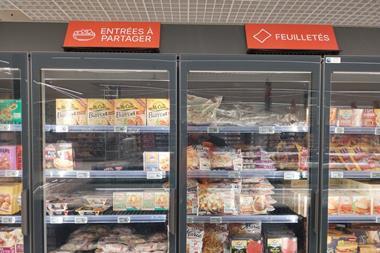
Jo-Ann McArthur: Well, that’s a big one. In Canada, as of 01 January, we had to introduce those front-of-pack labels. So we’re going through that right now in terms of nutritional labelling: foods that are high in sugar, saturated fat or sodium now have to be clearly called out.
People are questioning the amount of processing and ultra-processing in foods, even though they can’t always define what ‘ultra-processed’ actually means.”
I don’t think you have that in the UK yet, but it exists in other markets. However, coupled with processing really being in the spotlight, our trend report found this to be something consumers are paying far more attention to.
People are questioning the amount of processing and ultra-processing in foods, even though they can’t always define what ‘ultra-processed’ actually means.
Processing is definitely in the headlines and we’ve even seen that also in the US, where new food regulations are starting to focus on what they call ‘highly processed foods’. In Canada, we had a couple of years of lead-up to the implementation of front-of-pack labelling, and there’s been a lot of reformulations as companies try to avoid having those labels on pack.
The 2026 trends report highlights “The Return to Real,” with growing demand for authenticity and simpler food. How is this influencing choices around processing methods, ingredients and reformulation?
It’s about going back to real food. One of the things we highlighted in the report was what has happened in ‘plant-based milk’.
That was a fast-growing category in Canada, but consumers started reading ingredient labels, noticing just how long they were and how many ingredients were included. They also started looking more closely at the nutritional profile and it wasn’t delivering the same nutrition as real milk.
So we’ve actually seen an upturn in [dairy] milk for the first time in a long time – and butter just hit a historic high on a per capita basis in North America.
There’s also been a real push away from some of those faux meats we saw like Beyond Meat and Impossible Foods.
Consumers want products that deliver on taste, health and nutrition. I think they’re sceptical of foods where components are pulled apart and reformulated, because it isn’t necessarily better for you and doesn’t always taste as good.
At the same time, there’s renewed interest in fermented foods and traditional methods. Consumers are getting a more nuanced understanding of health – partly through wearables – and AI is going to accelerate that. It seems that consumers are trying to get a more sophisticated view of health and how the gut really does play a big role in that.
Scrutiny of ultra-processed foods continues to grow. How can companies strike the right balance between explaining processing methods and addressing concerns around safety, shelf life and affordability?
That’s a great question. Most food, unless you’re in the produce aisle, has some level of processing.
Consumers don’t always have a sophisticated understanding of what that really means.
I appreciate the approach of the brand Oatly because they’re very transparent; they own things. They even had that website, F*** Oatly, where they talked openly about where they got things right and where they got things wrong.
They’ve come out with packaging on the carton that tries to challenge that plant-based, ultra-processed, unhealthy narrative. They have a side panel that says “trust the processed. When turning oats into a tasty liquid like the one you’re holding, we use clever production processes like heat treatment and homogenization. They are also used for cow’s milk.”
It goes on to tell this story and educate but in a fun way. Transparency is always going to be your friend.
While having an idealised view of the food system, it’s important to remember what reality looks like for many people.”
But I do worry about affordability. I’m not a big fan of broad value statements like ‘ultra-processed is bad.’
It’s great to say we should all cook from scratch, but the reality is that if you’re a working parent with a couple of kids, exhausted, on a budget and short on time, processed food is often your friend and what makes meals possible.
So while having an idealised view of the food system, it’s important to remember what reality looks like for many people.
Consumer diets are moving away from focusing on a single ‘hero’ ingredient towards more balanced nutrition. How is this influencing how food companies think about what a successful product looks like today?
There is definitely a focus on protein, as there should be, but I think we’ve added protein to just about anything: protein popcorn, protein water – if you can add it, it’s been done.
But it doesn’t necessarily mean it’s a good product. A lot of them are indulgent products trying to create a health halo they don’t really deserve. Consumers are starting to get a more sophisticated understanding of how macronutrients need to work together.
We always watch TikTok because it shows food trends at the speed of social globally. One of the big trends was fibre-maxxing.
Truthfully, we’re more deficient in fibre than we are in protein and there’s now an acknowledgement that you need both – nutrients work together. That functional balance is something we’re starting to see more of.
General Mills in the US introduced a line of products called Ratio – so called because it provides the balanced profile consumers are looking for. Their tagline is: “We do the math so you don’t have to.” I think that’s a really smart way of looking at things.
From an R&D point of view, what changes are you seeing in formulation or ingredient selection as companies respond to shifting consumer and regulatory expectations?
We’ve seen a major run-up in reformulation. A lot of companies were reformulating ahead of front-of-pack labelling changes and I think that will continue.
We’re seeing a real reformulation wave because you’ve got front-of-pack labelling – not just here but also in the US – scrutiny on ultra-processed foods, as well as the GLP-1 effect.
But it’s not easy; you can’t just sub in one product for another – quite often it’s a whole matrix [change], but we are seeing companies really looking at that and looking for new ingredients.
One company we work with, Crush Dynamics out of British Columbia, upcycles grape skins and turns them into a powder that allows formulators to reduce sugar and sodium without off-notes. It’s cost neutral at worst, and often saves money. It’s great to see an upcycled ingredient that ticks the boxes in a few ways; something that’s upcycled as well as a better-for-you ingredient that product reformulators can use.
Transparency is increasingly expected, but it can also introduce complexity. How are companies deciding what information about sourcing and processing is most helpful to share?
The consumer can only take in so much information. QR codes still do a great job of letting people go deeper.
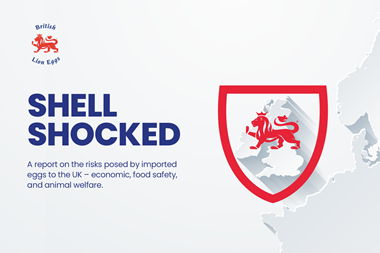
We used the example of egg cartons in our trend report, because it’s one thing to say your egg is laid by a free-range hen; it’s another thing to show it. Vital Farms in Canada and the US lets consumers go online to access a webcam showing farm conditions. Honest Eggs out of Australia takes it
If you look at content creation, consumers want real, unvarnished content, not looking like it is over-polished or AI-generated.”
even further. They gave their hens mini pedometers and a Strava account called “Fitchix,” so you can actually see how many steps that hen took that day.
It’s a concept of radical transparency, which can be really tough as a lot of companies don’t want to invite consumers in as they’re worried. But anytime you can pull that curtain back, it feels more authentic.
If you look at content creation, consumers want real, unvarnished content, not looking like it is over-polished or AI-generated.
That’s why I like Oatly so much: they’re transparent, and they own the fact that sustainability is a journey. Sometimes you get it right, sometimes you get it wrong, but owning that builds trust.
Data, digital tools and traceability systems are often positioned as solutions for building trust. Where do they add the most value and where can they fall short?
There are certain products consumers care more about than others.
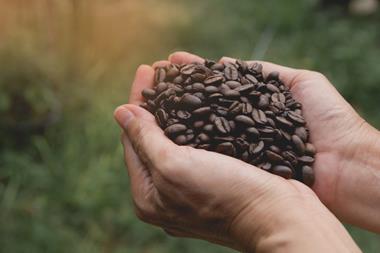
Fair trade in coffee and cocoa is a shortcut to transparency and trust. Blockchain may matter more for fish, where you have fraud or concerns about overfishing.
So, it really depends on the category.
Many of these challenges span R&D, regulatory, sourcing and commercial teams. Why are cross-industry environments like SIAL useful for addressing these issues together?
Innovation in food has really lagged over the past 10 years. A lot of what we’ve seen has come from entrepreneurs’ kitchens.
If you think of Poppi, the better-for-you soda, it came out of the founders’ kitchen. Then Pepsi buys it for $2 billion. Pepsi has all the R&D resources in the world and they didn’t come up with that.
SIAL is where you get to see innovation from around the world and the startup alleys are often where you see the most exciting developments. It’s a great place to see what’s happening.
For professionals attending SIAL, what kinds of conversations or insights should they focus on to stay aligned with evolving expectations around food integrity and innovation in 2026?
To me, it’s about staying curious, walking the floor and having conversations with people. Make sure you walk every aisle because you’ve got exhibitors from around the world. You’ve got founders who are excited to tell their story and could be the next Poppi.
So go in with an open and curious mind.
Discover more at SIAL Canada 2026

SIAL Canada returns to Montreal from April 29th to May 1st, 2026, bringing together leading voices across food innovation, ingredients and consumer trends.
Learn more at: https://sialcanada.com/
Meet the expert:

Jo-Ann McArthur, President of Nourish Food Marketing
Toronto-based but serving the world, Nourish Food Marketing is a full-service agency exclusively focused on the food, beverage, and agriculture industry. We help our clients stand out in one of the most competitive sectors. For more information, visit www.nourish.marketing.