




Emerging research on creatine, collagen and glutathione is challenging long-held assumptions about the role of bioactive ingredients in women’s health. Enzym Groups Olena Krasovska considers the implications for ingredient innovation, formulation and functional food development aimed at supporting healthy ageing.
For a long time, the functional food industry was focused on improving physical performance. Many bioactive compounds were associated primarily with sports nutrition or specialised supplements. Today, however, the role of bioactive ingredients in food and beverage formulation is evolving beyond performance nutrition towards daily health maintenance and active longevity. This signals a fundamental change in consumer behaviour and consequently in approaches to product formulation.
The financial forecasts confirm the scale of this transformation. According to Market Reports World, the global bioactive ingredients market was valued at over $40 billion in 2026 and is projected to reach $67 billion by 2035. Behind these aggregate growth figures lies detailed consumer segmentation by age and physiological need. Women over 40 now represent one of the most strategically important and historically underserved segments in this space.
The hormonal changes associated with perimenopause and menopause are often accompanied by declining oestrogen levels, loss of lean muscle mass, reduced bone mineral density and shifts in cognitive and metabolic function. Against this backdrop, developing functional solutions becomes a logical strategic move for businesses. A fresh look at familiar ingredients, such as creatine, collagen and glutathione can help address the needs of this market, as recent research is reframing what these compounds can offer in the context of women’s longevity.
A new perspective on familiar compounds
Creatine: from sports supplement to longevity ingredient
For many years, creatine was perceived almost exclusively as a sports supplement for muscle building, marketed primarily to men; and this was perhaps the most persistent misconception in the field. Today, it is gaining recognition as a promising ingredient for healthy ageing, particularly in pre- and postmenopausal women.
The decline in oestrogen is often associated with sarcopenia, which involves loss of muscle mass and decreased bone mineral density. Contemporary clinical research indicates that combining creatine supplementation with resistance training may support better preservation of both muscle mass and bone density.
Creatine acts as an energy buffer in tissues with high metabolic demands, including the brain. Beyond its musculoskeletal applications, this capability may reduce mental fatigue and support cognitive function, particularly under conditions of stress or age-related change. Together, these properties position creatine as a functional ingredient relevant not only to athletic performance, but also to daily health support.
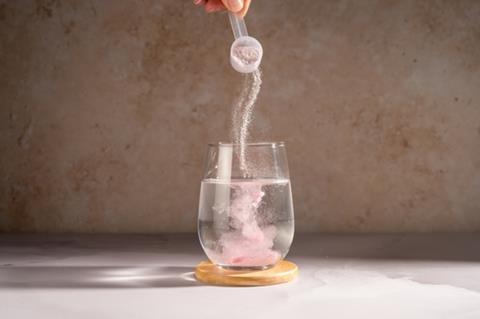
Hydrolysed collagen: from ‘building block’ to bioactive signal
The long-held assumption was that dietary collagen is simply broken down into amino acids and used by the body as an ordinary protein. However, more recent research suggests that specific collagen peptides may serve a signalling function, influencing cellular processes.
Pro-Hyp dipeptides, generated during hydrolysis, may be absorbed into the bloodstream and interact with fibroblasts, which are cells of connective tissue. Notably, experimental models indicate that they can stimulate endogenous synthesis of collagen, elastin and hyaluronic acid.
This mechanism could contribute to improvements in skin elasticity, joint function and vascular health, though the magnitude of effect depends on the peptide profile, dosage and duration of use. For postmenopausal women, in whom endogenous collagen synthesis declines progressively, hydrolysed collagen offers new possibilities for supporting skin resilience, joint integrity and vascular function.
Fermentation innovation: glutathione and the next generation of antioxidants
The potential of fermentation technology is being reconsidered just as radically as the capabilities of individual ingredients. Where fermentation was once primarily associated with probiotics and digestive health, modern biotechnology now enables the production of high-value functional ingredients, including antioxidant compounds such as glutathione. One of the principal intracellular antioxidants, glutathione protects cells from oxidative stress and supports mitochondrial function. Given that its levels decline with age, this increases its relevance to women’s health after 40. However, the use of glutathione is limited by its poor stability and low bioavailability in free form.
The team at Enzym Group is working in this direction through fermentation-based approaches to produce functional yeast-derived solutions. These ingredients potentially support systemic antioxidant status and may form part of a comprehensive approach to reducing the impact of oxidative stress – one of the key drivers of accelerated ageing.
A strategic window of opportunity: converting science into market advantage
More than 75 percent of consumers globally now select products containing bioactive compounds, and over 6,000 new products featuring such ingredients were launched in 2023 alone. According to reports, more than 58,000 products currently on supermarket shelves contain these compounds.
Fortune Business Insights claims the global functional food and beverage market was valued at $398.8 billion in 2025 and is projected to reach $983.1 billion by 2034. This growth trajectory is accompanied by thousands of new product launches each year, clearly showing a well-established consumer demand for products with demonstrated biological value.
Yet the market remains unevenly distributed and women over 40 continue to represent a segment with unmet needs. The challenge is not a shortage of products – it is that most are not specifically formulated around the physiology of this life stage. In a comprehensive approach, creatine, collagen and glutathione function together as three components of a unified daily health support system. This points to several distinct directions for manufacturers:
First: Fermentation-derived glutathione offers an opportunity for clean-label antioxidant solutions, from ready meals to functional beverages, free of synthetic additives.
Second: Creatine needs to be rethought and moved from the category of a sports ingredient to an everyday ingredient for supporting energy, strength and cognitive function – particularly for women over 40.
Third: The potential of collagen lies in its transition from generic supplement towards functional food products with well-defined bioactive peptide profiles and evidence-based dosing, positioned within the beauty-from-within segment.
Between the lab and the shelf: why a good ingredient ≠ a good product
Bioactive ingredients may have demonstrated efficacy, but integrating them into food products requires overcoming several barriers that exist at three distinct levels:
Stability: Glutathione is sensitive even to moderate temperatures, oxidation and pH changes, any of which can compromise its functional activity in a product. Collagen peptides may undergo structural changes, depending on processing conditions, which can affect their biological activity.
Bioavailability: Hydrolysed collagen is absorbed more efficiently than intact collagen, but its effect depends on the peptide profile, molecular weight and dosage. This complicates ingredient standardisation across different product formats, as a 2005 study in the Journal of Agricultural and Food Chemistry demonstrated.
Formulation: Organoleptic properties and compatibility with food matrices are critical. Creatine can affect taste and solubility in beverages, which requires recipe optimisation to maintain sensory quality.
In response to these challenges, the industry is adopting new approaches to ingredient delivery systems, including microencapsulation and fermentation-based technologies. Yeast-based systems produced through fermentation, in particular, demonstrate the potential for enhancing glutathione stability and enabling its effective integration, while simultaneously satisfying demand for clean-label solutions.
The future of functional foods will be defined by systemic solutions built around the specific needs of a particular audience. Creatine, collagen and glutathione have scientifically confirmed benefits. The technologies required to integrate them stably into food and beverage products already exist. The market is growing rapidly, consumer demand is clearly articulated, yet a comprehensive solution that genuinely addresses the physiology of women over 40 remains absent. For brands willing to think systemically to claim this niche, the answer lies in reconsidering the category.







No comments yet