


As World Egg Day highlights the routine culling of 45 million male chicks annually in the UK, a coalition of celebrities, MPs and campaign groups is urging the Government and egg industry to commit to a 2028 ban.
Celebrities and politicians have called on the UK Government and egg industry to end the routine killing of millions of male chicks each year, as campaigners mark World Egg Day on 9th October.
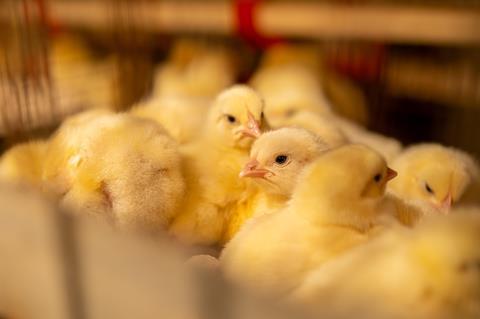
Around 45 million male chicks are killed shortly after hatching annually because they cannot lay eggs and are considered unsuitable for meat production. Campaigners say the practice should end as alternatives, including technology that identifies the sex of embryos before they hatch, become increasingly widespread internationally.
Calls for urgent action
Dame Joanna Lumley is among the high-profile figures urging ministers and the egg industry to work together to end the practice.
She said: “Around the world, countries are turning their backs on male chick culling and switching to in-ovo sexing technology, a far more ethical and efficient alternative. Today, I urge the UK Government and egg industry to work together to end the cruel and completely unnecessary practice of killing millions of male chicks.”
The Government’s Animal Welfare Strategy for England, published in December 2025, stated that it “would like to see an end to the practice of killing day-old chicks”. However, campaigners say no timetable has been announced for ending the practice.
Labour MP Irene Campbell, who represents North Ayrshire and Arran, is leading parliamentary efforts to secure a ban. More than 50 politicians have signed an open letter calling for an end to the culling.
Campbell said: “Routine male chick culling has no place in the UK. We must live true to our values as a nation of animal lovers and transition to a kinder, more sustainable alternative.”
European countries adopt alternatives
In-ovo sexing technology identifies the sex of a developing chick before hatching, allowing male embryos to be removed before they are born rather than killed afterwards.
Research by Innovate Animal Ag indicates that adoption is accelerating internationally. As of June 2026, the technology was being used across 40 percent of the European Union’s commercial egg-laying flock. More than 281 million male embryos had been removed before hatching worldwide since 2021.
In Switzerland, where the technology was introduced in 2025, they achieved adoption rates of around 85 to 100 percent across its layer flock. Norway has reached approximately 52 percent, while uptake is also beginning to expand in the United States, Australia and Brazil.
The UK Government’s official Animal Welfare Committee recommended in its 2023 opinion on alternatives to culling newly hatched chicks that the practice should be banned “as soon as accurate methods for sexing eggs prior to hatch are available to be implemented in GB hatcheries.”
Campaigners call for 2028 deadline
The Vegetarian Society launched its Ban Hatch & Dispatch campaign in April, calling on the Government and egg industry to agree a clear timetable to end male chick culling by 2028.
The organisation says public opinion supports change, with polling suggesting 76 percent of people in the UK would be willing to pay one penny more per egg to ensure it was not associated with chick culling.
Jenny Canham, Public Affairs Lead at The Vegetarian Society, said: “It’s shocking that most eggs in the UK currently come from male chick culling having taken place, while most of the public are completely against this cruel practice. This World Egg Day is a reminder of the cruel reality faced by millions of male chicks every year, killed within hours simply because they cannot lay eggs. The UK Government and egg industry must work together to change this and set a clear timeline for ending male chick culling once and for all.”












No comments yet