



The AMAST Network, backed by a £54 million UK government and UKRI investment, will spend five years developing and testing practical strategies to reduce antibiotic dependency across livestock, aquaculture and crops, while safeguarding animal health and the long-term efficacy of antimicrobials.
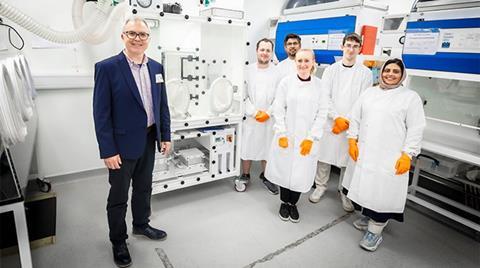
Researchers from the University of Leicester are among a UK-wide network awarded funding to tackle antimicrobial resistance (AMR) across the agrifood sector.
The Antimicrobial Resistance in Agrifood Systems Transdisciplinary (AMAST) Network will receive funding as part of a £54 million investment by UK government partners and UK Research and Innovation (UKRI) to address biosecurity threats including antimicrobial resistance.
Over the next 5 years, the network will bring together farmers, veterinarians, industry, researchers and policymakers to develop and test practical approaches to help food producers use antibiotics more responsibly, while protecting animal health and productivity.
Focus on practical solutions
Since AMAST was established in 2024, more than 250 members from farming, veterinary practice, industry, government and academia have helped identify barriers to effective antimicrobial use.
The network has developed shared priorities around animal health, antimicrobial use, diagnostics, data, behaviour and the environment.
Dr John Pearl from the University of Leicester’s Department of Respiratory Sciences is contributing to research into complex avian diseases that require antimicrobial treatment in bird flocks. His work is informed by research into chronic pulmonary diseases including tuberculosis and non-tuberculous mycobacterial pulmonary disease.
He said: “Combatting antimicrobial resistance requires vigilance across both clinical practice and in our nation’s agricultural food chain. The potential impact of antimicrobial resistance, however, extends into our wild spaces and throughout our environment. Because of this, the work we do with AMAST is essential and I’m privileged to be able to contribute.”
Three areas of research
AMAST’s programme will focus on pigs, ruminants and challenges affecting the wider agrifood sector.
In the pig sector, researchers will work with farmers, veterinarians and advisers facing persistent disease and antimicrobial-use challenges. Swine dysentery will be used as a model for linking diagnostics, biosecurity, farm management and decision-making.
For cattle and sheep, the network will put the UK Ruminant Antibiotic Stewardship Roadmap into practice. The roadmap aims to improve the collection and use of antimicrobial data, helping farmers and vets understand antibiotic use, benchmark progress and make more informed decisions.
The roadmap is due to be launched at the British Cattle Veterinary Association Congress on 15 October.
Across the wider agrifood sector, researchers will examine approaches relevant to livestock, aquaculture, gamebirds and crops while drawing on international experience.
The programme will also examine environmental aspects of AMR including antimicrobial residues in manure, soil and water.
Protecting antibiotics for the future
AMAST is led by Dr Matthew Gilmour at the Quadram Institute, with co-directors Dr Marie McIntyre and Professor Alex Hughes at Newcastle University.
Dr Gilmour said: “UK agriculture has already made major progress on antibiotic stewardship. The next gains will not come from simply telling farmers and vets to use less; they will come from solving the real problems that still drive antimicrobial use: disease pressure, availability of alternative medicines, diagnostic uncertainty, data gaps, economics and trust.
“AMAST brings the people who deal with those challenges every day together with researchers and policymakers to design solutions that work in practice. This investment lets us move from identifying the barriers to testing and embedding what works, while protecting animal health and keeping antibiotics effective for the future.”
The wider £54 million investment will also support work on future epidemics and next-generation livestock vaccines, strengthening the UK’s ability to prevent, detect and respond to biological threats while improving resilience, food security and sustainable economic growth.









No comments yet