



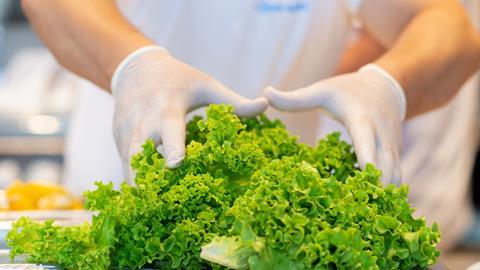

Integrity is not measured by the absence of failure. It is measured by what a system does when failure occurs.
Missed the first instalment? Part one: Departure published yesterday.
Yesterday, in Part one: Departure, we followed an extraordinary weekend that began with a global celebration of sport, culture and culinary discovery before shifting almost overnight to headlines about a Cyclospora outbreak linked to fresh produce. International visitors who had been introducing the world to American barbecue, biscuits and gravy, ranch dressing, free refills and tipping customs suddenly found themselves sharing a very different story.
The outbreak mattered, but it was never the only story. The larger story was trust. More specifically, it was the realisation that in an interconnected world every meal represents an act of confidence in people we will never meet, systems we rarely see and decisions made far beyond our own communities. That confidence is so deeply woven into daily life that most of us notice it only when something goes wrong.
That realisation invites a larger question – one that extends beyond food safety and into what I believe will define the future of the global food system:
What does it mean to deserve the world’s trust?
Beyond food safety
For generations, food safety has focused – correctly – on protecting people from harm. It has done so by identifying hazards, reducing risks, strengthening regulations, improving surveillance and advancing the science that prevents illness. Those efforts have saved countless lives and transformed the safety of the global food supply.
Food System Integrity asks a broader question: can society continue to deserve the confidence people place in every meal?
The distinction is subtle, but it changes everything.
Today’s consumers evaluate food through a wider lens than previous generations. Safety remains essential, but it is no longer sufficient by itself. Consumers increasingly ask whether food is authentic, ethically produced, sustainably sourced, environmentally responsible and worthy of their confidence. They expect organisations to communicate honestly during uncertainty, to learn from failure rather than conceal it and to demonstrate accountability long before a crisis becomes tomorrow’s headline.
Food safety remains the foundation. Food System Integrity asks how those technical achievements are translated into enduring public confidence. Compliance may satisfy regulations; integrity earns trust.
Compliance may satisfy regulations; integrity earns trust
The difference between knowing and believing
One of the defining challenges of modern food systems is that scientific certainty and public confidence do not always advance together.
Science proceeds through disciplined uncertainty. Evidence accumulates. Hypotheses are tested. Conclusions evolve as knowledge improves. This deliberate process is not a weakness; it is one of science’s greatest strengths because it values accuracy over speed and evidence over assumption.
Consumers experience something very different. They encounter changing headlines, conflicting opinions, product recalls, social media speculation, corporate statements and government advisories – often all at once. By the time investigators complete their work, many people have already reached conclusions of their own, not because they reject science, but because uncertainty is difficult to live with when deciding what to feed one’s family.
The challenge, therefore, is not simply producing better science.
It is helping society understand how science works.
Transparency is not the elimination of uncertainty. It is the honest communication of uncertainty. Organisations that explain what they know, acknowledge what they do not yet know and communicate openly as evidence evolves are not demonstrating weakness. They are demonstrating integrity.
That distinction may become one of the defining leadership challenges of the coming decade.
Integrity as leadership
We often speak about food safety as though it belongs primarily to laboratories, production facilities, regulatory agencies or quality assurance departments. In reality, food safety is ultimately a leadership responsibility.
Every decision about investment, staffing, supplier relationships, crisis communication, traceability, environmental monitoring, organisational culture and strategic priorities reflects leadership long before it becomes a food safety outcome. Integrity begins well before an inspection. It begins with values.
Organisations earn confidence not because they promise perfection, but because they demonstrate accountability when perfection proves impossible. They acknowledge uncertainty rather than disguise it. They communicate what they know, explain what they do not yet know and commit themselves to learning openly from failure.
Consumers rarely expect perfection, but they do expect honesty. That expectation is neither naïve nor unrealistic; it is the foundation upon which lasting trust is built.
The new geography of responsibility
Globalisation has changed more than the movement of food. It has fundamentally changed the geography of responsibility.
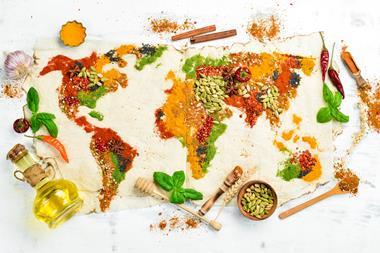
A decision made by a grower in Spain may influence consumers in Sweden. Processing choices in the Netherlands may affect restaurants in London. Environmental monitoring conducted in California may protect families in Tokyo. A laboratory result generated in one country may shape regulatory decisions around the world before the day has ended.
Distance no longer limits consequence; interdependence now defines it.
The extraordinary efficiency of today’s food system is one of humanity’s greatest collaborative achievements. Every day, billions of people are nourished because farmers, processors, transporters, retailers, scientists, regulators and foodservice professionals – most of whom will never meet one another – coordinate their work with remarkable precision.
That achievement deserves recognition.
It also demands stewardship.
Technology will continue transforming the food system. Artificial intelligence will strengthen predictive capabilities. Whole genome sequencing, digital traceability, automation, environmental monitoring and advanced analytics will make supply chains more transparent and more resilient than ever before.
These innovations matter. Yet technology alone cannot create confidence. Trust remains a human achievement, earned through competence, strengthened by transparency and sustained by accountability.
Trust remains a human achievement, earned through competence, strengthened by transparency and sustained by accountability
Homecoming
In Homer’s Odyssey, the journey ends where it began.
Odysseus returns home, but he is not the same person who departed. The value of the voyage lies not in the miles travelled, but in the wisdom gained along the way.
Perhaps the same is true for the global food system.
Every outbreak, every recall, every scientific investigation and every public conversation presents an opportunity to return wiser than we began – not simply with better technologies or stronger regulations, but with a deeper understanding of the relationship between those who produce food and those who place their trust in it.
Consumers rarely remember the technical details of outbreak investigations. Few recall the name of the pathogen, the laboratory methods used to identify it or the sequence of regulatory actions that followed. What they remember is whether someone told them the truth, accepted responsibility, communicated with transparency and appeared worthy of confidence.
Memory shapes trust.
Trust shapes behaviour.
And behaviour shapes the resilience of the food system itself.
Every day, billions of people entrust strangers with one of life’s most intimate acts. We eat food we did not grow, prepared by people we will never meet, transported through systems we rarely see and protected by institutions we often take for granted.
Few human achievements require greater cooperation.
Fewer still require greater integrity.
That is why Food System Integrity is not simply the next chapter in food safety.
It is the next chapter in globalisation.
Globalisation has given humanity the ability to move food across borders with unprecedented speed and efficiency. Our next challenge is ensuring that trust travels just as faithfully. The measure of success will not be whether every failure can be prevented. No complex human system can make that promise. Rather, it will be whether our institutions consistently earn the confidence they ask consumers to place in them.
Food may be produced locally, traded globally and regulated nationally.
Trust exists only where all of those worlds intersect.
That is the homecoming before us.
Not a return to where we started, but an arrival at a clearer understanding of what our shared food system demands of us – and of ourselves.
Because food may be the world’s most global product.
But trust remains its most personal ingredient.
Catch up on Part one: Departure










No comments yet