


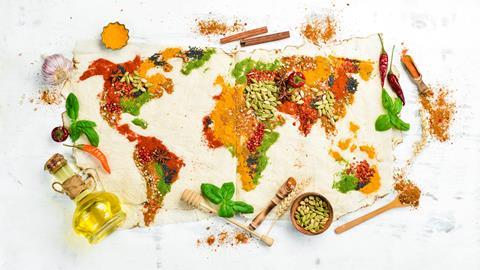

Food may be the world’s most global product, but trust remains its most personal ingredient.
From shared tables to shared trust
There are weekends when the world seems remarkably connected – moments when millions of people experience the same events through different lenses yet arrive at a shared sense of humanity. This was one of those weekends.
Audiences filled cinemas for the release of The Odyssey, revisiting Homer’s timeless story of perseverance, uncertainty and the long journey home. At nearly the same moment, Spain defeated defending champions Argentina to lift the FIFA World Cup, concluding a tournament that had drawn supporters from every continent to the United States.
For weeks, supporters had crossed oceans to cheer for their national teams. They arrived carrying passports, jerseys and expectations. They returned home with something less tangible but equally memorable: stories.
Many of those stories were not about football.
They were about food.
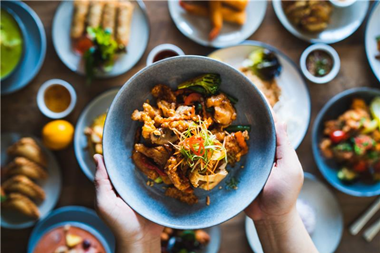
Across social media, visitors from around the world documented their first encounters with American food culture. They filmed themselves tasting slow-smoked Texas barbecue ribs, trying biscuits and gravy for the first time, comparing regional barbecue sauces, discovering the unmistakable flavour of ranch dressing, marvelling at free drink refills and trying to understand why tipping seemed less a courtesy than an unwritten social contract. They wandered through diners, neighbourhood cafés, food trucks and family-owned restaurants that rarely appear in travel brochures but often reveal more about a nation than its monuments.
These posts were far more than entertaining travel observations.
They reflected something profoundly human.
Long before visitors understood American politics or history, they began understanding America through its food. Every restaurant became a classroom. Every shared meal became an act of cultural exchange. Every photograph reminded us that food remains one of humanity’s oldest and most universal languages.
For a brief moment, the world’s conversation about America was shaped not by politics or policy, but by curiosity, hospitality and culinary discovery. Food became the tournament’s unofficial ambassador, reminding us that diplomacy often begins long before negotiations around conference tables. Sometimes it begins when strangers simply share a meal.
Then, almost overnight, the conversation changed.
The joyful exchange of culinary discovery gave way to two words that spread rapidly across American headlines, broadcasts and social media.
“Explosive diarrhoea.”
The phrase quickly became a viral headline – not because the parasite had crossed borders overnight, but because information had.
It travelled farther and faster than the organism responsible.
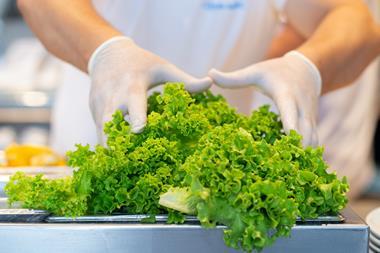
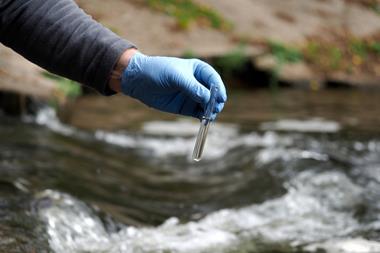
A Cyclospora outbreak associated with fresh produce soon became overshadowed by language that proved more contagious than the parasite itself. Before epidemiologists could complete traceback investigations, millions had already formed opinions, shared speculation and amplified narratives that focused more on symptoms than on science.
The outbreak was real.
The illnesses were real.
But the most enduring story was not the outbreak itself.
It was what the moment revealed about the world we have built.
Within days, the same digital networks that had celebrated culinary discovery became conduits for anxiety. The same international visitors who had introduced millions to American food traditions now shared headlines about an outbreak. The same global systems that made cultural exchange possible also demonstrated how quickly confidence can be challenged.
The modern odyssey is no longer measured by miles travelled across oceans.
It is measured by confidence carried across borders.
The modern odyssey is no longer measured by miles travelled across oceans. It is measured by confidence carried across borders
A world connected by food
It is easy to overlook just how extraordinary the modern food system truly is.
For most of human history, geography determined the menu. Seasons dictated availability. Distance limited choice. What families ate depended largely on what could be grown, harvested, preserved or traded nearby.
Today, that reality has changed almost beyond recognition.
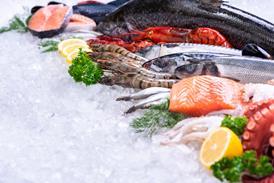
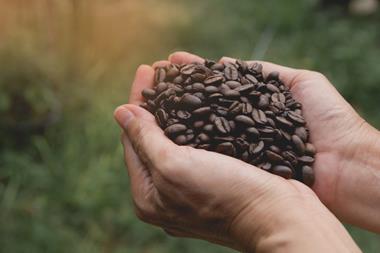
A strawberry harvested in Spain may appear days later on breakfast tables in Sweden. Coffee grown in Colombia fuels conversations in Copenhagen. Seafood landed in Norway may be served in Singapore before the week is over. Olive oil produced in Greece enriches kitchens across North America, while fresh produce harvested in Mexico becomes part of family dinners in Canada.
Even within Europe, food rarely follows national boundaries. Lettuce harvested in Spain may be packaged in the Netherlands, distributed through Germany and served in London. Consumers rarely think about that journey. Nor should they have to. They simply expect the meal before them to be fresh, wholesome, authentic and safe.
That expectation is one of humanity’s quietest achievements.
Behind every meal lies an extraordinary collaboration among farmers, harvest crews, processors, transporters, laboratory scientists, regulators, retailers, restaurant professionals and countless others who will never meet the people they ultimately nourish. Refrigerated transport, container shipping, advances in microbiology, environmental monitoring, digital traceability and international cooperation have transformed the movement of food into one of civilisation’s greatest collaborative enterprises.
We often celebrate globalisation for increasing access, affordability and choice. Less often do we pause to appreciate the remarkable level of trust upon which it depends.
Every day, billions of people eat food produced by individuals they will never meet, transported through systems they rarely see and protected by institutions they often take for granted. The extraordinary confidence required to sustain that system is one of civilisation’s quietest achievements – and one of its least appreciated.
Globalisation has compressed geography.
It has not compressed consequence.
Every innovation that shortened the distance between producer and consumer also expanded the distance over which responsibility must travel. Every improvement in efficiency deepened our interdependence, while every advance in trade created new opportunities – not only for commerce, but also for cooperation. Food crosses borders because people built global supply chains. Trust crosses borders because people build integrity.
Food crosses borders because people built global supply chains. Trust crosses borders because people build integrity
The journey we rarely see
Consumers do not inspect irrigation systems before ordering a salad. They do not review environmental monitoring data before purchasing fresh produce or audit supplier verification programmes before sharing dinner with family and friends. Nor should they.
Instead, they rely upon an invisible network of farmers, food manufacturers, transporters, retailers, laboratory scientists, regulators and foodservice professionals whose work quietly protects public health every day. The system’s greatest success is that most consumers rarely notice it.
When everything works, complexity remains invisible. When something fails, that same complexity suddenly becomes impossible to ignore. Outbreaks are therefore about more than illness; they become moments when consumers glimpse, often for the first time, the immense complexity of a global food system that usually operates beyond view.
Some people respond by looking for a single company to blame. Others lose confidence in an entire category of food. Still others simply wonder how something so ordinary could become so complicated. These reactions are understandable because consumers are not merely evaluating products. They are evaluating whether the system itself deserves their confidence.
That question reaches beyond one outbreak, one company or even one country. It belongs to an interconnected world where food, information and public confidence now travel the same global pathways.
Every outbreak eventually reaches a conclusion. Traceback investigations are completed. Scientific reports are published. Products return to store shelves and news cycles move on. Yet another journey continues.
Consumers are left asking a question that epidemiology alone cannot answer – not simply where contamination began, but whether the system itself deserves their trust. That question leads us beyond food safety. It invites us to consider something larger, something that extends beyond compliance, regulation and even science itself.
It invites us to think about Food System Integrity.
That is where our journey continues.
Read on tomorrow: Part two: Homecoming – What it means to deserve the world’s trust.







No comments yet