



The Dairy Roadmap’s Processor Working Group has set ambitious new benchmarks across emissions, water use and packaging – requiring all processors to adopt Science Based Targets and eliminate unnecessary single-use plastics by 2030, as the sector pushes towards net zero by 2050.
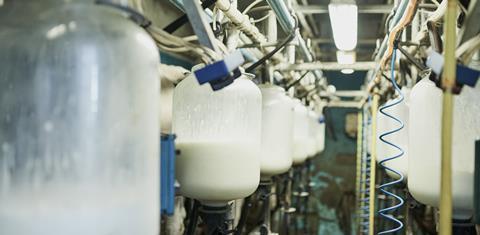
The UK dairy processing sector has unveiled a new set of targets aimed at accelerating progress on climate change, energy, water, plastics and packaging.
The targets have been developed by The Dairy Roadmap’s Processor Working Group and build on improvements made since the initiative was established in 2008.
The industry now requires more than 30 percent less energy to process each tonne of milk and more than 50 percent less water. More than 60 percent less packaging is used per tonne of milk while plastic milk bottles contain more than 30 percent recycled material, compared with none in 2008.
More than 90 percent of processor waste is now recovered or recycled, up from 62 percent in 2008, while less than 2 percent goes to landfill compared with 24 percent previously. Around 65 percent of UK milk is also within Science Based Targets Initiative (SBTi)-aligned supply chains.
Dr Emma Gregson, Dairy Roadmap Secretariat and Environment Manager at Dairy UK, said: “The UK dairy sector is in a strong position thanks to pre-competitive collaboration and an emphasis on continuous improvement.
“The next phase is about continuing to set challenging but realistic targets, streamlining data collection to track progress and sharing what works so the whole sector can move forward together.”
Focus on plastics and packaging
The new packaging targets aim to eliminate unnecessary single-use plastic, increase recycled content and improve recyclability while limiting carbon impacts.
The Dairy Roadmap wants all packaging to be recyclable where possible and economically viable. It also aims for 100 percent of paper and card to be FSC certified or equivalent and for dyed plastic bottle caps to be removed from consumer packaging by 2030.
The next phase is about continuing to set challenging but realistic targets, streamlining data collection to track progress and sharing what works so the whole sector can move forward together.”
Dr Emma Gregson, Dairy Roadmap Secretariat and Environment Manager at Dairy UK
The industry is considering further targets for recycled packaging content, with future work expected to align with initiatives including the WRAP Food & Drink Pact.
Packaging choices will be guided by the waste hierarchy, with prevention and reuse prioritised ahead of recycling, recovery and disposal. Carbon footprints will also be considered during product design and the need for single-use plastics regularly assessed.
New emissions requirements
The Dairy Roadmap’s long-term goal is to limit global warming to 1.5°C and achieve zero contribution from the dairy sector towards global warming by 2050.
Under the new targets, all processors will estimate and report their Scope 1 and 2 emissions. Small and medium-sized dairy processors are expected to undertake the SBTi process and present this to their boards by the end of 2026.
All processors will then be expected to set SBTi-approved Scope 1 and 2 targets by the end of 2027. Large organisations will also need to set SBTi-approved Scope 3 targets, including Forest, Land and Agriculture (FLAG) targets.
“The next phase is about continuing to set challenging but realistic targets, streamlining data collection to track progress and sharing what works so the whole sector can move forward together.”
Managing water risks
The sector has also set new targets for water management, with an ambition of achieving no serious pollution incidents, legal compliance and sustainable water use.
All processors will measure water use within their own operations and undertake water risk assessments to support local action plans by the end of 2026. By the end of 2027, processors are expected to have developed action plans to reduce water risk.
The sector will also look to reduce mains water use through greater efficiency, treatment and reuse while engaging with catchment-level projects where appropriate.
A new data collection template has been developed to track progress consistently. Guidance on SBTi and water targets is also being prepared while discussions continue on recycled packaging content.
The Processor Working Group will review progress and consider further targets as industry, policy and legislative requirements develop.












No comments yet