



The UK’s Competition and Markets Authority has found that McCormick’s acquisition of the majority of Unilever’s global foods business may substantially reduce competition in two key product categories supplied to UK retailers.
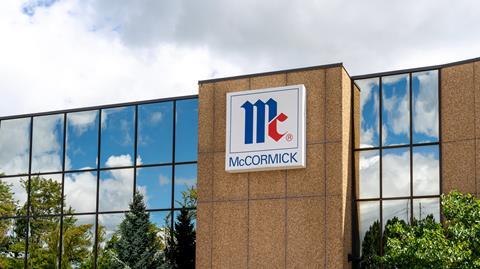
The Competition and Markets Authority (CMA) has raised concerns that McCormick & Company’s proposed acquisition of the majority of Unilever’s foods business could substantially reduce competition in UK markets.
In a decision published on 11 November 2026, the regulator said the deal may be expected to result in a substantial lessening of competition, meaning the transaction will be referred for an in-depth Phase 2 investigation unless the companies offer acceptable commitments to address its concerns.
The decision is significant in the CMA’s investigation into the proposed acquisition, which could change the competitive landscape of the UK food manufacturing sector.
Two major branded suppliers would be brought together
The proposed transaction would see US-based McCormick acquire substantially all of Unilever’s global foods business, with some food operations remaining under Unilever ownership. Unilever would also receive shares in McCormick and the right to appoint members to its board.
The CMA’s assessment focused on three product categories supplied to UK retailers: dry ingredient mixes, dry sauces and mustard.
McCormick’s UK consumer portfolio includes dry ingredient mixes and sauces sold under Schwartz, alongside condiments and sauces under French’s. Unilever Foods supplies products under brands including Knorr, Maille and Colman’s.
The regulator found that the two companies are particularly close competitors in the markets for dry ingredient mixes and dry sauces. In both categories, the merger would bring together the two largest branded suppliers, creating a combined business that would be significantly larger than its competitors.
The CMA acknowledged that supermarket own-label products and other branded suppliers, including Maggi in dry ingredient mixes and Bisto in dry sauces, provide some competition. However, it concluded that these alternatives currently exert only a limited competitive constraint on the two companies.
Supermarket shelf space presents barriers to competition
The CMA also considered whether other businesses could enter or expand within these markets to offset the potential impact of the merger.
However, it found that establishing a competitive presence would be difficult because of limited supermarket shelf space and the strong existing positions of established suppliers, particularly McCormick, Unilever and own-label manufacturers.
The regulator also found no evidence of significant market growth that would suggest new entrants or expanding competitors could provide sufficient competition to the merged business.
As a result, the CMA concluded that the transaction could substantially lessen competition in the supply of dry ingredient mixes and dry sauces to UK retailers.
Mustard, however, was not identified as an area of concern.
Although McCormick supplies American-style mustard through French’s while Unilever owns the English-style Colman’s and French-style Maille brands, the CMA found that consumers do not generally regard these different mustard varieties as interchangeable.
Supermarkets therefore need to stock each type to meet consumer demand. The regulator found no meaningful overlap between the companies’ mustard products and no evidence that the merged business could use its position in one mustard category to undermine competitors in another.
Companies have until 18 November to respond
The CMA has given McCormick and Unilever until 18 November 2026 to offer undertakings that could address its competition concerns.
If the companies do not submit acceptable proposals, the regulator will refer the transaction for a Phase 2 investigation. This would involve a more in-depth examination of the potential impact on competition in the UK.
The CMA’s Phase 1 assessment drew on information supplied by both companies, their internal business documents and evidence gathered from customers and competitors.
The merger remains subject to approval from relevant competition authorities, including the CMA, with the outcome of the next stage set to determine whether the acquisition can proceed.






No comments yet