



Government launches consultation to overhaul School Food Standards, removing high-sugar and deep-fried foods to tackle childhood obesity.
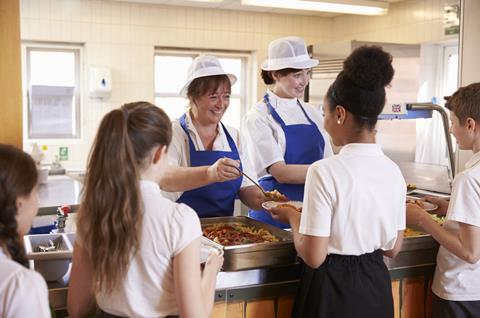
The UK Government has announced plans to remove high-sugar and deep-fried foods from school menus as part of a major overhaul of School Food Standards aimed at tackling childhood obesity.
The reforms, unveiled on Monday 13 April, mark the first update to the standards in more than a decade. Under the proposals, schools will no longer be able to offer unhealthy “grab and go” options such as sausage rolls and pizza every day, while deep-fried food will be banned completely.
Fruit will replace sugar-laden desserts for the majority of the school week, with menus expected to feature more fruit, vegetables and wholegrains.
Consultation and enforcement
The government has launched a nine-week consultation on the updated standards, developed with nutritionists and public health experts.
This comes a month after the UK Government launched a consultation on new statutory guidance to improve allergy safety in schools, including requirements for emergency medication, staff training and dedicated policies.
To ensure compliance, ministers plan to introduce a national enforcement mechanism to monitor schools and ensure the standards are applied consistently. Full details are expected in September, with enforcement scheduled to begin in September 2027.
Schools may also be required to appoint a lead governor responsible for school food and publish food policies and menus online. New polling shows 74 percent of parents have concerns about their child’s nutrition.
The consultation coincides with the expansion of the government’s Free Breakfast Clubs programme, with more than 500 new clubs opening this month and offering places to up to 142,000 children. The initiative has already been rolled out to 750 schools.
For the food industry, the changes are likely to have implications for school catering providers, menu development and ingredient sourcing across the education foodservice sector.
Government response
Education Secretary Bridget Phillipson said the reforms represent a significant shift in school food policy.
Today we are launching the most ambitious overhaul of school food in a generation, and it is long overdue.
Every child deserves to have delicious, nutritious food at school that gives them the energy to concentrate, learn and thrive – meals that children will actually recognise and enjoy, backed by robust compliance so that good standards on paper become good food on the plate.
From our Free Breakfast Clubs to extending Free School Meals to over half a million more children, this means good-quality food from the moment children arrive at school to the end of the day.”
Education Secretary Bridget Phillipson
Health Minister Sharon Hodgson said the measures form part of wider efforts to improve children’s diets.
Children are consuming twice the recommended amount of free sugar and offering more nutritious meals at school is a great way of ensuring they eat healthier food.
We’re determined to reduce the child obesity epidemic and the new School Food Standards represent another piece in a jigsaw of measures designed to help raise the healthiest generation of children ever.”
Health Minister Sharon Hodgson
Industry and campaigner reaction
Government figures show that one in three children leave primary school overweight or obese, while tooth decay linked to high-sugar diets remains the leading cause of hospital admissions among children aged five to nine.
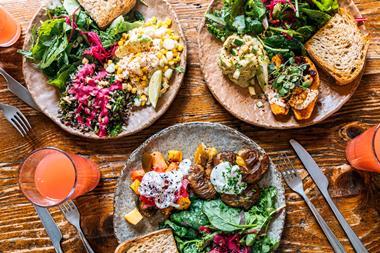
Sample menus under the proposed standards include meals such as Spaghetti Bolognese, Mexican-style burritos, cottage pie with root-veg mash, jerk chicken with rice and peas and roasted chickpea, vegetable and mozzarella wraps.
Celebrity chef and long-time school food campaigner Jamie Oliver welcomed the reforms.
Twenty years ago, dog food had higher standards than school dinners. I’ve been banging the drum ever since because I refuse to accept our kids being fed anything less than proper, nourishing meals.
School food is the UK’s most important restaurant chain. From September, during term-time schools will provide two-thirds of a child’s daily diet - a massive opportunity to improve health at scale. My Good School Food Awards prove that world-class meals are possible right now, and every child deserves that same quality.
So, I’m delighted this government is now updating and enforcing these standards.”
Jamie Oliver
Industry groups and public health organisations welcomed the reforms.
Anna Taylor, Executive Director of The Food Foundation, said the government’s plans to introduce higher school food standards, alongside universal breakfast clubs and wider access to free school meals, recognise the significant potential of school food to nourish and energise the next generation. She added that the reforms represent an opportunity for the sector to improve school meals and embed food education in schools.
Schools should be a place that actively supports children’s health. Strengthening school food standards, so children can enjoy affordable, tasty and nutritious meals, is a vital and welcome step.
Right now, children are surrounded by unhealthy food at almost every turn - not just at school, but also online, on the high street, at home and beyond. Action cannot stop at the school gates - it is needed across the wider food environment to truly give every child the best start in life.”
Katharine Jenner, Executive Director, Obesity Health Alliance
The government said some measures will be introduced gradually in secondary schools to allow caterers time to adapt menus, develop recipes and train staff. Schools ready to adopt the new standards earlier will be encouraged to do so.






No comments yet