

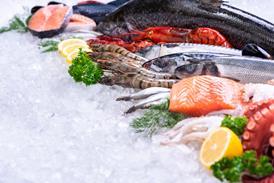


DTU National Food Institute researchers say a voluntary “STABILISED” label could help consumers identify ready-to-eat foods that prevent Listeria growth and reduce infections.
Researchers at the DTU National Food Institute have called for a new voluntary labelling scheme to help consumers identify ready-to-eat foods that prevent the growth of listeria during shelf life.
The proposed “STABILISED” label would apply to products such as smoked salmon, gravad fish, spiced pork roll and cold cuts, giving consumers a clearer way to choose foods with a lower risk of listeriosis.
The call comes as the EU introduces stricter rules from 1 July 2026, requiring manufacturers of non-stabilised ready-to-eat products to prove that listeria monocytogenes does not exceed 100 bacteria per gram throughout shelf life. Where manufacturers cannot demonstrate this, the bacterium must not be detectable in a 25-gram sample.
A labelling scheme should be introduced for ready-to-eat foods that have been stabilised during production to prevent the growth of listeria. This will enable us to reduce the number of people who fall ill with listeria infections. The label should give consumers confidence in eating these ordinarily healthy fish products, which may however, be prone to contain listeria.”
Martin Laage Kragh, a researcher at the DTU National Food Institute
Making listeria risk visible
Listeriosis cases in the EU rose from 0.40 per 100,000 inhabitants in 2010 to 0.69 per 100,000 in 2024. The disease has a case fatality rate of 15.6 per cent and accounts for approximately 32 per cent of all deaths linked to foodborne disease outbreaks in the EU.
“A labelling scheme should be introduced for ready-to-eat foods that have been stabilised during production to prevent the growth of listeria,” said Martin Laage Kragh, a researcher at the DTU National Food Institute. “This will enable us to reduce the number of people who fall ill with listeria infections. The label should give consumers confidence in eating these ordinarily healthy fish products, which may however, be prone to contain listeria.”
The researchers say some producers already make products that stop listeria from growing, but consumers cannot easily identify them. They propose that only producers able to prove listeria cannot grow in their products should be able to use the label.
For food manufacturers, the proposal places greater emphasis on product design, preservation and shelf-life validation, rather than relying on hygiene controls alone. The researchers define stability as ensuring that a product’s preservation method matches its stated shelf life.
Professor Emeritus Paw Dalgaard from the DTU National Food Institute added: “Many products have a shelf life that is too long given the way they are made. But by changing the recipe – and often this requires only a small change – the products can be made safe.”
Reformulation and shelf-life controls
For smoked and marinated fish, which are associated with many listeria cases, manufacturers could add small amounts of vinegar during salting to prevent bacterial growth without affecting taste. Producers could also use frozen formats to stop growth. For cold cuts and other products, heat treatment or high-pressure processing in consumer packaging may kill listeria if the bacterium enters the product during packaging.
The researchers stress that cleaning remains vital, but argue that hygiene measures alone have not done enough to stop the rise in infections. They want producers to maintain cleaning controls while also designing ready-to-eat products in ways that prevent listeria growth.
They also want authorities to examine outbreak products differently. Instead of only identifying the source of contamination, investigations should assess whether formulation, preservation or shelf life allowed listeria to grow.
Paw Dalgaard said investigations should also consider whether manufacturers could improve preservation or shorten shelf life to prevent further outbreaks.
The researchers warn that repeated listeriosis outbreaks can link back to the same products, and sometimes the same manufacturers, making it crucial to identify what goes wrong during production and distribution.






![EcoTrophelia_009[1]](https://d1qyip7ii4bpjm.cloudfront.net/Pictures/380x253/2/2/4/14224_EcoTrophelia_0091.jpg)




No comments yet