




Oxford researchers link industrial poultry expansion to faster Campylobacter spread, bacterial adaptation and growing antimicrobial resistance risks across food systems.
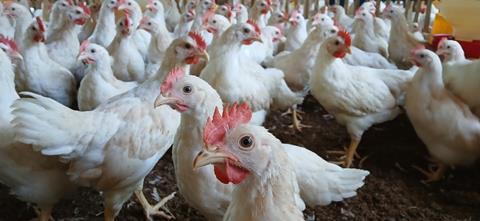
Industrial poultry farming has reshaped the spread of Campylobacter, with Oxford researchers estimating a 100-fold increase in bacterial transitions from chickens to wild birds since 1900 compared with predomestication levels.
The study, ‘Accelerating Campylobacter zoonosis in the Anthropocene’, published in the Proceedings of the National Academy of Sciences (PNAS), found that expanding commercial chicken production has disrupted historic associations between Campylobacter strains and their bird hosts.
As poultry populations have grown, strains once largely confined to wild birds have gained more opportunities to enter, mix and become established in commercial flocks.
Researchers from the Ineos Oxford Institute for Antimicrobial Research at the University of Oxford analysed 2,747 bacterial genomes collected from chickens and wild birds in 30 countries, including the UK and US, between 1979 and 2024.
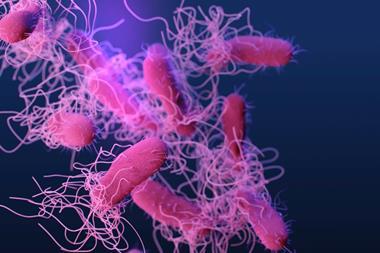
Campylobacter is the most common bacterial cause of diarrhoea worldwide. In the UK, it causes more than 3.5 times as many gastroenteritis cases each year as all other monitored foodborne bacteria combined, while rising antimicrobial resistance is making some infections harder to treat.
Professor Sam Sheppard, senior author of the study at the University of Oxford, said: “Industrial farming has created one of the largest animal habitats on the planet. Our findings provide new evidence that human-driven environmental change can increase the spread of infectious diseases. As chicken populations have grown, bacteria that were once largely confined to wild birds have gained far more opportunities to enter poultry flocks, spread and become established. Understanding these evolutionary consequences is essential if we are to reduce future risks from zoonotic disease and antimicrobial resistance.”
Poultry scale reshapes pathogen ecology
Global chicken numbers have increased seven-fold since the 1960s to approximately 31 billion birds, accounting for around 70 percent of all bird biomass on Earth.
While that expansion has supported affordable animal protein production at scale, it has also created conditions in which bacteria can spread, mix and acquire new traits.
The genomic analysis identified changes linked to antimicrobial resistance, oxidative stress tolerance, metal acquisition and motility, which can help Campylobacter survive within modern poultry systems.
Mathematical modelling also showed how densely populated flocks can act as ecological “pathogen sponges”, absorbing and amplifying strains from multiple sources. Once chicken populations reach a critical scale, strains originating in wild birds can become self-sustaining among poultry, even when poorly adapted to their new host.
Industrial farming has created one of the largest animal habitats on the planet. Our findings provide new evidence that human-driven environmental change can increase the spread of infectious diseases.
As chicken populations have grown, bacteria that were once largely confined to wild birds have gained far more opportunities to enter poultry flocks, spread and become established.”
Professor Sam Sheppard, senior author of the study at the University of Oxford
These evolutionary pressures sit alongside a persistently high human disease burden. Campylobacter infections remain widespread in England, with UK Health Security Agency (UKHSA) data recording 69,394 laboratory-confirmed cases in 2025. Because many infections never enter laboratory surveillance, UKHSA estimates the true community burden was close to 650,000 cases. A previous IOI study associated 80 percent of human Campylobacter infections in Oxfordshire with poultry meat and found many were resistant to antibiotics.
Implications for poultry controls
The study does not measure contamination on carcasses or retail chicken or compare individual production systems. Instead, it identifies how large poultry populations can accelerate bacterial mixing, persistence and adaptation.
The findings strengthen the case for controlling Campylobacter across the poultry chain, beginning on farms rather than relying primarily on processing interventions.
A recent FSA evidence review of Campylobacter risk factors on broiler farms highlighted farm management and biosecurity as crucial to controlling flock colonisation. It highlighted controls around entry to poultry houses, hygiene between flock cycles and contaminated equipment and vehicles, but found inconsistent evidence for some individual interventions.
At processing level, UK broiler slaughterhouses must meet a Campylobacter process hygiene criterion. Under the criterion, no more than 10 of 50 broiler carcass neck-skin samples may exceed 1,000 colony-forming units per gram, with exceedances requiring improvements to slaughter hygiene and reviews of process controls, bird origins and farm biosecurity.
The antimicrobial resistance findings make coordinated controls more pressing. A 2026 EFSA and ECDC assessment found that resistance in Campylobacter has become so widespread across Europe that ciprofloxacin is no longer recommended for treating human infections.
Oakem Kyne, a DPhil student and the study’s first author, added: “As Campylobacter strains adapt to life in poultry, they can acquire traits that help them survive in challenging environments, including traits linked to antimicrobial resistance. Understanding how farming practices influence bacterial evolution is an important step towards reducing the burden of foodborne disease.”















No comments yet