


Food safety's technological transformation accelerated in 2025, explains Yannick Verry from Informa Markets, driven by evolving contamination threats and looming regulatory compliance deadlines that expose critical gaps in traditional detection methods.
As traditional bacterial testing methods requiring up to a week for results prove inadequate for modern processing speeds, contamination incidents continue to challenge producers. Eggs maintain a high-risk level due to persistent Salmonella issues and pesticide-related hazards dominate fruit safety concerns, while thousands of listeriosis cases are recorded every year within Europe alone.
The FDA's extension provides manufacturers with a valuable opportunity to implement enhanced traceability systems."
The evolving technological landscape coincides with the US Food and Drug Administration (FDA) decision to delay its Food Traceability Rule compliance by 30 months to July 2028, acknowledging that the original timeline was too short for implementing this complex rule.
In response, breakthrough detection and preservation technologies are transforming how manufacturers respond to contamination, delivering unprecedented speed and accuracy just as regulatory compliance requirements intensify. Here, we look at some of the most interesting.
From days to minutes: contamination detection refashioned
Traditional microbiological testing creates a critical timing vulnerability. Bacterial testing requires up to three days as bacteria must be cultured on agar plates and incubated until colonies become visible. During this waiting period, contaminated products often complete processing and enter distribution channels – sometimes reaching retail shelves before laboratories can confirm hazards.
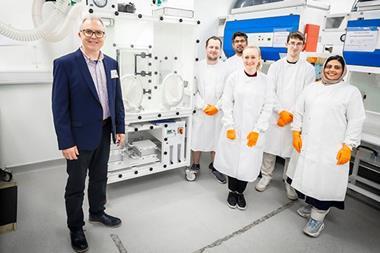
University of Maastricht spinout Sensip-dx has collapsed this timeline to just 15 minutes. The company's sensor technology uses molecularly imprinted polymers – synthetic materials engineered with molecular binding sites for specific bacteria – combined with thermal resistance measurements to identify pathogenic presence in real time.
The manufacturing process involves stopping polymer curing mid-process and pressing living bacteria into the half-cured material, creating both physical imprints and chemical bonds. When polymerisation resumes, the bacteria die, leaving precisely shaped binding sites that recognise matching pathogens.
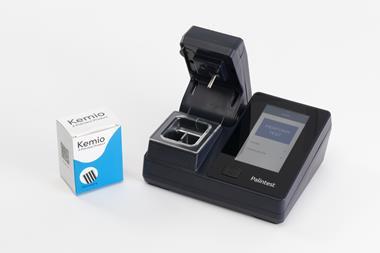
During testing, sample fluid flows over the sensor. Matching bacteria bind to these action points and the system measures thermal resistance to confirm presence quickly. The dramatic acceleration in detection speed – from three days to 15 minutes – fundamentally changes operational decision-making, allowing facilities to test rinse water, ingredient samples or contact surfaces during active production and implement immediate corrections rather than managing recalls after distribution.
The sensors work across all known foodborne bacterial pathogens and can be calibrated for various food matrices. Sensip-dx is developing prototypes with early business partners, targeting first commercial products imminently.
Quality degradation goes beyond chemical intervention
While detection technologies address identification, parallel innovations tackle quality degradation that has traditionally required chemical intervention. Conventional freezing creates large ice crystals that rupture cell walls, producing mushy texture and flavour loss upon thawing. Liquid nitrogen freezing prevents this damage, but cost constraints limit its application.
Electrostatics holds a promising solution: applying controlled electromagnetic fields during freezing causes products to vibrate at frequencies that prevent large crystal formation. This freezing method protects flavour in addition to preserving texture. When cell walls remain intact, flavour compounds and aromatic molecules stay within cells and do not degrade. The electrostatic effect also reduces surface bacteria, extending refrigerated shelf life for items like fresh raspberries from standard periods to five or six weeks.
Blind tastings revealed unexpectedly compelling advantages for bakery applications, with test participants unable to distinguish between fresh and frozen-then-reheated pizza. Ice cream is another key application, providing soft-scoop directly from freezer storage. For manufacturers facing consumer demand for clean labels, electrostatic freezing offers quality maintenance without chemical additives.
Accuracy detection gets a fresh perspective with computer vision
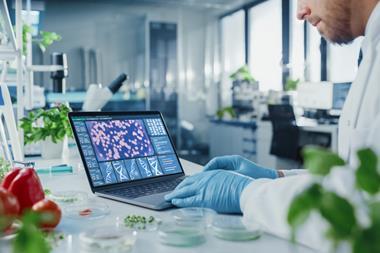
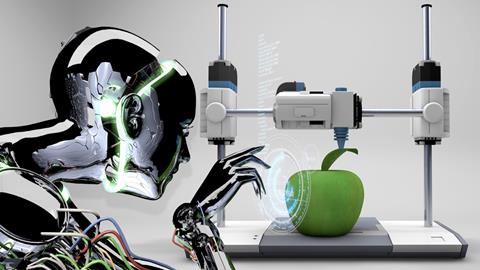
AI-powered computer vision systems now recognise food inconsistencies faster and more accurately than humans, achieving 97 percent accuracy in defect detection. The transformation stems from adaptability: unlike traditional vision systems that flag acceptable natural variations as defects, AI-powered systems learn to distinguish genuine quality issues from the inherent variability in organic products. A slightly irregular strawberry shape does not trigger rejection, but rot will. Machine learning models predict quality factors – water content, soluble solids, colour changes – while eliminating subjective human assessments.
Computer vision technology delivers improved quality control, increased productivity, enhanced food safety and valuable data collection for traceability. Real-time monitoring allows manufacturers to address potential quality issues early in the production cycle, enhancing the integrity and safety of food products while maintaining high standards.
The regulatory deadline propelling change
These technological advances are arriving as manufacturers are tasked with navigating unprecedented regulatory pressure. FDA's Food Traceability Rule, originally scheduled for January 2026 compliance, requires detailed recordkeeping for foods on the Food Traceability List including cheeses, eggs, nut butters, herbs, leafy greens, certain fruits and vegetables, fish and ready-to-eat salads. Covered entities must maintain records that can be converted to spreadsheet format and submitted to FDA within 24 hours.
The scope of this requirement created significant implementation challenges. Supply chain coordination proved particularly difficult – even prepared companies found themselves dependent on data from partners not similarly situated. In March 2025, FDA extended the deadline by 30 months to July 2028, acknowledging these realities.
The competitive window of opportunity
The FDA's extension provides manufacturers with a valuable opportunity to implement enhanced traceability systems. By leveraging this period to adopt advanced technologies – such as high-speed bacterial detection, electrostatic preservation and AI-powered quality control – companies can not only meet regulatory requirements but also drive significant improvements in operational efficiency.
These systems offer practical advantages: rapid detection enables in-process contamination control rather than post-distribution recalls; automated vision systems generate the detailed documentation traceability regulations require and chemical-free preservation meets clean-label consumer demands. The technologies work independently but complement regulatory compliance needs.
The question for food safety leaders is the implementation timeline. Whether manufacturers adopt them proactively during the compliance window or reactively under regulatory pressure will likely determine their competitive positioning in the post-2028 landscape.
About the author:

Yannick Verry is Brand Director for the Fi Events Portfolio at Informa Markets, leading strategic, financial, operational and customer-oriented objectives for the Fi series of exhibitions. With over 15 years of experience in international trade and B2B events strategy across Europe, Asia and the Americas, Yannick brings extensive expertise in P&L management, brand leadership and digital transformation within the global food industry.
About Food ingredients (Fi)
Fi was launched in Utrecht, The Netherlands, in 1986. Its portfolio of live events, extensive data and digital solutions, as well as high-level conferences, is now established throughout the world, providing regional and global platforms for all stakeholders in the food ingredients industry. Over 1 million people have attended Fi shows over the years, with billions of Euros-worth of business created as a result. With more than 35 years of excellence, the events, digital solutions and supporting products deliver a proven route to market, with a truly global audience. Since 2018, Fi has been part of the Informa Markets portfolio. For more information, please visit: www.figlobal.com.
About Informa Markets
Fi Europe is organised by Informa Markets, a division of Informa plc. Informa Markets creates platforms for industries and specialist markets to trade, innovate and grow. Its portfolio comprises more than 550 international B2B events and brands in markets including Healthcare & Pharmaceuticals, Infrastructure, Construction & Real Estate, Fashion & Apparel, Hospitality, Food & Beverage, and Health & Nutrition, among others. Informa Markets provides customers and partners around the globe with opportunities to engage, experience and do business through face-to-face exhibitions, specialist digital content and actionable data solutions. As the world’s leading exhibitions organiser, the company brings a diverse range of specialist markets to life, unlocking opportunities and helping them to thrive, 365 days of the year. For more information, please visit www.informamarkets.com.
Topics
- Automation, AI & digital manufacturing
- Clean label, natural & reformulation
- Contaminants & residues
- Enforcement, policy & governance
- Food Ingredients
- Informa Markets
- Packaging operations (line-side)
- Process design & scale-up
- QA/QC systems (HACCP, FSMS)
- Rapid methods & microbiology testing
- Recalls & incident response
- Refrigeration, freezing & cold chain ops
- Shelf life, spoilage & integrity
- Traceability, transparency & compliance