



Featured content
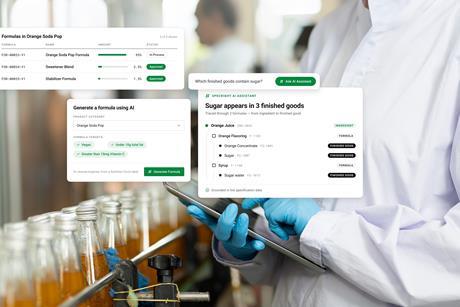
Why fragmented product data raises the cost of food non-compliance
Specright’s Andy Stark explores how fragmented product data can increase compliance risk, slow reformulation and drain R&D capacity – and why trusted data is becoming critical to effective AI adoption.
 Opinion
Brazilian beef and the UK: why Europe’s food safety decisions matter again for Britain
With the EU ban on Brazilian beef reigniting debate over import standards, Chris Elliott examines the implications for farmers, consumers and UK food security.
 Opinion
A big UK food policy opportunity… to be seized!
Clive Black lays out potential scenarios governing the health of the UK’s food system – maintaining that securing its resilience is within grasp, if only government will but reach for it.
 Article
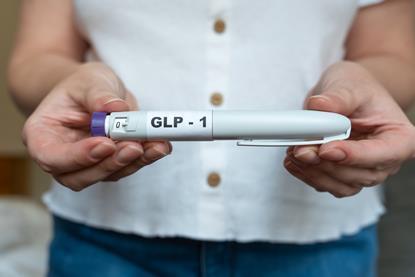
GLP-1 friendly’ has no regulatory definition and manufacturers are shipping it anyway
New Food explains: ‘GLP-1 friendly’ has no regulatory definition. What manufacturers must verify before using the term.
News
 News
NewsPET industry launches shared platform for food contact safety data
PETCORE EUROPE has launched GeNi, a centralised interlaboratory data platform developed with KÖR, to address fragmented testing practices and strengthen food safety knowledge across the PET packaging value chain.
 News
NewsSalmonella outbreaks linked to imported eggs remain under investigation
Three clusters of Salmonella Enteritidis infections in England have resulted in nearly 600 confirmed cases and two deaths, with public health authorities continuing to investigate links to imported eggs.
 News
NewsLidl launches hybrid high-protein meat range with pea protein
Lidl is rolling out a new high-protein hybrid meat range that blends British meat with pea protein, claiming at least 20 percent more protein than traditional alternatives.
 News
NewsUMass Amherst launches $120m future of food initiative
The University of Massachusetts Amherst has launched a $120 million initiative to address food system challenges, including a new Food Innovation Hub and research centre.
From our partners
 Article
PFAS analysis at a turning point: from trace detection to defensible, sustainable decisions
How laboratories can manage contamination, matrix effects, expanding analyte lists and regulatory change – while reducing the environmental cost of high-throughput LC–MS/MS.
 Article
How laboratory AI agents can transform R&D and quality in the food industry
Food and beverage laboratories face growing pressure to innovate without compromising safety. This article explores how agentic AI can connect siloed data, strengthen predictive quality and accelerate R&D.
 Article
Why food laboratories need analytical systems that deliver more than sensitivity
Can laboratories increase sensitivity without compromising routine reliability, workflow efficiency or resource use? The LCMS-8065XE was designed to address these growing analytical demands.
Upcoming Webinars

Signal or noise? Making sense of food’s most confusing regulations
Join this free webinar to learn how to spot the signals early, turn regulatory uncertainty into commercial advantage, and make smarter decisions about your product portfolio.
Automated solutions for mycotoxins and vitamins in complex foods matrices
Learn how automation helps food testing laboratories address evolving regulatory requirements, achieve lower LOD/LOQ targets through effective sample clean-up, and analyse novel foods and other complex matrices.

Human safety assessment for novel foods: de-risking the path from concept to compliance
Join this free webinar to discover how a strategic, tiered approach to human safety assessment can help you build the right evidence, reduce unnecessary testing and move towards regulatory approval with greater confid

Developing foods for the GLP-1 era: reformulation, claims and market readiness
As GLP-1 use redefines appetites and nutritional priorities, expectations around what food products need to deliver are changing. This webinar explores nutrient-dense reformulation and the claims and labelling challenges involved in bringing these new products to market.
Signal or noise? Making sense of food’s most confusing regulations
Automated solutions for mycotoxins and vitamins in complex foods matrices
Human safety assessment for novel foods: de-risking the path from concept to compliance
Developing foods for the GLP-1 era: reformulation, claims and market readiness
On-demand Webinars




Join now
Unlock exclusive industry insights
- Bookmark articles and resources to access anytime
- Enjoy free access to industry leading resources, webinars and insights
- Stay informed with in-depth coverage of food safety, quality, innovation and regulatory change from across the global food and beverage industry
- Receive updates and recommendations tailored to your professional interests