

A team at Southern Illinois University Carbondale has developed a microbial upcycling process that transforms PET plastic and crop residues into edible proteins, vitamins and flavouring compounds.
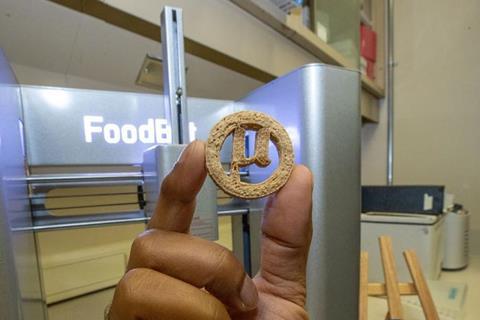
Researchers have programmed yeasts to transform plastic and agricultural waste into edible proteins and flavouring molecules, creating protein-rich cookies from materials that would otherwise be discarded.
The technology, developed by a team at Southern Illinois University (SIU) Carbondale, could offer a new approach to plastic upcycling while potentially supporting food production in resource-limited environments. The work forms part of a NASA-led project exploring food technologies for deep-space missions.
The researchers will present their findings at the American Chemical Society’s (ACS) Fall 2026 meeting, taking place from 23-27 August in Chicago.
“We were trying to develop technologies for plastic upcycling to make more valuable products,” said Associate Professor Lahiru Jayakody. ”We thought, why not focus on making food? Because plastic is carbon and food is carbon.”
Using microbes to transform waste
The team focused on polyethylene terephthalate (PET), one of the most widely used plastics and a common material for drinks bottles. PET contains carbon-rich molecules that could potentially be converted into components of food.
Rather than relying on chemical reactions and solvents to carry out the transformation, the researchers used genetically programmed yeasts as biological production systems.
Microbes are very clever, so we are using their traits to solve the problems we created.”
Lahiru Jayakody, Associate Professor at Southern Illinois University Carbondale
Jayakody and graduate student Sandhya Jayasekara programmed several types of yeast, including baker’s yeast, to convert molecules derived from plastic and agricultural waste into proteins, vitamins and flavouring compounds.
The researchers processed PET, discarded corn stalks and leaves and other biomass using a proprietary method known as oxidative hydrothermal dissolution. Developed by SIU Carbondale Geology Professor Ken Anderson, the process uses water and oxygen at high temperatures and pressures to break down difficult materials into components that microbes can access.
The programmed yeasts then use these components to produce food ingredients including proteins, fats and acids.
From waste to µBites
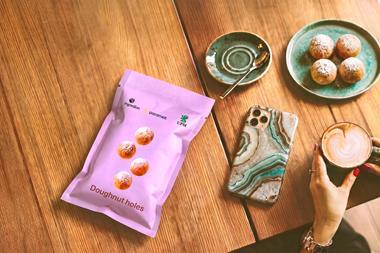
The resulting ingredients are combined with fibre, starch and sweetener before being extruded through a 3D printer to create protein-rich cookies called µBites, pronounced ’microbites’.
According to the researchers, the available data indicate that the cookies are safe to eat. However, the team is awaiting institutional approval before starting any taste tests.
However, initial feedback on the cookies’ scent has been positive, with most participants saying that they would be willing to eat them in in situations where resources were limitied.
In order to improve the cookies appeal, the team is also working to improve the sensory properties and nutritional value of the cookies. Jayasekara has developed yeasts capable of producing additional food ingredients, including vanilla flavouring from plant biomass.
Another yeast strain can convert ethylene glycol derived from PET into beta-carotene, which the body can convert into vitamin A.
“We’re using microbes to develop the cookie into a more attractive, consumer-friendly product,” says Jayasekara.
Potential beyond Earth
The researchers hope to eventually produce more of the µBites’ ingredients using microbes, including the starch, fibre and sweetener.
Jayakody also hopes the technology could support food production in environments where conventional food supply chains are difficult to maintain. Potential applications could extend from disaster zones and submarines to future colonies on the Moon or Mars.
“Global food demand is expected to rise 35–56 percent by the year 2050, and about 30 percent of the world population will be at risk of hunger in the future. The way to address that, I believe, is by using microbes,” he concludes.







No comments yet