



From laboratory concept to commercial production, Solar Foods is developing a radically different route to protein built on energy, microbiology and gas fermentation rather than traditional agriculture. New Food Deputy Editor Ben Cornwell speaks to Co-founder and Chief Scientific Officer Dr Juha-Pekka Pitkänen about the technical, regulatory and industrial realities of scaling an entirely new way of producing food.

Long before Solar Foods existed, the concept of producing food from microorganisms using energy rather than agriculture had already surfaced in early space science.
“NASA scientists in the 1960s had already presented the idea that with these kinds of microorganisms you could produce a protein-rich food ingredient for a space crew. We tested these microbes at VTT and realised it was possible to cultivate,” says Dr Juha-Pekka Pitkänen.
That early research would eventually evolve into Solein, a protein produced through gas fermentation using carbon dioxide, hydrogen and renewable electricity. The science may sound futuristic. The reality has been painstakingly industrial.
What Solar Foods is attempting goes far beyond developing a new ingredient. The company is constructing an alternative route to food production – one in which energy and microbiology sit at the centre of the system rather than land, seasons and agricultural cycles.
From proof of concept to production infrastructure
At the heart of Solar Foods’ technology is a deliberate shift in how energy enters the food system. Instead of relying on photosynthesis through crops or feed, the company cultivates a naturally occurring microbe using hydrogen generated from renewable electricity and carbon dioxide captured from air.
“From the same ingredients, CO₂ and renewable electricity converted into hydrogen, we can actually feed a process where we grow a microorganism and then the microorganism becomes a protein-rich ingredient,” explains Dr Pitkänen.
The approach may sound complex, but the underlying biology is surprisingly simple.
“If you look at the chemical elements needed to sustain life – what humans need and what microorganisms need – they are basically the same.”
Demonstrating growth under controlled conditions was only the beginning. The real challenge emerged when the focus shifted from laboratory experiments to sustained industrial production.
Scale also determines economic viability. Without sufficient production volume, the system cannot compete. Each increase in size introduces new layers of technical complexity and capital intensity. As Pitkänen explains, “The closer we get to the summit, the steeper the hill becomes.”
This tension has shaped Solar Foods’ path towards Factory 01. In spring 2024, the facility began production as the world’s first commercial-scale Solein plant, marking an important step in translating the technology from research into industrial production.
Designing with regulation in mind
Long before Solar Foods was formally established, the team understood Solein would fall under novel food regulation in most jurisdictions. That reality shaped development from the start.
“When Quorn was established in the UK, there was no regulatory path. They had to create it. Now there is a path and that was critical for us.”
The existence of a regulatory framework did not make the process straightforward, but it provided a clear pathway forwards. From the beginning, the company understood that regulatory approval would ultimately determine whether the technology could reach the market.
Solein received its first novel food approval from the Singapore Food Agency in 2022, permitting import, manufacture and sale in Singapore. In September 2024, it obtained self-affirmed GRAS status in the US, enabling commercialisation there. Applications remain under review in other major markets including the EU and UK.
Regulatory progress has moved alongside the company’s efforts to scale the technology towards commercial production.
Until now, everything we’ve eaten has captured energy through photosynthesis, directly or indirectly. Now the root of that energy is different.”
Dr Juha-Pekka Pitkänen, Co-founder and Chief Scientific Officer of Solar Foods
Nutritional composition and system efficiency
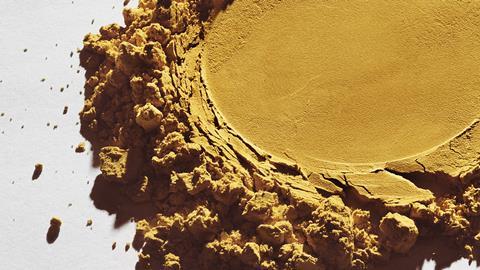
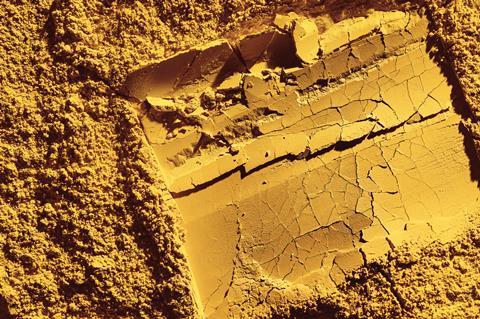
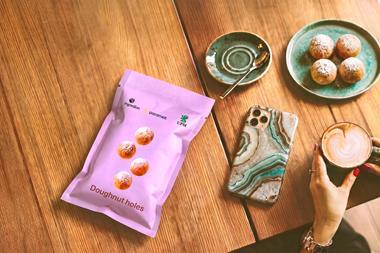
At a nutritional level, Solein functions like a conventional protein ingredient. The dried powder is around 80 percent protein, with roughly 6 percent fat, 10 percent dietary fibre and 4 percent minerals. It contains all nine essential amino acids required by the human body and provides micronutrients including iron and vitamin B12. In product development trials it has already been incorporated into foods ranging from alternative meat to noodles and ice cream.
Solein has also been designed to integrate easily into existing food manufacturing systems. Produced as a protein-rich powder, it can be handled much like other protein ingredients already used in food production facilities.
Yet the significance of Solein lies less in its nutritional profile than in its production system. Today’s global food system remains heavily dependent on land, water and agricultural cycles. Livestock production alone occupies roughly 40 percent of the world’s habitable land, while food production as a whole accounts for around 30 percent of global greenhouse gas emissions. Global calorie demand is projected to rise by more than 50 percent by mid-century.
Electricity-driven microbial production offers a different equation. Because Solein is cultivated through fermentation rather than farming, its resource footprint is dramatically smaller. Compared with beef production, land use is roughly 200 times more efficient and water use around 600 times lower. Even compared with plant protein production, emissions are estimated to be around five times lower.
The motivation behind the technology is therefore to improve the efficiency of food production as population growth places increasing pressure on land, water use and natural resources.
The shift goes deeper than efficiency metrics. As Pitkänen notes, “Until now, everything we’ve eaten has captured energy through photosynthesis, directly or indirectly. Now the root of that energy is different.”
Testing the system beyond Earth
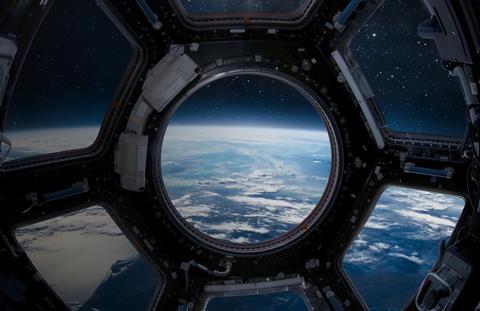
Space research has re-emerged as both origin and proving ground. Solar Foods is working with the European Space Agency to develop a version of its fermentation system capable of operating in microgravity, with the long-term aim of integrating Solein production into life-support systems aboard future space habitats.
“CO₂ from cabin air is a waste stream. Hydrogen from oxygen production is a waste stream. Those two waste products become the inputs for our process,” says Pitkänen.
Operating in orbit fundamentally alters process behaviour. Pitkänen notes that gravity plays a critical role in how gases and liquids behave inside fermentation systems, meaning microgravity conditions in space create very different process dynamics that must be understood before such systems can operate reliably beyond Earth.
Through the ESA-funded HOBI-WAN project, Solar Foods is developing a ground-based science model to validate performance before progressing towards a flight model intended for testing aboard the International Space Station. The company was also selected as an international category winner in NASA’s Deep Space Food Challenge.
While the space programme attracts attention, its real value lies in stress-testing the system under extreme constraints. Closed-loop efficiency, safety and reliability become essential. Insights from these experiments could help inform how similar systems are designed and operated on Earth.
Integrating energy and biology
Solar Foods is also participating in SOLARSPOON, a European Innovation Council Pathfinder Challenge project led by the University of Cambridge. The initiative explores whether electrolysis and microbial cultivation can be combined into a single solar-powered system capable of converting carbon dioxide and nitrogen from air into nutrients.
If successful, the device would become the first functional prototype to achieve at least 10 percent solar-to-food conversion efficiency. Such integration would tighten the link between renewable energy and food production, reducing system losses and improving overall efficiency.
For Solar Foods, the objective remains consistent: align energy generation and food production within a coherent industrial framework.
Accelerating dietary change
Shifts in human diet have historically taken centuries.
“Romans had pasta, but they didn’t have tomatoes. We didn’t have potatoes. What we eat has changed tremendously over the centuries. Now we’re trying to do that kind of change in a decade.”
Scientific feasibility, regulatory progression and industrial infrastructure must advance together. Each stage introduces new technical and financial thresholds.
Solar Foods’ journey from laboratory research at VTT to commercial-scale production at Factory 01 shows what it truly takes to move a new food production model from concept into reality. Electricity-driven microbial fermentation brings food manufacturing closer to the energy system, reshaping how protein can be produced in a resource-constrained world. What began as a scientific possibility is now operating in real facilities under real regulatory systems with growing industrial capability, laying the early foundations of a fundamentally different way of producing food.








No comments yet