




Mars signs long-term wind power agreement in Lithuania to support manufacturing operations, supply chain decarbonisation and wider renewable energy expansion.
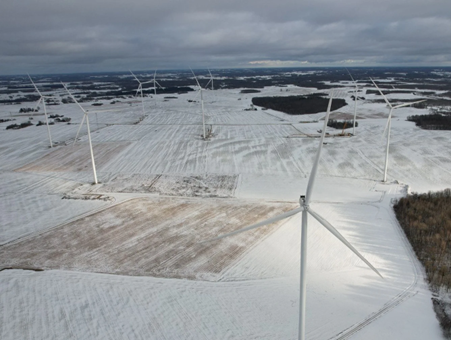
Mars has signed a major wind power agreement in Lithuania to secure renewable electricity for its operations and supply chain, supporting the company’s progress toward net zero.
The global snacking, food and pet care business has entered a long-term virtual power purchase agreement (PPA) with European Energy for most of the output from the planned Skuodas Wind Farm in Lithuania. The project, expected to go live in 2028, forms part of the Mars Renewables Acceleration Program and aims to expand renewable electricity across the company’s full value chain.
The wind farm will also support Mars’ pet food manufacturing facility in Lithuania, providing a secure long-term source of renewable electricity while reinforcing the site’s role as a key contributor to the company’s export performance.
The Skuodas Wind Farm is expected to generate around 490 GWh of renewable electricity annually – roughly the amount needed to power around 250,000 homes for a year – and will have an installed capacity of 158.4 MW.
Under the agreement, Mars will secure renewable electricity backed by bundled guarantees of origin from the new-build wind capacity, enabling verified renewable energy coverage for both its own operations and wider value chain.
At Mars, we’re focused on turning climate commitments into measurable progress and action with real-world infrastructure.
This agreement with European Energy helps bring new wind power online in Lithuania and strengthens our ability to extend credible renewable electricity across our value chain.
It marks another step under our Renewables Acceleration Program - helping scale clean electricity and keep us moving toward our net zero ambitions.”
Kevin Rabinovitch, Global VP Sustainability at Mars
Expanding renewable capacity across Europe
By committing to a long-term financial agreement, Mars is helping accelerate the development of new wind capacity while demonstrating the role corporate PPAs can play in expanding renewable energy infrastructure across Europe.
This agreement shows how companies like Mars are actively enabling new renewable generation.
Through this collaboration, we are bringing the Skuodas wind farm forward and adding substantial new, domestically produced capacity to Lithuania’s energy mix.
It shows how corporate PPAs translate commitments into real infrastructure and strengthen national energy independence in Lithuania.”
Jens-Peter Zink, Deputy CEO of European Energy
The agreement builds on a series of clean energy initiatives delivered through the Mars Renewables Acceleration Program. In 2025, Mars signed its first agreements under the programme, including a European contract that launched more than 100 solar projects in Poland and three renewable energy projects in the United States with Enel.
Earlier this year, the company also secured 70 percent of the output from the Kölvallen Wind Farm in Sweden through another long-term agreement.
By expanding renewable electricity across its operations and supply chain, Mars expects the Renewables Acceleration Program to contribute to an estimated 10 percent reduction in its total carbon footprint by 2030 compared with a 2015 baseline.












No comments yet