



A major cyberattack has forced French supermarkets to discard fresh and frozen food, exposing vulnerabilities in critical refrigeration systems.
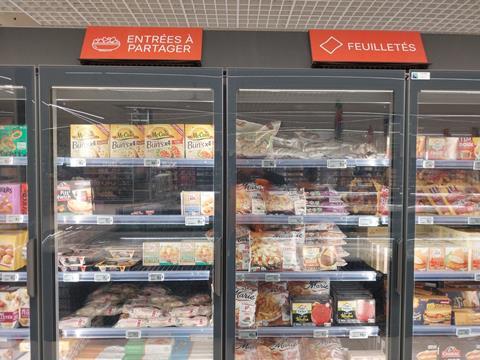
Hackers have disrupted refrigeration systems across hundreds of French supermarkets, causing some units to heat to 50°C and forcing retailers to discard fresh and frozen food after storage temperatures were compromised.
French Finance Minister Roland Lescure told Parliament on Tuesday (13 October) that around 700 of the country’s 10,000 supermarkets had been affected by the cyberattack. The incident, which began overnight on 11–12 October, hit major retailers including Intermarché, Netto, Coopérative U, Carrefour, Monoprix and E.Leclerc.
Attackers remotely altered refrigeration controls, reportedly manipulating automated defrost cycles and keeping some units at elevated temperatures for several hours. French prosecutors have launched a cybercrime investigation into the incident, including reports of food spoilage and fires.
The disruption has also prompted an official cybersecurity warning covering refrigeration controllers from several manufacturers, raising concerns about the security of internet-connected equipment used to preserve perishable food.
Food security requires more attention at all levels. Because the weaponisation of food has become a reality.”
European Commissioner for Agriculture and Food Christophe Hansen on X
Retailers face food losses as refrigeration systems fail
The consequences varied between retailers. Intermarché reported that refrigeration units at some affected stores reached 50°C for approximately six hours, forcing staff to discard compromised fresh and frozen products.
Its parent company, Les Mousquetaires, said employees removed affected products from sale and worked to restore refrigeration equipment and replenish shelves. Carrefour reported disruption at 80 stores, while Monoprix said approximately five percent of its network was affected.
Elsewhere, rapid intervention helped prevent further losses. Coopérative U chief executive Dominique Schelcher confirmed that 80 of the retailer’s nearly 2,000 stores were hit, but said staff prevented cold chain failures in most cases.
“In the stores where this was not possible, the affected products, which had experienced a cold chain break, were immediately withdrawn from sale and destroyed. Our absolute priority remains the food safety of our customers,” Schelcher said on X.
The financial impact remains unclear. French broadcaster BFMTV reported combined losses of €270,000 at two supermarkets in Alsace, although the total cost across France has yet to be established.
Attention has also turned to the refrigeration management systems that allowed hackers to interfere with storage conditions.
Danish engineering firm Danfoss, whose equipment featured in the attacks, said many affected controllers had reached the end of their supported lifespan or were running outdated firmware. Some no longer received security updates, although the manufacturer said it had previously encouraged customers to update supported systems and replace obsolete equipment.
“Reliable refrigeration is critical to our customers’ operations, and we remain committed to supporting our customers and helping them maintain secure and reliable systems they are used to,” Danfoss said.
The attacks were not confined to Danfoss equipment. In an alert updated on 13 October, France’s national cybersecurity response team, CERT-FR, identified compromises involving Danfoss AK-SC and AK-SM controllers, alongside Copeland and Dixell xweb systems. The agency advised operators to remove direct internet exposure and secure remote access.
The potential exposure extends beyond stores already affected. Reuters identified at least 4,500 publicly accessible Danfoss management interfaces, although it could not independently establish how many were running vulnerable software.
Official cybersecurity guidance for refrigeration operators
France’s national cybersecurity response team, CERT-FR, has issued recommendations for organisations operating potentially affected refrigeration controllers.
- Identify affected equipment: Check Danfoss AK-SC and AK-SM, Copeland xweb and Dixell xweb systems.
- Secure remote access: Remove direct internet exposure and restrict remote connections to secure VPNs or protected networks.
- Review security configurations: Check system access settings and investigate suspected unauthorised changes.
- Apply security updates: Install supported firmware updates, change default passwords and follow manufacturers’ recommendations.
- Restore compromised equipment: Reset and securely reconfigure affected systems, addressing underlying vulnerabilities before restoring remote access.
What the attack means for the food industry
The incident illustrates how a cybersecurity breach can become a food safety problem when attackers interfere with equipment responsible for maintaining storage temperatures.
Unlike a mechanical refrigeration failure, compromised controls can alter operating conditions even when the cooling equipment itself remains functional. The contrasting experiences of Intermarché and Coopérative U also highlight how rapid detection and intervention can prevent temperature deviations from resulting in food losses.
The risks are not new. In March 2026, representatives of the Global Food Safety Initiative (GFSI) warned that hackers could manipulate temperature controls, highlighting the need to incorporate cybersecurity into digital food safety systems.
The French attack provides a concrete example of that risk, drawing attention to how food businesses maintain older refrigeration equipment, manage third-party remote access and independently verify temperatures when automated systems become unreliable.
CERT-FR has warned that attacks targeting these controllers are probably continuing. It also cautioned that resetting compromised equipment without addressing underlying vulnerabilities could leave systems exposed to further attacks.
Meanwhile, French prosecutors continue investigating how the hackers gained access and the extent of the damage. As of 13 October, no group had publicly claimed responsibility.
Although Lescure said the incident posed no threat to France’s overall food supply, he acknowledged that it “touches the heart of our food security.”
“It was a wake-up call for everyone,” he said.
European Commissioner for Agriculture and Food Christophe Hansen also condemned the attack, writing on X: “Food security requires more attention at all levels. Because the weaponisation of food has become a reality.”












No comments yet