


Food safety testing is evolving rapidly as laboratories face increasing pressure to deliver faster, more reliable, and audit-ready pathogen detection results. While molecular methods such as PCR have significantly improved sensitivity and Time-To-Results, achieving trustworthy outcomes today depends just as much on workflow robustness, contamination control, and laboratory compliance as on the technology itself.
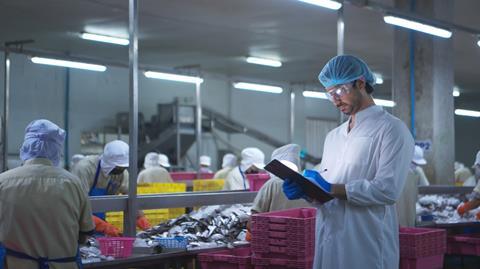
Food safety remains one of the most critical challenges in public health and the food industry. Each year, millions of cases of foodborne illness are reported worldwide, often caused by pathogens contamination such as Salmonella and Listeria monocytogenes.
Over the past two decades, food pathogen detection has undergone a technological transformation, shifting from traditional methods to molecular-based techniques such as PCR in order to improve sensitivity and specificity and provide faster results.
Beyond PCR: why workflow design matters
In modern food safety testing, PCR provides significant improvements in pathogen detection; however, its effectiveness depends heavily on its integration into the overall laboratory workflow.
Methods must therefore be designed to be simple, user-friendly, and supported by innovative workflows that minimize manual handling and variability between operators. Such optimization ensures consistent and reproducible results across different testing conditions and laboratories. At the same time, streamlined and well-controlled processes in the laboratory are essential to reduce the risk of cross-contamination, particularly when handling positive controls or amplified DNA from previous experiments, which can otherwise lead to false-positive outcomes.
Ultimately, the value of PCR lies not only in its analytical performance but in the robustness, usability, and contamination control strategies of the complete testing system.
The importance of ISO 17025 accreditation
Because pathogen testing results directly influence decisions of food product releases and have direct impact on consumers safety, laboratories must demonstrate that their testing processes are technically competent and reliable.
One of the most important standards used to achieve this objective is ISO 17025 that specifies the general requirements for competence, impartiality, and consistent operation of food pathogens testing. Accreditation to this standard secures reliability of results, ensures to comply with regulatory requirements and most importantly, provides confidence in testing results to ensure they are scientifically valid and accurate.
Ultimately, the value of PCR lies not only in its analytical performance but in the robustness, usability, and contamination control strategies of the complete testing system.”
Positive controls: essential but challenging
Accreditation of pathogen detection method, together with good laboratory practices, require the use of positive controls as a cornerstone of quality assurance in microbiological testing. These controls are essential to verify batch testing performance, ensuring that analytical systems are functioning correctly for every series of analyses, and to validate all steps of the pathogen detection method, from enrichment to final result, thereby confirming the robustness of the entire workflow.
In addition, positive controls play a key role in training analysts and supporting regular proficiency testing, helping laboratories to maintain a high level of technical competence. However, while indispensable, these requirements often introduce a significant operational challenge linked to the risk of cross-contamination between positive controls and routine samples, as positive controls generally achieve high cell densities due to cultivation in medium-only.
This can lead to false-positive results, creating complexity in troubleshooting, increasing uncertainty in result interpretation, and ultimately complicating decision-making processes for food batch releases.
Smarter strategies for reducing uncertainty
This challenge underscores the importance of adopting innovative solutions that can both fulfill regulatory expectations and simplify workflows, enabling laboratories to maintain high standards of accuracy while reducing uncertainty in troubleshooting and decision-making.
One innovative solution to address these challenges associated with positive controls is the implementation of a method that can distinguish whether a positive result obtained from a routine food sample is a true positive or the result of cross-contamination from a positive control. Having such capability empowers laboratories to rapidly identify the root cause of unexpected results, significantly simplifying troubleshooting processes.
This, in turn, supports faster and more accurate decision-making and enabling end users to act with greater confidence. Additionally, this approach strengthens risk assessment management and enhances the reliability of food batch release decisions, ensuring that only compliant products reach the market.
Strengthening compliance, training, and reliability
In addition to its ability to distinguish true positives from cross-contamination, this solution provides significant added value by supporting the validation of the entire detection workflow in full alignment with ISO 17025 and audit requirements. By acting as a robust process control, it enables laboratories to systematically verify that each step of the method is performing as expected, thereby strengthening overall compliance and data reliability.
Furthermore, it serves as a powerful tool for training and qualifying new analysts, allowing them to practice and validate their techniques with confidence and peace of mind, without compromising routine testing activities.
An innovative approach to Salmonella control
To address the key challenges associated with the use of positive controls in food testing laboratories, particularly for Salmonella detection, Gold Standard Diagnostics has developed a dedicated PCR kit targeting S. Tranoroa, designed to be used alongside Salmonella spp. detection methods.
This innovative approach enables laboratories to safely introduce a unique S. Tranoroa strain, never previously reported in food, as a positive control, while maintaining full confidence in result interpretation. The specific PCR assay allows clear differentiation between S. Tranoroa and other Salmonella serovars, helping to distinguish true positive results from potential cross-contamination. Within 1 additional hour after the initial presumptive positive Salmonella spp. result, the second PCR result for S. Tranoroa is available.
Having such capability empowers laboratories to rapidly identify the root cause of unexpected results, significantly simplifying troubleshooting processes.”
In addition, the solution offers a streamlined and harmonized workflow, with simple sample preparation that doesn’t require addition of supplements or use of proprietary media. The system is built for efficiency and speed, using ready-to-use reagents to reduce hands-on time and deliver rapid results with shorter turnaround times.
Finally, the workflow enhances robustness and contamination control through features such as UNG technology and pierceable caps, while remaining flexible, intuitive, and compatible with multiple PCR platforms.
Learn more in our recorded webinar
Want to explore these challenges and solutions in greater detail? Our recorded webinar provides additional insights into modern food pathogen detection strategies, contamination control approaches, and practical solutions for improving confidence in laboratory workflows and decision-making.