



FDA recalls 6,000 promotional M&M’s packs missing allergen warnings, after repackaged sweets containing milk, soy and peanuts reached consumers across 20 states.
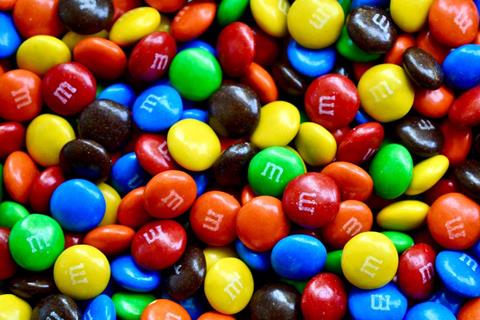
The US Food & Drug Administration (FDA) has recalled more than 6,000 promotional packs of M&M’s after identifying undeclared allergens in repackaged products distributed across 20 states.
The recall, issued by Beacon Promotions Inc. on 26 January and classified on 4 February, affects sweets that may contain milk, soy and peanuts without the required allergen warnings.
The FDA classified the recall as Class II, defined as a situation where use of the product "may cause temporary or medically reversible adverse health consequences or where the probability of serious adverse health consequences is remote."
The recall covers 1.3-ounce packs of Peanut M&M’s and classic M&M’s sold in a wide range of branded promotional packaging across the following states: Alabama, Arizona, California, Florida, Iowa, Kansas, Kentucky, Maryland, Massachusetts, Minnesota, New York, North Carolina, Ohio, Pennsylvania, South Dakota, Tennessee, Texas, Virginia, Washington and Wisconsin.
The recalled Peanut M&M’s carry “Make Your Mark” labels, lot code M1823200 and a best-before date of 30 April 2026.
The recalled classic M&M’s were distributed in multiple promotional formats, including corporate and event branding such as Subaru, Adobe, Morgan Stanley, Best Western, Dropbox DocSend and Berkshire Hathaway Guard Insurance Companies.
Affected lot codes include:
- L450ARCLV03 — best by 1 December 2025
- L502FLHKP01 — best by 1 January 2026
- L523CMHKP01 — best by 30 June 2026
- L537GMHKP01 — best by 1 September 2026
Consumers with milk, soy or peanut allergies should not consume the affected M&M’s products, as exposure could trigger a serious or potentially life-threatening allergic reaction.
Mondelēz expands CHIPS AHOY! recall
Separately, Mondelēz Global LLC this week expanded its 24 December 2025 voluntary recall in the United States of CHIPS AHOY! Baked Bites Brookie products.
The company said the action followed an incorrect mixing process that led to the "formation of small corn starch clumps" in the snacks. Regulators warned the clumps could pose a choking hazard, particularly for higher-risk groups such as young children and older adults.