
New £3 million UK programme will unite bioscience and industry to accelerate healthier, sustainable food products and processing innovations.
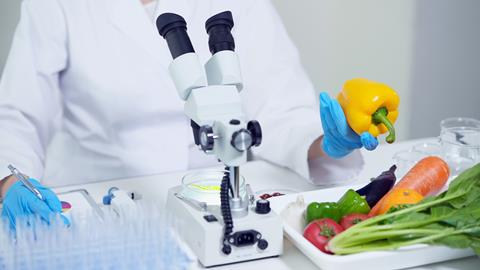
The UKRI Biotechnology and Biological Sciences Research Council (BBSRC) and the Department for Environment, Food and Rural Affairs (Defra) have announced a new £3 million Diet and Health Collaborative Research and Development funding programme to drive food innovation and improve health outcomes across the UK.
The investment will bring together academia and industry to translate world-class bioscience into practical solutions, supporting the development of novel food products and processing technologies that deliver healthier, more sustainable and high-quality food for consumers.
Strengthening the UK’s food innovation ecosystem
Co-designed and jointly funded by BBSRC and Defra, the programme aligns bioscience innovation with Defra’s policy priorities and the Good Food Cycle, aiming to strengthen sustainability, resilience and economic growth across the food system.
Professor Anne Ferguson-Smith, BBSRC Executive Chair, said:
This new investment reflects the power of partnerships in translating world-leading bioscience into tangible benefits for people, the economy and the environment. By bringing together researchers and industry, BBSRC and Defra are working together to deliver outcomes that can improve nutrition, reduce food inequalities and help build a more resilient and sustainable food system.
This programme builds on UKRI’s strong foundations in diet and health research and will help deliver real-world impact and improve lives and livelihoods across the UK.”
The new funding builds on UK Research and Innovation’s earlier commitments, including the £15 million Diet and Health Open Innovation Research Club, which has already connected partners across the food innovation ecosystem. Together, these initiatives are designed to unlock the scientific and industrial capability needed to tackle long-term challenges and opportunities in the UK food sector.
Through the programme, funded projects will support research that improves nutritional quality, advances understanding of how processing and product composition affect health, and promotes circularity to reduce food waste and loss.
Minister for Food Security, Dame Angela Eagle, said:
We’re working to develop a food strategy that delivers for people, businesses and the environment.
This investment will bring together our brightest researchers with industry expertise to drive the food innovations that will improve health outcomes, reduce environmental impact and support a thriving UK food industry.”
Priority areas and requirements for funded research
Projects must address at least one priority area, including improving nutrition for populations at higher risk of malnutrition or muscle loss, such as older people, those using GLP-1 drugs and disadvantaged groups. Other focus areas include assessing the health impacts of additives and emulsifiers, developing sustainable alternatives, and improving environmental outcomes through circular economy approaches.
Research may also explore biofortification, reformulation, affordability and accessibility of nutritious food, consumer behaviour and strengthening the resilience of the UK food supply chain.
Applicants must demonstrate how their proposals contribute to the Good Food Cycle, supporting a healthier population, a thriving food sector, improved environmental outcomes and a more resilient supply chain.
The opportunity is now live on the UKRI Funding Finder, with applicants required to submit a notification of intent before making a full application.
Topics
- Clean label, natural & reformulation
- Dame Angela Eagle
- Decarbonisation, energy & utilities
- Department for Environment Food and Rural Affairs (Defra)
- Enforcement, policy & governance
- Fats, oils & emulsifiers
- Flavours, colours & sensory
- Labelling, claims & HFSS/UPF
- Logistics, cold chain & disruption
- Proteins & alternative proteins
- Shelf life, spoilage & integrity
- UK & Ireland