



Commercial shipping is one of the few genuinely closed food environments left in modern logistics, which makes it an unusually honest test of supply chain resilience. Coby Sella, Chief Executive Officer of Agwa, argues that the lessons now playing out at sea signal where the wider food system is heading.
The food industry has spent the past few years relearning an old lesson about resilience. A drought in one growing region, a blocked shipping lane, an unexpected tariff, and suddenly supply chains that looked dependable for decades begin to show their limits. New Food’s recent report, Global Food Supply Chains in 2026: Building Resilience Under Pressure, puts it plainly: the same efficiencies that allowed food supply chains to scale globally have also made them more sensitive to disruption.
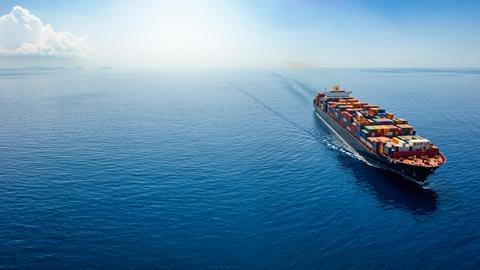
That sensitivity shows up earlier and more starkly at sea than almost anywhere else – yet most of the food industry never sees it. Once a ship leaves port, the crew cannot top up the cold store, reroute a delivery or call in a substitute supplier. Whatever fresh produce came aboard is all there is. Fruit and vegetables loaded in port may last little more than 10-14 days before quality declines and crews fall back on frozen, preserved or lower-quality alternatives for the remainder of the voyage. On long routes, that can mean weeks without reliable access to fresh food.
This makes shipping an unusually honest test of the resilience question the wider food industry is now asking. Onshore, fragility is often masked by redundancy; there is usually another supplier, another route, another delivery window. At sea, those buffers fall away, exposing a system that performs well in stable conditions but offers limited correction once disruption, perishability and distance collide.
The New Food report frames this as a tension between efficiency and resilience – and that is the right frame. For decades, food supply chains have been engineered around cost and scale; built on specialised production regions, long trading networks and just-in-time delivery. Ship provisioning is that model in miniature. It assumes port resupply will be consistent, affordable and on time – luxuries that operators can no longer take for granted.
Onshore, fragility is often masked by redundancy; there is usually another supplier, another route, another delivery window. At sea, those buffers fall away, exposing a system that performs well in stable conditions but offers limited correction once disruption, perishability and distance collide.”
Climate volatility is reshaping where and when food can be grown; geopolitical tension is redrawing trade routes that took decades to establish – but a vessel mid-ocean has no equivalent room in which to manoeuvre. It simply absorbs the consequences.
Then there is the issue of waste, which the sea exposes uncomfortably well. The United Nations estimates that more than a billion tonnes of food is wasted each year beyond the farm, with a further 13 percent lost before produce even reaches retail. On a ship, the same dynamic plays out in a confined space. Produce bought in port is often overpriced and variable in quality to begin with; some is over-ordered to offset expected spoilage; and by the third week at sea the question is less how to preserve freshness than what remains usable at all.
The cost is not only commercial: the food system already accounts for roughly a third of global greenhouse gas emissions, and food loss and waste alone for between eight and 10 percent. Every crate that rots in a hold is a small, visible version of a problem the whole sector is trying to solve.
A more subtle loss runs alongside the visible one, reaching far beyond shipping. The word ‘fresh’ flatters much of what arrives in any kitchen, ashore or at sea, because the nutritional clock on leafy produce starts at harvest, not at the galley door or the supermarket shelf.
Lettuce illustrates this point. Being among the most widely used greens precisely because it is rich in vitamins C, A and folate – alongside antioxidants and minerals such as potassium, phosphorus and calcium – sadly much of that value erodes long before anyone eats it. Studies of the post-harvest chain show vitamin C falls by around a quarter in initial storage, by close to half after two days on a retail shelf and by more than 80 percent the day after that. Chlorophyll and carotenoids follow the same trajectory, and mineral content erodes too, with potassium and calcium down by roughly a quarter and some trace minerals by as much as four-fifths. Handling, temperature swings, disinfection and poor humidity control all hasten this deterioration.
At sea, that attrition is taken to its extreme. Greens may already be a week old when loaded – their nutritional peak behind them – and a few days in a cold store can leave produce that may look acceptable yet carries a fraction of its original nutrition. Freshness is not a fixed property but a rapidly depreciating one, and distance from the point of harvest is what depreciates it. That is an awkward truth for any business selling food on its nutritional merits – and it holds as true on a retail shelf as in a ship’s galley.
In safety-critical environments, nutrition is not just a comfort but a determinant of performance; a fact that other high-stakes sectors have long recognised. Aviation and military research treat it as a core domain of human performance, set alongside sleep and exercise, rather than beneath them. In air-traffic control, regulators count nutrition among the practical measures for managing fatigue, not as a question of staff welfare. Similarly, the US Department of Defense has noted that the impairment fatigue causes can rival that of alcohol.
Shipping sits within the same logic. Human factors lie behind the overwhelming majority of marine incidents – the consequences of which can be catastrophic – and fatigue runs through them as a persistent thread. Diet never appears on an accident report, but the condition it shapes across a long rotation is precisely what determines the alertness and resilience of a crew . Treating nutritious food as part of that performance picture, rather than galley housekeeping, is the priority these sectors share.
Freshness is not a fixed property but a rapidly depreciating one, and distance from the point of harvest is what depreciates it.”
What makes the maritime case interesting is not only the problem it reveals but how some operators are starting to tackle it. Faced with a supply chain they cannot fix externally, several are bringing part of it aboard. Onboard growing systems now enable vessels to produce a share of their own fresh greens at the point of use – independent of port schedules, weather windows or trade politics. Harvested on demand, those greens reach the plate before the nutritional clock has had time to run – a fundamentally different proposition from produce trucked, shipped and stored for weeks.
This is less exotic than it sounds and that is the point. It mirrors a shift already underway across other infrastructure-heavy industries. Manufacturers are installing onsite solar and storage rather than depending wholly on the grid; industrial sites are treating water and waste locally rather than moving it to distant centralised plants. The logic is consistent: where a centralised system is fragile or carbon-heavy, a modular version closer to the point of use improves resilience, reduces waste and returns a measure of control. Decentralised food production belongs to that same family of solutions.
None of this replaces the global food supply chain and it would be a mistake to suggest it could. Onboard growing supplements rather than substitutes, covering a slice of fresh nutrition, not the whole provisioning need. But resilience is rarely about replacing a system wholesale. Instead, it aims to build redundancy where failure is most costly, and a vessel three weeks from the nearest port is precisely such a point. It also meets tightening regulatory requirements: the Maritime Labour Convention’s most recent amendments require food on board to be adequate not only in quantity but in nutritional value, quality and variety, making reliable access to fresh produce a matter of compliance as well as care.
This is not hypothetical. One crew working in a sensitive, high-pressure environment in the Gulf described having fresh produce grown onboard as “a significant improvement compared to traditional supply limitations at sea”, noting that it supported nutrition, morale and daily routine during an extended period away from port. The detail matters, because it shows how quickly supply chain resilience becomes human resilience once a vessel is cut off from normal resupply.
Shipping, then, is not a niche curiosity. It is a preview. It shows in compressed and unforgiving form what happens when an efficient supply chain meets conditions it was never designed for, and points towards the thinking that will shape the next decade of food security. The report closes by asking whether global food supply chains can move beyond efficiency alone, towards systems able to withstand environmental, economic and geopolitical pressure. The vessels already growing their own food are, in their modest way, beginning to answer it. The rest of the food system would do well to watch what they learn.









No comments yet